
One Mouse or Infestation? How to Tell the Difference in Your California Home
You saw one mouse, or found a few droppings, and now you wonder: one mouse or infestation? This guide shows you which clues matter, how to check your home in three days, and when to call a professional. PestPunt sends field representatives directly to your property across California.
One Mouse or Infestation? At a Glance
One clue, one place: A few droppings or a single sighting may mean an early visit. Trap, seal gaps, and recheck in three days.
Repeated clues: Droppings in several rooms, noises on many nights, or fresh evidence after cleaning suggest mice live in the home.
Strong signs: Nests, chewed wiring, or a strong urine odor call for a professional inspection the same day.
Safety first: Never sweep or vacuum dry droppings. Wet them with disinfectant and wipe them up.
One Mouse or Infestation? What You Can and Cannot Tell
Many homeowners ask this question the moment they spot a mouse. The honest answer is that one sighting cannot settle it. A single mouse can wander in on a cold night. A single mouse can also be the one you happened to see out of several.
What Counts as an Infestation?
Pest professionals do not use one fixed number. In practice, an infestation means mice live in your home, find food and shelter there, and keep coming back. The signs repeat, spread to new areas, or include nests, damage, or breeding. A mouse that slips in through an open garage door and leaves again does not meet that bar. Mice that nest inside your wall do.
Why Simple Rules Fail
You will read blunt rules online, such as "if you see one, you have dozens." Those rules make strong headlines, but they skip the evidence. Your home may hold one mouse, a pair, or a family. Your job is to gather clues, weigh them together, and act on what they show.
This guide gives you a method. You will learn which signs carry weight, how to run a simple three-day check, and which findings should send you to the phone.

Why One Mouse Often Means More
House mice reproduce fast when a home gives them food and shelter. The University of California reports that a female house mouse may have 5 to 10 litters in a single year, with about 5 or 6 pups per litter. Pups arrive 18 to 21 days after conception, and young mice usually reach sexual maturity about 5 to 6 weeks after birth, although maturity can come later. You can read the full details in the UC IPM house mouse guidance.
What That Means for a Single Sighting
Those numbers do not prove you have a colony. They show how fast a small problem can grow. A pregnant female who enters your garage in October can raise a litter before spring. You may never see her, because mice stay hidden and feed mostly at night.
Do Mice Live Alone?
Mice often share a nesting area, but a young male or a stray can also wander alone. Our guide on whether mice travel in packs or alone explains how mouse groups form and why lone travelers still happen. For a closer look at breeding speed, read about mouse reproduction and population growth.
When One Mouse May Really Be One Mouse
A lone mouse remains possible. It becomes more likely when:
- You see it once, at night, near a door or garage you opened recently.
- You find no fresh droppings, gnaw marks, or nesting material after a careful search.
- You catch it in a trap, and no new signs appear for a week or more.
Even then, treat the visit as a warning. Something let that mouse in, and the same gap can let in the next one.
Seven Clues That Separate One Mouse From an Infestation
Weigh these clues together. Treat them as a checklist that records patterns. No clue below counts mice, and no single clue settles the question.
1. Droppings: Number and Spread
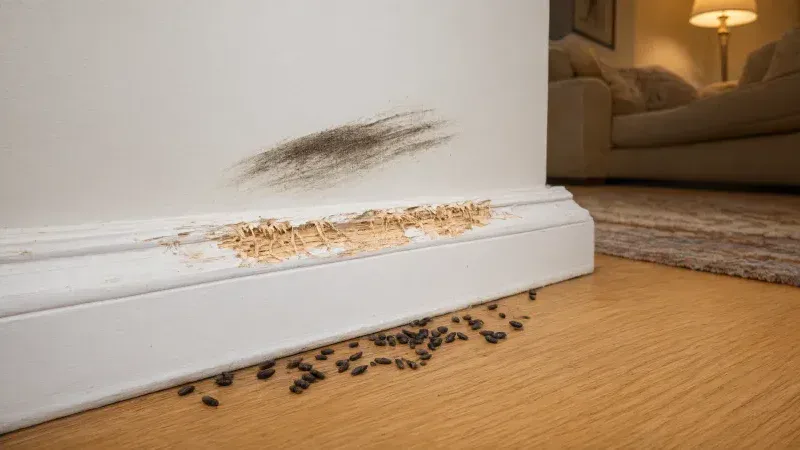
Mouse droppings look like small, dark grains about the size of a grain of rice. A few droppings in one spot fit an early visit. Droppings in several rooms, or fresh droppings that return after you clean, point to repeated travel. Droppings show activity. They do not show how many mice made them.
2. Night Noises
Scratching, scampering, or gnawing sounds in walls and ceilings often start after dark. One quiet night tells you little. The same sounds on several nights, or sounds in different parts of the house, suggest mice use more than one route. Sounds alone cannot prove mice, so look for physical evidence too.
3. Gnaw Marks
UC IPM lists fresh gnaw marks as a sign of active areas. Look at food packaging, cardboard, soap, wood corners, and wiring. Fresh gnawing looks pale and clean. Chewed wiring needs a same-day response, because the University of California notes that many fires of unknown origin are believed to come from rodents gnawing wires.
4. Nesting Material
Mice build nests from finely shredded paper, fabric, insulation, or other fibrous material. Check behind boxes, inside drawers, in garages, and near woodpiles. A nest means a mouse has settled in and may be raising young. A nest does not tell you how many mice use it.
5. Odor
UC IPM describes a musky odor as common in large or long-term infestations. A faint smell inside a closed cabinet tells you less than a smell that fills a room. A sharp rotting smell can point to a dead mouse inside a wall or ceiling.
6. Rub Marks and Tracks
Mice follow the same routes along walls and baseboards. Oils from their fur leave dark, greasy smudges that grow darker with traffic. Tracks are harder to find, but dusty shelves and garage floors sometimes show them. Record what you see from a distance, and do not disturb it.
7. Sightings: When and How Often
Mice are active mostly at night, and UC IPM notes they can appear in daylight when food is available. One daytime sighting does not prove a large population. Repeated sightings on different days, combined with droppings or nests, carry far more weight.
What Your Evidence Suggests: A Practical Guide
Use the table below to interpret what you find. It comes from practical field experience. It is not a scientific severity scale, and it cannot count mice.
| What you find | What it may suggest | Best next move |
|---|---|---|
| One mouse seen once, with no other signs after a careful search | A recent arrival or a lone wanderer | Trap near the sighting, seal gaps, and recheck in three days |
| A few droppings in one spot | Early activity in one area | Clean safely, set traps, and watch that spot for new droppings |
| Fresh droppings return in the same spot after cleaning | Ongoing activity along a route | Add traps along the wall and book an inspection if it continues |
| Droppings or gnaw marks in two or more rooms | Mice may travel through more of the home | Inspect the whole home and consider a professional visit |
| Night noises in a wall or ceiling on several nights | Activity inside a void, and a nest is possible | Book an inspection and do not open walls yourself |
| A nest, shredded material, or young mice | Mice have settled in and may be breeding | Call a professional and do not disturb the nest |
| Chewed wiring or flickering lights | A fire and safety concern | Call a licensed electrician and a pest professional the same day |
No single row proves the size of the problem. Rows lower in the table carry more weight, because they show settled, repeated, or damaging activity. If your evidence keeps moving down the table, read our guide to the signs a mouse infestation is getting worse.
How to Check Your Home in Three Days
A short, structured check turns a worried guess into a clear answer. Follow these six steps over three days, and write down what you find.
Write Down What You Saw
Note the date, time, room, and what the mouse did. Photograph droppings or damage from a distance. Do not touch them. These notes show you later whether the problem is growing.
Walk the Home With a Flashlight
Check the kitchen, pantry, laundry room, garage, and the edges of every room. Look behind appliances, under sinks, and inside lower cabinets. Wear gloves, and note droppings, gnaw marks, rub marks, and nesting material.
Clean One Small Area Safely
Clean a small area using the wet method in the safety section below. That gives you a clean baseline, so new droppings stand out. Never sweep or vacuum dry droppings.
Set Traps Where You Found Evidence
Place snap traps against walls, behind objects, and in dark corners near droppings. UC IPM advises setting the trigger end next to the wall. Pairs of traps set 1 to 2 inches apart can raise capture success.
Listen and Recheck Each Day
Sit quietly in the evening and note which areas make noise. Each morning, check the traps and the cleaned area for new droppings. Keep short notes, so you can compare day one with day three.
Review the Notes on Day Three
New droppings, repeated noises, several catches, or any nest mean you should book an inspection. No new signs after one catch suggests a lone visitor. Keep sealing gaps either way.

Safety Gear and Rules Before You Inspect
Rodent urine, droppings, and nesting material can carry germs. The CDC explains that when fresh urine, droppings, or nesting material from an infected rodent gets stirred up, the virus can enter the air, and people can breathe it in. Read the full CDC hantavirus prevention guidance before you clean.
Protective Gear for Small Jobs
- Rubber or plastic gloves
- Safety goggles when you work overhead or in tight spaces
- A fitted N95 respirator in dusty or enclosed spaces, such as attics and crawl spaces
- Long sleeves, long pants, and closed shoes
- Paper towels, disinfectant, and sealable trash bags
Heavy contamination, large nests, and enclosed spaces call for stronger protection and training. Call a professional for those jobs.
Attic and Crawl Space Cautions
Attics get very hot in warm months, so search early in the morning or in the evening. Step only on joists or on boards laid across joists, because drywall will not hold your weight. Never touch wires you suspect mice damaged. If the space feels unsafe, leave the search to a trained technician.
What to Do Today Whether It Is One Mouse or Many
You do not need a final answer to start. These six actions help in both cases, and they cost little time.
Remove Food Access
Store dry food, pet food, and birdseed in glass, metal, or thick plastic containers. Feed pets only the amount they finish at one feeding. Wipe crumbs and keep trash in sealed containers.
Set Enough Snap Traps
UC IPM calls trapping a great first step when you place enough traps near activity. Use enough traps to make trapping short and decisive. Space traps no more than about 10 feet apart in active areas.
Bait Lightly
Use a very small amount of bait on the trigger plate. Too much bait lets a mouse lick it off without springing the trap. Nesting material, such as cotton or dental floss, can also attract a nesting female. Keep traps away from children and pets.
Seal Gaps Right Away
Mice can use openings as small as a quarter inch. Plug gaps with copper mesh, coarse steel wool, or metal, then seal around them. UC IPM says foam, rubber, vinyl, plastic, and wood are easy to gnaw, so they fail.
Clean With the Wet Method
Put on gloves, wet droppings with disinfectant, wait for the label contact time, and wipe them up with paper towels. Bag and discard everything. Wash your hands with soap and water.
Recheck and Escalate
Check traps every day and dispose of any catch without touching it bare-handed. If signs continue after about a week, or appear in new areas, book a professional inspection.

Where to Look First in a California Home
Mice follow edges, warmth, and food. Search these places in order, and write down what you find in each one.
Kitchen and Pantry
Check behind the stove and refrigerator, inside lower cabinets, and around pipe openings under the sink. Look at the back corners of drawers and the edges of bagged foods. Mice often chew cereal boxes and flour bags first.
Garage and Storage Areas
Cardboard boxes, holiday decorations, pet food, and old clothes make perfect nests. Check the gaps around garage doors and utility lines. In our field work, garages are a common first stop, because they connect the outdoors to the house.
Attic, Ceilings, and Walls
Listen at night for scratching above ceilings and inside walls. Look for tunnels in attic insulation and droppings along beams. Roof rats also use attics in many California neighborhoods, so confirm the species before you choose a plan.
Vehicles and Outdoor Edges
Mice nest in parked cars, especially near engine compartments and air filter boxes. Outside, check ivy, woodpiles, and clutter against the foundation. UC IPM notes that mice are excellent climbers, so thin plants that touch or climb your walls.
When Activity Increases
Activity can happen in any season. UC IPM notes that where outdoor mouse populations exist, mice frequently enter homes in autumn when nights turn colder. That makes October and November a smart time to inspect and seal.
Local Patterns Across California
- Older homes: Worn weatherstripping, vent screens, and utility gaps create easy entry.
- Multi-unit buildings: Shared walls and pipe chases let mice move between units, so tell your landlord early.
- Hillside and garden properties: Brush, ivy, fallen fruit, and bird feeders can bring mice close to the foundation.
Is It a Mouse? Ruling Out Other Animals
The right plan depends on the animal. Confirm what you have before you spend money on traps or sealing materials.
| Animal | How to identify it | Why it matters |
|---|---|---|
| House mouse | Gray to light brown, with large ears and small black eyes. The tail has almost no fur. An adult measures about 5 to 7 inches, including a 3 to 4 inch tail. | The most common indoor mouse. Trapping and exclusion plans fit it well. |
| Deer mouse | Larger eyes, a white belly with a clear line between the dark back and white underside, and a furred tail. | Deer mice are linked to hantavirus, so use extra care and call a professional for cleanup. |
| Rat | A larger body, larger droppings, and heavier sounds in walls or attics. | Rats need different traps and larger sealing. Confirm the species before you act. |
If you cannot tell which animal you have, photograph the droppings or damage from a distance and call for help. A correct identification saves time and prevents repeat visits.
Health Risks and Safe Cleanup
Even a small amount of mouse activity can affect your health and your home. Take extra care if children, pets, or people with asthma or weakened immune systems live with you.
Health Risks
- Mice contaminate food and food-contact surfaces with droppings and urine.
- UC IPM links house mouse urine proteins to early asthma in sensitive children and other allergic reactions.
- House mice can carry germs such as salmonella and the virus that causes lymphocytic choriomeningitis.
- Stirred-up droppings and nesting material can expose people to harmful particles.
Property Risks
- Gnawed wiring can short out and may start fires.
- Mice chew insulation, packaging, and stored belongings.
- Urine stains and odors soak into wood and drywall.
- Entry gaps stay open until you seal them.
The Wet Cleanup Method
Follow these steps for small amounts of droppings in open areas:
- Put on rubber or plastic gloves.
- Spray the droppings and the surrounding area with disinfectant until wet. Follow the product label.
- Let the disinfectant sit for the contact time on the label.
- Wipe up with paper towels, and seal everything in a plastic bag.
- Disinfect the surface again, remove your gloves, and wash your hands with soap and water.
If anyone in your home develops fever, severe muscle aches, or trouble breathing after rodent exposure, contact a doctor and mention the exposure.
DIY or Professional? Decide With These Signs
You can handle a small, early problem on your own. Some situations need a trained technician. Compare your findings to the two lists below.
When DIY May Work
- You saw one mouse and found no other signs after a careful search.
- Signs appear in one area only.
- Traps catch a mouse, and new signs stop within about a week.
- You can reach and seal every gap you find.
When Professional Help Makes Sense
- Signs appear in more than one room or area.
- You find nests or hear sounds in walls on several nights.
- New droppings keep appearing after about a week of trapping.
- You see chewed wiring or smell a strong urine or rotting odor.
- Entry points sit on the roof or inside walls.
- Someone in your home has asthma, allergies, or a weakened immune system.
- You manage a rental, restaurant, daycare, or other business.
What a Professional Visit Covers
A proper inspection checks the whole property, not only the room where you saw the mouse. A technician examines the exterior, roofline, attic, garage, kitchen, and crawl space. They trace droppings and rub marks to entry points, identify the animal, and explain the control, sealing, and cleanup options. If you need fast help, see our page on same-day mouse removal in California.
What to Expect When You Call PestPunt
PestPunt operates as a Service Area Business. We have no office for you to visit. When you call, a specialist listens, asks questions, and sends a field representative to your property.
What to Tell Us
- What you saw, heard, or found, and in which rooms
- When you first noticed it, and whether signs have increased
- Whether you set traps, and what they caught
- Whether children, pets, or people with health concerns live in the home
What Happens at Your Property
Your field representative inspects the areas where you found evidence and the places you may have missed. They look for entry points, nesting sites, and damage. Then they explain what the evidence suggests and which options fit your property.
Questions to Ask Any Provider
- Will you inspect the whole property, including the roofline and attic?
- How will you seal entry points, and with which materials?
- How do you place traps or bait, and how do you protect children and pets?
- What follow-up happens after the first visit?
- Can you also handle cleanup of droppings and nesting material?
A good provider answers these questions clearly before work begins.
How to Keep the Next Mouse Out
UC IPM calls exclusion the most successful and permanent form of house mouse control. Trapping removes the mice that are inside. Sealing stops new ones from replacing them.
- Seal gaps and openings larger than a quarter inch with metal, wire screen, coarse steel wool, or concrete
- Seal cracks in foundations and around pipes, vents, and utility cables
- Make sure doors, windows, and screens fit tightly, and add door sweeps
- Store food, pet food, and birdseed in sealed containers
- Keep garbage in sealed containers and clean up spills right away
- Reduce clutter in garages, closets, and attics
- Thin or remove plants that touch or climb your walls
- Walk the exterior each season, and fix new gaps early
Skip ultrasonic and similar devices. UC IPM reports little evidence that sound, magnetic, or vibration devices drive established mice out of buildings.

Common Mistakes When You Face One Mouse
1. Trusting One Sighting Either Way
One sighting does not prove a lone mouse, and it does not prove a colony. Check the evidence before you decide.
2. Setting Only One Trap
A single trap rarely solves the problem. Place several along walls and near droppings.
3. Skipping the Entry Points
Trapping without sealing invites new mice to replace the old ones. Close every gap you find.
4. Dry Sweeping Droppings
Dry cleaning stirs up dust and particles. Wet the area first, then wipe it up.
5. Relying on Ultrasonic Devices
Mice quickly get used to repeated sounds, and these devices do not reach behind objects. Use traps and exclusion.
6. Releasing Mice Outside
California law restricts relocating wildlife, and mice can return to your home. Use snap traps or ask a professional.
Frequently Asked Questions About One Mouse or Infestation
Not always. One mouse is not an infestation by itself, but it often shows that mice found a way in. Look for droppings in several places, repeated night noises, gnaw marks, and nesting material. If you find only one sighting and no other signs after a careful search, you may have a recent arrival. Seal gaps and recheck in three days.
You cannot tell the number from one sighting, a pile of droppings, or a noise. Evidence shows activity, not a head count. A professional inspection shows where mice travel, nest, and enter your home, which tells you more than a guess about numbers. Call (888) 217-6759 to describe what you found.
Not by itself. UC IPM notes that mice are active mostly at night but may appear in daylight when food is available. One daytime sighting deserves a closer look. Repeated sightings on different days, combined with fresh droppings or nesting material, point to a bigger problem.
Call right away if you find nests, hear sounds in walls on several nights, see chewed wiring, or smell a strong urine odor. If you find only one sign, trap and seal for about a week. Book an inspection if signs return or spread. Do not wait if someone in your home has asthma or a weakened immune system.
Set enough traps to make trapping short and decisive. UC IPM advises placing snap traps along walls, behind objects, and in dark corners where you found droppings, with traps no more than about 10 feet apart in active areas. Pairs of traps set 1 to 2 inches apart can improve your catch rate.
No. California law bars relocating live wildlife, including house mice, away from the property where you caught it without a special permit. UC IPM also reports that relocated mice can find their way back to the nest site. Use snap traps, or ask a professional to handle removal.
Wear rubber or plastic gloves, wet the droppings with disinfectant, wait for the label contact time, and wipe them up with paper towels. Seal everything in a bag and wash your hands. Never sweep or vacuum dry droppings. For heavy contamination, nests, or enclosed spaces, ask a professional to handle the cleanup.
PestPunt serves California statewide. We operate as a Service Area Business, so our field representatives travel directly to your property, and you never visit an office. Call (888) 217-6759 any time to describe your mouse problem and arrange on-site help.
Final Takeaways
One mouse is not always an infestation, and one mouse is not always alone. Weigh the evidence instead of guessing. Look at droppings, noises, gnaw marks, nests, and odor together. Run a three-day check, seal every gap you can find, and trap in the areas where you see signs. Clean with wet methods and never sweep dry droppings.
If signs spread, return after cleaning, or include nests and chewed wiring, call PestPunt at (888) 217-6759. Our field representatives travel directly to your property anywhere in California, so you never need to visit an office.
Mobile Rodent Control Services
Find Out If It Is One Mouse or Many
Call (888) 217-6759 to reach PestPunt 24/7. Describe what you found, and our California field representatives will explain the next step and come to your property.