Dead Rodent & Carcass Removal Services Across California: 24/7 Mobile Dispatch
A dead mouse or rat in your attic, wall, crawl space, or vent will not leave on its own. PestPunt dispatches a field representative to your California property to find the carcass, remove it safely, treat the area, and close the entry point. Call any time and describe the smell, the sounds, and the room.
Dead Rodent Removal in California — At a Glance
What we remove: Dead mice, rats, and other rodents in attics, wall voids, crawl spaces, vents, garages, and under appliances.
How it works: You call, describe the smell, and a field representative comes to you. We run no office, so no one visits a storefront.
Safety method: We wear protective gear, wet the carcass and the area, double-bag, and never sweep or vacuum dry debris.
Key takeaway: Removing the carcass ends the smell. Sealing the entry point and controlling live rodents stops the next one.
What Dead Rodent and Carcass Removal Includes
Most people call us after the same experience. The scratching in the ceiling stopped a few days ago, and now a sour, sweet, rotten smell fills one room. A rodent died somewhere you cannot see. Pest control companies call this a dead rodent call, a carcass removal, or a dead animal removal. All three mean the same job: find the body, remove it, and make the space safe again.
PestPunt handles that job across California. We dispatch field representatives straight to your property, so you never visit an office. A complete visit does more than lift a carcass. It covers six tasks.
1. Locate the Carcass
We follow the strongest odor, flies, stains, and the route the rodent traveled. We check attics, wall voids, crawl spaces, and ducts in a logical order.
2. Remove and Bag
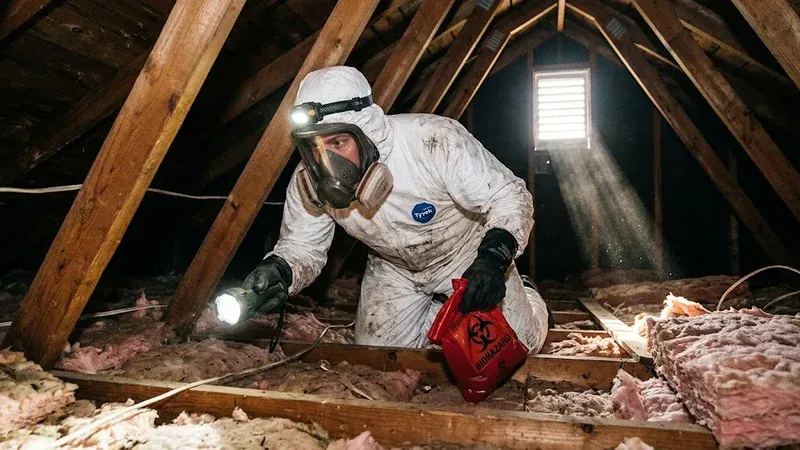
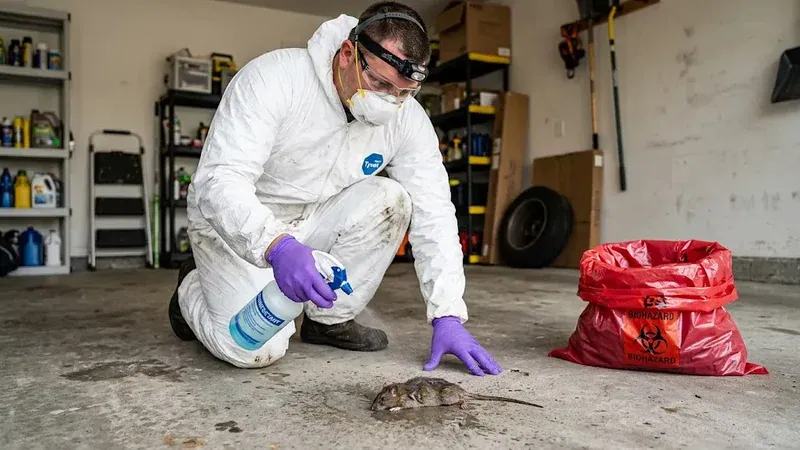
We wear gloves and protective gear, wet the carcass with disinfectant, and place it in sealed double bags for safe disposal.
3. Disinfect the Area
We wet-clean the spot where the body lay. We never sweep or vacuum dry material, because dust can carry germs into the air.
4. Remove Soiled Material
Insulation, nesting material, and droppings near the carcass hold odor and bacteria. We bag the soiled material instead of leaving it behind.
5. Find the Entry Point
One dead rodent means rodents have a way inside. We look for the gap that let it in and explain how to seal it.
6. Check for Live Rodents
A carcass often signals more activity. We check for droppings, gnawing, and fresh runways, then tell you what we find.
Signs a Rodent Died Inside Your Home
A dead rodent announces itself, but the clues look different from room to room. Learn the signs so you can describe them clearly when you call. Clear details help us plan the right tools and the right access.
The Smell
A dead rodent smells like rotting meat, sour cabbage, or sulfur. Some people also notice a sharp ammonia note from rodent urine. A dead mouse produces a smaller smell than a dead rat, but a mouse in a closed wall can still cause a strong odor. The smell starts faint and grows stronger over several days.
The Clues Around the Smell
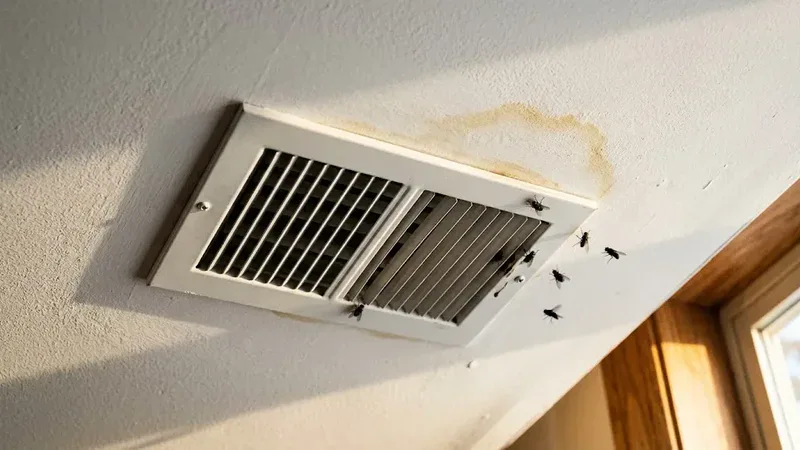
- Flies or maggots near a vent, ceiling light, baseboard, or window
- A brown or yellow stain spreading on a ceiling or wall
- Scratching, gnawing, or squeaking that stopped a few days ago
- A dog or cat that sniffs, paws, or stares at one spot
- Droppings, grease marks, or gnawed boxes near the odor
- A smell that grows stronger when the heating or air conditioning runs
Why the Smell Seems to Come From Everywhere
Air travels through gaps around pipes, outlets, vents, and framing. Because of that airflow, the strongest smell often sits a few feet away from the carcass, not directly on top of it. Homeowners often open the wrong wall or tear out the wrong section of insulation for this reason. A methodical search saves you from needless damage.
Where Dead Rodents Hide in California Homes
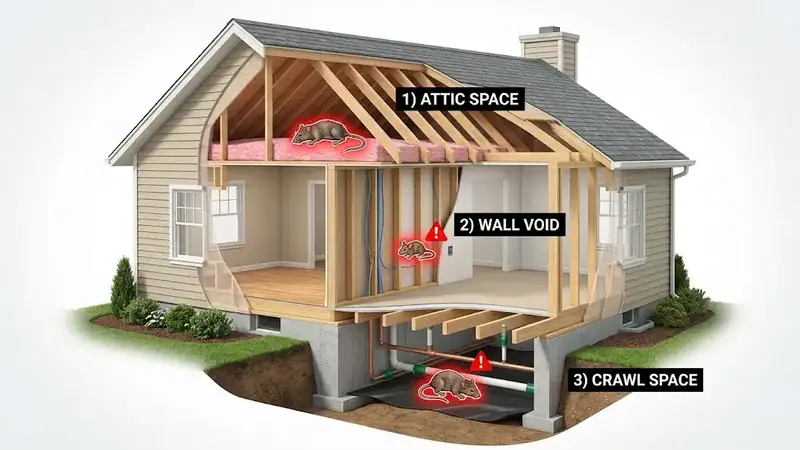
Rodents die where they hide. Mice and rats pick warm, dark, quiet spots, so those same spots hold the carcass. California homes offer plenty of them. These are the six places our field representatives check first.
Attic Insulation
Roof rats favor attics. A carcass often lies under or inside insulation, and the insulation absorbs the odor and holds it for weeks.
Wall Voids
Rodents travel inside walls and die between studs. Access depends on the wall type, and some walls need a small opening.
Crawl Spaces and Subfloors
Norway rats and mice favor low, damp, undisturbed areas. Pipes, vapor barriers, and stored items hide the body.
Ducts and Vents
Warm ductwork attracts rodents. A carcass inside or near a duct spreads the odor to every room that shares the system.
Garages and Storage
Boxes, shelves, and stacked items give rodents cover. Many carcasses sit behind or beneath stored belongings.
Kitchens and Appliances
Rodents travel behind refrigerators, stoves, dishwashers, and cabinets. A carcass in this area stays close to food and prep surfaces.
Cars, RVs, and Stored Vehicles
Rodents also nest in cars, trucks, campers, and RVs, especially vehicles that sit unused. The CDC advises people to clean these vehicles carefully and wear gloves when they remove rodents or nesting material. If you smell something rotten when you start the engine or turn on the vents, check the engine bay and the cabin air intake, and call us if you find a carcass you cannot reach.
When to Call for Dead Rodent Removal Right Now
Some people wait a week and hope the smell fades. A few days of patience works for a single mouse in an open space, but it fails in most real homes. Call right away in these situations:
- The smell grows stronger each day instead of weaker
- You see flies, maggots, or a stain spreading on a ceiling or wall
- The carcass sits in a wall, attic, crawl space, or duct you cannot reach
- A child, pet, pregnant person, or someone with a weak immune system or asthma lives in the home
- You run a restaurant, store, clinic, or office, and the smell reaches customers or staff
- You rent out the property and a tenant reports the smell
- You used poison bait, and you now smell a carcass you cannot find
Why Speed Matters
A carcass attracts flies, and flies lay eggs. Fluids from the body soak into insulation, drywall, and wood, and those materials hold odor long after the animal dries out. The sooner a field representative removes the source, the less material you need to replace. We run a 24/7 dispatch line, so you can call at night or on a weekend.
How to Book Dead Rodent Removal With PestPunt
Booking takes one phone call. Here is exactly what happens from your first call to the arrival of your field representative.
Call the 24/7 Dispatch Line
Call (888) 217-6759 at any hour. A dispatcher answers and starts with one question: where do you smell it?
Describe the Smell and the Location
Tell us which room smells, how strong the smell is, and when you last heard rodents. Mention flies, stains, and pet behavior.
Share the Property Type
Tell us whether you own a house, rent an apartment, or manage a business. Mention attic access, crawl space access, and any poison you used.
Confirm Your City and Address
We serve California statewide. Give us your city and street address so we can dispatch the nearest field representative.
Receive Your Next Step
The dispatcher explains what to expect on site and how to prepare. We do not guess at prices on the phone or on this page.
Meet Your Field Representative
Your representative travels directly to your property. You do not visit an office, and you do not need to move anything heavy before they arrive.
What to Tell the Dispatcher
Strong details speed up the search. Have these facts ready:
- The room or rooms where the smell is strongest
- The number of days since the smell started
- Whether you saw or heard rodents before the smell began
- Whether you used poison, glue boards, or snap traps
- How you can reach the attic, crawl space, or garage
What Happens During a Dead Rodent Removal Visit
Our field representatives follow a set order so they protect your home, your health, and their own. This is the process from arrival to cleanup.
Walk the Property and Trace the Odor
Your representative starts where the smell is strongest, then tests nearby rooms. They check where airflow could carry the odor away from the source.
Inspect Hiding Places
They check the attic, wall access points, crawl space, ducts, garage, and appliance gaps. They look for droppings, gnaw marks, and runways that point to the body.
Put On Protective Gear
They wear gloves and use a respirator when the space calls for one. Attics and crawl spaces call for more protection than an open garage.
Wet, Remove, and Double-Bag
They spray the carcass and the nearby surface with disinfectant, let it soak, lift the body, and seal it in two bags. They bag soiled insulation and nesting material the same way.
Clean and Treat the Area
They wipe the surface with disinfectant and treat the area to reduce lingering odor. They never dry-sweep or vacuum debris.
Explain Findings and Next Steps
They show you where the rodent entered, tell you whether other rodents remain, and explain how to seal the gap and prevent a repeat.
How Long Does a Dead Rodent Smell Last?
The honest answer is days to several weeks. Pest control industry guidance says a carcass can take three weeks or more to break down completely, and some odor can linger after the source is gone. Several factors decide how long the smell lasts in your home.
| Factor | How it changes the odor | What it means for you |
|---|---|---|
| Size of the animal | A dead rat produces more odor than a dead mouse. | Large rodents need faster action. |
| Temperature | Heat speeds decomposition and strengthens the smell. | Hot attics in summer create fast, intense odor. |
| Humidity and airflow | Moisture strengthens odor. Airflow spreads it. | The smell may reach rooms far from the body. |
| Location | Insulation, drywall, and wood absorb fluids and odor. | Soiled material may need removal, not only deodorizing. |
| Number of carcasses | Several dead rodents multiply the smell. | A repeat smell often points to more rodents. |
Why Air Fresheners Fail
Air fresheners and odor absorbers mask the smell for a few hours. They do not remove the source. Odor control works best after a technician removes the carcass and the soiled material, because treatment then reaches the surface that holds the smell. Ventilate the room by opening windows and running fans, as long as the air does not push the smell into other rooms.
Health Risks of Dead Rodents: What CDC and California Health Officials Say
A dead rodent is not only a smell problem. Rodents carry germs, and their fleas, urine, droppings, and nests can carry them too. The risk varies by species and location, and most dead mice in a California home pose a low risk when you handle them correctly. The risk rises when you stir up dust, handle a carcass bare-handed, or clean a closed space without protection.
The CDC guidance on cleaning up after rodents tells people to wear gloves and to spray dead rodents and nests with disinfectant. It also recommends sealing the body in a bag and washing hands after removing the gloves. We follow the same wet-clean principles on every job.
Where the Risk Comes From
- Hantavirus can spread when people breathe dust from rodent urine, droppings, or nests.
- Fleas leave a dead rodent to find a new host, which can include people and pets.
- Bacteria from a decomposing body can contaminate surfaces and soiled material.
- Dry sweeping or vacuuming puts contaminated dust into the air.
What Lowers the Risk
- Wear rubber, latex, vinyl, or nitrile gloves.
- Spray the carcass and the area with disinfectant and let it soak.
- Seal the body in a bag, then place it in a second bag.
- Wash your gloved hands, remove the gloves, then wash again with soap and warm water.
A Note on Plague in California
The California Department of Public Health reports that plague circulates among certain wild rodents in parts of California, mostly ground squirrels, chipmunks, and woodrats in rural and mountain areas. Hungry fleas leave a dead rodent to feed on other animals, including people. Plague is rare, and a dead house mouse in a city home does not signal plague. Still, the state advises people not to touch sick or dead wild rodents. If you find a dead rodent with no visible injury in a camp, cabin, or recreation area, report it to your local health authority.
Why Poison Baits Often Create the Dead Rodent Problem
Many dead rodent calls start with a bait station. Poison does not kill on the spot. A rodent eats the bait, wanders off to a quiet place inside the structure, and dies there. That place is often a wall void, an attic, or a crawl space.
The UC Integrated Pest Management Program advises people not to use rodenticide baits indoors, because dead rats create bad odors. It also advises sealing buildings before baiting outside so poisoned rats cannot get back in to die. UC IPM also notes that California law limits which rodenticides people can use, and licensed professionals handle the majority of available products.
Three Problems With Indoor Poison
- Hidden carcasses. Poisoned rodents die out of sight, and you smell them before you find them.
- Pet and wildlife exposure. Dogs, cats, and wildlife can eat a poisoned rodent and take in the poison second-hand.
- False confidence. Poison does not fix the entry point, so new rodents arrive and the cycle repeats.
What We Recommend Instead
Trapping and exclusion keep the carcass where you can see it. A snap trap leaves the body at the trap, and exclusion closes the gap so no more rodents enter. If you already used poison, tell the dispatcher. We then plan for a hidden carcass before we arrive.
Which Rodent Died? Mouse, Rat, and Other Species
Knowing the species helps us predict where the body lies and which safety steps matter most. You often cannot tell from the smell alone, so we use droppings, gnaw marks, and location as clues.
| Rodent | Where it usually dies | Clues around the carcass | Removal note |
|---|---|---|---|
| House mouse | Wall voids, behind appliances, garages, cabinets | Droppings about 1/4 inch long, small gnaw marks | Small body, but a closed wall can still hold strong odor. |
| Roof rat | Attics, upper wall voids, near rooflines and trees | Larger droppings, rub marks along beams and pipes | Attic heat speeds decomposition. Insulation often needs removal. |
| Norway rat | Basements, crawl spaces, ground floors, near foundations | Burrows, larger droppings, gnawing on low pipes and wood | Damp spaces hold odor. Check burrow entries outside. |
| Deer mouse | Cabins, sheds, garages, rural and foothill homes | Nests in stored items, droppings in boxes and vehicles | Deer mice can carry hantavirus. Use full wet-clean precautions. |
| Woodrat, squirrel, chipmunk | Rural lots, foothills, and mountain cabins | Stick nests, burrows near the structure | Report unexplained dead wild rodents to local health officials. |
UC IPM notes that roof rats are agile climbers with tails longer than their heads, and that Norway rats favor basements, woodpiles, and the ground floor of buildings. That difference matters, because it tells us whether to look up in the attic or down near the foundation first.
Dead Rodent Removal Across California
California covers coastal cities, hot inland valleys, dense urban blocks, and mountain foothills. Each setting changes where rodents die and how fast the smell grows. PestPunt operates as a mobile service area business, so our field representatives drive to you anywhere in the state.
Southern California
Los Angeles, Long Beach, and San Diego homes often have attics, palm trees, citrus trees, and dense landscaping that give roof rats an easy route to the roof. Warm weather also speeds up decomposition. After we remove a carcass in Los Angeles, many customers also need droppings removed, and our rodent droppings clean-up service in Los Angeles page explains that next step.
San Francisco Bay Area
San Francisco, Oakland, and San Jose have older homes, tight crawl spaces, and shared walls. Rodents travel along those shared walls, and a carcass in one unit can smell in the unit next door. Property managers in these cities benefit from a fast, documented response.
Central Valley and Sacramento
Hot summers in Sacramento and Fresno cook attics, and a carcass breaks down fast in that heat. Agricultural edges also bring rodents toward homes. If you want a broader plan for the whole property, read about our rodent pest control in Sacramento work.
Foothills and Mountain Homes
Cabins and rural homes often host deer mice and woodrats. These properties call for extra care, because the CDC links deer mice to hantavirus and California health officials monitor plague in some wild rodent populations.
Dead Rodent Removal for Homes and Businesses
Homeowners, Renters, and Landlords
- Removal from attics, walls, crawl spaces, garages, and vents
- Clear communication with tenants and property owners
- Guidance on sealing entry points and preventing repeats
- Advice on when to repair stained drywall or replace insulation
Restaurants, Stores, Offices, and Property Managers
- Fast response when smell reaches customers or staff
- Careful work near food areas, storage, and shared spaces
- Scheduling that respects business hours
- Notes on findings that help you plan follow-up work
A smell that reaches customers costs a business money and trust. If you manage a commercial space, call us as soon as you notice the odor, and tell the dispatcher about your hours and access so we can plan the visit around your operation.
After Removal: Cleanup, Odor Control, and Sealing
Removing the body ends the source of the smell. Three jobs finish the work: cleanup, odor control, and sealing. Skip any one of them, and the problem tends to come back.
Cleanup
We bag soiled insulation, nesting material, and droppings near the carcass. If droppings spread across a larger area, you may need a full decontamination. Our rodent droppings clean-up service in Los Angeles page explains how that work runs for Los Angeles properties, and the same principles apply statewide.
Odor Control
After we remove the source, we treat the surface that held the smell. Ventilation helps the remaining odor fade, and you can open windows and run fans while it clears. If the smell stays strong after removal, tell us, because it may point to a second carcass.
Sealing Entry Points
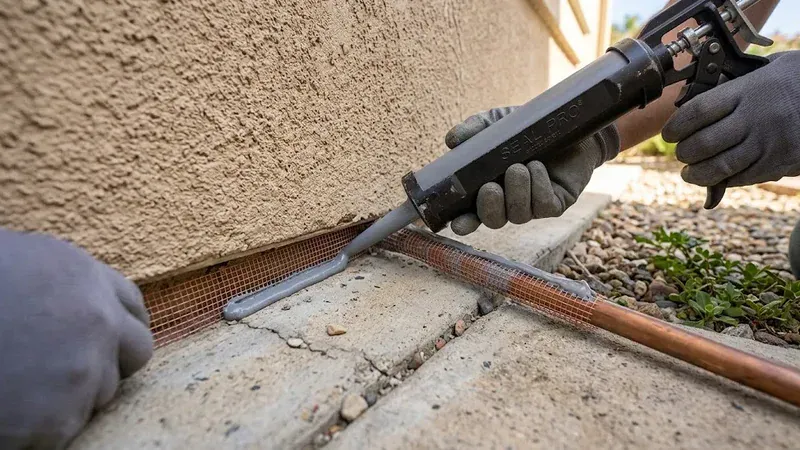
Mice use gaps about a quarter inch wide, and rats use gaps about half an inch wide. Check the roofline, vents, pipe and wire penetrations, garage doors, and foundation gaps. Use hardware cloth, metal flashing, or steel mesh with a durable sealant. Expanding foam alone fails, because rodents chew through it.
How to Choose a Dead Rodent Removal Provider in California
A dead rodent call looks simple, but the quality of the work varies. Use these questions to compare any provider, including us.
- Do you locate the carcass, or do you only spray deodorizer?
- How do you protect your crew and my family during removal?
- Do you remove soiled insulation and nesting material?
- Will you find and explain the entry point?
- Can you share your licence and insurance details, and how do I confirm them with the licensing agency?
- What do you do if you cannot find the carcass on the first visit?
Good Signs
- The provider asks detailed questions about the smell and location.
- The provider explains the process before the visit.
- The provider talks about sealing and live rodents, not only removal.
- The provider follows wet-clean safety methods.
Warning Signs
- The provider promises a guaranteed smell-free result before inspecting.
- The provider pushes poison baits as the only answer.
- The provider sprays fragrance and leaves without searching.
- The provider refuses to explain safety steps.
How to Prepare Before Your Field Representative Arrives
A little preparation saves time on site. You do not need to clean anything, and you should not try to fix the problem first. Follow these steps:
- Clear a path to the attic hatch, crawl space door, or garage storage area
- Keep pets and children away from the smell source
- Leave the carcass, droppings, and nests untouched
- Write down where you heard activity and where the smell is strongest
- Tell us about any poison, traps, or recent repairs
- Open a window in the room with the smell, if the air does not push it elsewhere
If You Find a Single Dead Mouse in a Trap
You can handle a single dead mouse in an open, ventilated space if you follow CDC-style precautions. Put on rubber, latex, vinyl, or nitrile gloves. Spray the mouse, the trap, and the surface with disinfectant and let it soak. Lift the mouse into a plastic bag, seal it, and place that bag inside a second bag. Disinfect your gloves, remove them, and wash your hands with soap and warm water. Never sweep or vacuum dry droppings.
Call us if you cannot see the body, if the carcass sits in a wall or attic, or if you find several dead rodents.
Common Mistakes With Dead Rodent Removal
1. Waiting It Out
A carcass in a closed space keeps smelling for days or weeks and attracts flies. Early removal limits damage.
2. Masking the Smell
Air fresheners hide the odor for a few hours. They never remove the source.
3. Cutting Walls Blindly
Airflow carries the smell away from the body. Trace the odor first, then open the smallest possible access point.
4. Sweeping or Vacuuming
Dry cleaning puts dust into the air. Wet the area with disinfectant first.
5. Using Poison Indoors
Poison creates hidden carcasses and exposes pets and wildlife. Use traps and exclusion instead.
6. Skipping the Entry Point
If you remove the carcass but leave the gap open, new rodents arrive. Always seal the entry point.
Frequently Asked Questions About Dead Rodent Removal in California
The cost depends on where the carcass lies, how hard the access is, and whether cleanup and sealing are needed. PestPunt does not publish prices on this page. Call (888) 217-6759, describe the smell and the location, and the dispatcher will explain your next step.
A dead rodent smell can last from a few days to several weeks. Size, heat, humidity, airflow, and the location of the body all change the timeline. Odor can linger in insulation and drywall after the animal dries out, so removing the source gives the fastest relief.
Often, yes. A field representative traces the odor, checks nearby access points, and chooses the smallest opening that reaches the body. Some walls need an access cut, and some do not. We explain your options before work begins, so you decide how to proceed.
Yes, bare-handed contact carries risk. Rodents can carry hantavirus and fleas, and dry dust can spread germs. The CDC advises gloves, disinfectant, and double-bagging. Never sweep or vacuum droppings. If you cannot reach the body safely, call us instead of handling it yourself.
PestPunt serves California statewide, and we run 24/7 phone dispatch. We operate as a service area business, so we keep no office for visits. Our field representatives travel directly to your property in cities like Los Angeles, San Diego, San Jose, San Francisco, Fresno, Sacramento, Long Beach, and Oakland.
Eventually the body dries out and the smell fades, but that process can take weeks. During that time, flies and odor can spread, and fluids can soak into insulation and drywall. Removing the source ends the smell sooner and reduces the material you may need to replace.
We advise against indoor poison. Poisoned rodents often die inside walls, attics, and crawl spaces, and the smell follows. Poison can also expose pets and wildlife. UC IPM advises against indoor baits for this reason. Trapping and sealing entry points give you better control.
Yes. A dead rodent usually means rodents have a way inside. Our field representatives look for entry points, droppings, and fresh activity, then explain how to seal gaps and control remaining rodents so you do not face another carcass.
Final Takeaways
A dead rodent calls for source removal, not air freshener. Trace the odor, find the carcass, remove it with gloves and disinfectant, bag it twice, and clean the surrounding area. Avoid indoor poison, because it creates hidden carcasses. Seal the entry point after removal, and check for live rodents so the problem does not return.
If the smell is strong, the body sits in a wall or attic, or you do not want to handle it yourself, call PestPunt at (888) 217-6759. Our field representatives travel directly to your property anywhere in California.
Mobile Rodent Control Services
Remove the Dead Rodent and the Smell Together
A dead rodent will not fix itself, and the smell will not wait. Call (888) 217-6759 to describe what you smell and where, and our field representatives will travel directly to your California property.