
Signs of Rodents in the Garage: What Homeowners Should Check First
Your garage is the easiest door into your home for mice and rats. Cluttered shelves, pet food, warm engines, and small gaps under the door create an ideal hideout. This guide shows you the signs to look for, the spots to check, and the steps to take before rodents move inside.
Signs of Rodents in the Garage — At a Glance
What to look for: Droppings, gnawed packaging, nest material, rub marks, paw prints in dust, and a musty odor.
Where to look: Along walls, behind shelving, under workbenches, around the water heater, and inside vehicles.
Safety first: Wear gloves and a respirator, wet any droppings, and never sweep or vacuum them dry.
Next step: Control the rodents first, then seal gaps and remove stored clutter that gives them cover.
Why Rodents Choose Your Garage First
Most homeowners expect rodents in the kitchen. In practice, many infestations start in the garage. The garage sits at the edge of your home, it has doors that rarely seal fully, and it holds items rodents want: pet food, birdseed, cardboard, rags, and quiet corners.
A garage also offers warmth. Water heaters, freezers, and recently parked cars give off heat, especially on cool California nights. Rodents move toward those areas and often build nests next to them. When the garage connects to the house through a shared wall, a utility penetration, or a door with a worn sweep, rodents follow the same route inside.
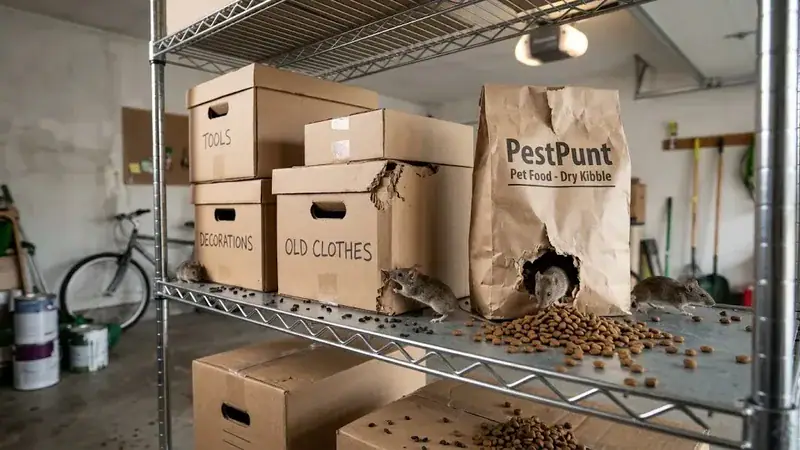
Four Features That Attract Rodents
- Gaps at the door: A worn rubber seal at the bottom of the garage door leaves room for a mouse. UC IPM notes that rats can squeeze under a door with a gap of only about 1/2 inch.
- Clutter: Stacked boxes and loose fabric give shelter and nesting material.
- Food sources: Pet food, birdseed, and fertilizer with grain content invite feeding.
- Warm machinery: Water heaters, freezers, and car engines give heat.
Droppings: The First Sign Most People Find
Droppings are the easiest sign to confirm. Mouse droppings are small, dark, and pointed at the ends. Rat droppings are larger and blunter. Fresh droppings look dark, moist, and shiny, while old droppings look dry, gray, and crumbly.
Where to Find Droppings in a Garage
- Along the base of walls, where rodents prefer to travel
- Behind and beneath workbenches and storage shelves
- Inside cardboard boxes and plastic totes with loose lids
- Around the water heater and the furnace closet
- Near pet food, birdseed, and trash cans
- On top of car tires and the ledges of wheel wells
The amount of droppings gives you a rough clue about activity, but it never gives you an exact count. A small pile may come from one animal that visits often. Treat any fresh droppings as a reason to inspect further and to use the safe cleanup rules below.
Gnaw Marks and Damaged Items
Rodent teeth never stop growing, so rodents gnaw constantly. In a garage, they chew cardboard boxes, pet food bags, plastic bins, wood trim, insulation, hoses, and wiring. For a closer look at how to read these marks, see our guide to chew marks on wood vs wire.
Common Garage Gnaw Targets
- Food packaging: Torn corners and small holes in bags of dog food, birdseed, or grass seed.
- Cardboard and paper: Shredded boxes, often a nest source.
- Door seals: Chewed rubber at the base of the garage door.
- Plastic and hoses: Nibbled edges on bins, sprinkler lines, and dryer hoses.
- Wiring: Stripped sheaths on door opener cables, extension cords, and freezer cords.
Fresh gnawing looks pale and sharp. Old gnawing looks dark and smooth. If you notice fresh marks, mark the location and check again in two days.
Nests and Shredded Material
A nest is a pile of soft material that rodents shred and arrange into a cup or ball. Mouse nests are usually softball size or smaller. Rat nests are bulkier and often include mixed debris. In a garage, look inside stacked boxes, behind appliances, within old furniture, inside the engine bay of a parked car, and in the folds of stored blankets.

What Nest Material Looks Like
Look for shredded paper, fabric fibers, insulation, dry leaves, and pet food mixed together. A musky odor and a cluster of droppings near the pile confirm that rodents use the spot. Do not pick the nest up with bare hands. Leave it in place, photograph it, and follow the wet cleanup steps after you control the rodents.
Rub Marks, Tracks, and Noises
Rodents use the same paths repeatedly. Their fur and body oils leave dark, greasy smudges on walls and pipes. They also leave tracks in dusty places and sounds you can hear on a quiet night.
Signs of Travel Routes
- Rub marks: Dark smears along baseboards, pipes, and beams where bodies brush past.
- Footprints and tail trails: Tiny prints or swept lines in dust on shelves or the floor.
- Scratching and scurrying: Noise from walls, ceilings, or stored boxes, often at night.
- Squeaks: High, short sounds near nests.
- Odors: A stale, ammonia-like smell in closed cabinets or corners.
Pets may also signal activity. A dog that sniffs the same shelf or a cat that stares at a corner may be noticing rodent scent or sound.
Rodent Signs in Cars and Garage Wiring
Parked vehicles give rodents shelter, warmth, and plenty of soft material. Rodents can nest in engine bays, air filter boxes, and cabin air intakes. They may also gnaw on wires and hoses. If your car stays parked for several days, check it first.
Signs in a Parked Vehicle
- Shredded material in the engine bay or air filter housing
- Droppings on top of the engine cover or in the trunk
- Chewed insulation on wires or hoses
- A new warning light or a vehicle that will not start
- A musty smell from the vents
Wires near the garage ceiling also matter. Chewed garage door opener cables and exposed copper can create an electrical hazard. Turn off power to the affected circuit and call a licensed electrician before you touch the cable.
How to Inspect Your Garage for Rodents: Step by Step
A calm, methodical inspection takes less than an hour. Wear gloves and a respirator, and work from the door inward.
Check the Garage Door Seal
Close the door and turn off the lights during the day. Look for light along the bottom and sides. Any visible gap needs attention, and a chewed rubber seal needs replacement.
Walk the Walls Slowly
Shine a flashlight along the base of each wall. Look for droppings, rub marks, and small holes. Rodents prefer to run next to walls rather than across open floor.
Inspect Shelves and Storage
Lift lids and move boxes carefully. Check the bottom shelf first. Look inside bags of pet food and seed for holes and droppings.
Examine Appliances and Utilities
Check behind and beneath the water heater, freezer, and washer. Look at the gaps where pipes and wires pass through walls. Photograph every opening you see.
Look Above Your Head
Scan rafters, the garage ceiling, and the cables around the door opener. Note any shredded insulation or stripped wire sheaths.
Record and Rank What You Find
List each sign with a photo and a date. Rank the signs by freshness. Fresh droppings, shiny gnaw marks, and active nests tell you to call for help soon.

How to Secure Your Garage After You Find Signs
Control comes before closure. Remove rodents first, and then close the routes they use.
Begin Rodent Control
Place snap traps along the walls where you saw droppings, or call a professional. Keep traps away from children and pets. Check them daily.
Remove Food Sources
Store pet food, birdseed, and seed in metal or thick plastic containers with tight lids. Move trash cans away from the garage wall.
Declutter and Lift Storage
Move boxes onto shelves off the floor and a few inches from the wall. Replace cardboard with sealed plastic bins where you can.
Replace the Door Seal
Install a new bottom seal and side weatherstripping on the garage door. Choose a seal that fits tightly with no visible gap.
Seal Openings With Metal
Pack steel wool or hardware cloth into gaps larger than 1/4 inch around pipes and wires, then finish with sealant. See how to spot rodent entry points around your home for a full list of spots.
Clean and Monitor
After control, clean the area with wet methods. Recheck the garage weekly for a month and keep the traps in place until signs stop.

What We See in California Garages by Region
Garage rodent problems vary across California. PestPunt field representatives travel to properties statewide, and the same patterns repeat in each region.
Los Angeles and Long Beach
Detached garages in Highland Park (90042) often have older wood doors and gaps at the sill. In Long Beach neighborhoods such as Belmont Shore (90803) and Bixby Knolls (90807), garages often open onto alleys, so trash cans and open doors invite rodents. Read about our Long Beach rodent control service or our Los Angeles service.
San Jose, Sacramento, and Fresno
In San Jose, Willow Glen (95125) and Rose Garden (95128) have mature fruit trees and attached garages, which attract roof rats. In Sacramento, East Sacramento (95819) and Oak Park (95820) feature older garages with wooden framing. In Fresno, Fig Garden (93704) properties have large lots with outbuildings. Our pages for San Jose and Sacramento explain how dispatch works.
San Diego and Coastal Areas
San Diego homes near canyons, such as North Park (92104), often see rats traveling along fences and ivy toward the garage. Trim vegetation away from the roofline and the garage walls.
Garage Rodent Signs by Location and What They Mean
This table matches common signs to the spot where you find them. Use it to decide what to inspect next.
| Location | What You May See | What It May Mean | Next Action |
|---|---|---|---|
| Door bottom | Chewed seal, daylight gap, droppings | Entry point at ground level | Replace seal after control |
| Shelves and boxes | Shredded paper, gnawed bags | Nest or feeding site | Photograph, then wet-clean |
| Water heater area | Droppings, rub marks, warm nest | Warm hiding place | Inspect pipe gaps |
| Ceiling and rafters | Stripped wires, insulation scraps | Roof rat or mouse travel | Call electrician and pro |
| Vehicles | Nest in engine bay, chewed hoses | Shelter in parked car | Inspect before driving |
| Walls | Dark rub marks, small holes | Active travel route | Place traps, seal later |
The table gives clues, not certainty. A technician can confirm the species and the full route during an on-site visit.
Mice or Rats in the Garage?
Mouse and rat jobs use different seal-up sizes and different trap sizes, so identify the species early. The UC IPM house mouse guidelines describe how mice enter through gaps larger than 1/4 inch. The UC IPM rat guidelines explain that rats need roughly a 1/2 inch opening.
- Mice: Small droppings, scratch-like gnaw marks, nests behind boxes.
- Roof rats: Larger droppings, activity overhead, chewed wires near the ceiling.
- Norway rats: Burrows near foundations, larger gnawing at the door base.
If you see mixed signs, assume the larger animal until a professional confirms.
Health Risks and Safe Garage Cleanup
Garages often hold dust, insulation, and old droppings. Disturbing them can put particles into the air. California health officials track hantavirus, and deer mice can enter garages in mountain and foothill areas. Learn more in our guide to hantavirus symptoms and risk in California, and read the CDC steps for cleaning up after rodents.
Wet Cleanup Steps
Open the garage door for at least 30 minutes. Wear gloves and a fitted respirator. Spray droppings and nests with disinfectant until they are wet. Wait the label contact time and wipe up with paper towels. Double-bag the waste and disinfect shelves and floors. Wash your hands with soap and water.
When to See a Doctor
If you develop fever, muscle aches, cough, or shortness of breath in the weeks after cleaning a garage with rodent waste, tell your doctor about the exposure.
DIY Garage Check vs Professional Inspection
A homeowner can inspect a garage safely and can handle small cleanup. Some signs, however, call for professional help right away.
When DIY Works
- You find a few old, dry droppings in one corner.
- No fresh gnaw marks or noise appear.
- You can reach all areas safely.
- You have no signs inside the house.
When to Call a Professional
- You see fresh droppings or active nests.
- Chewed wires or a dead car battery appear.
- You hear scratching at night.
- Signs also appear in the kitchen or attic.
- You cannot find the entry point.
- Someone at home has a respiratory condition.
What We Check During a Visit
A field representative inspects the garage door, the foundation line, utility penetrations, the attic connection, and any stored items. They confirm the species, trace the route to the house, and explain the control and sealing plan in plain language.
Garage Rodent Prevention Checklist
Prevention costs less than repair. Use this checklist each season.
- Replace worn garage door seals and check the sides
- Seal gaps over 1/4 inch with steel wool or hardware cloth
- Keep pet food and seed in metal or thick plastic
- Use sealed plastic bins instead of cardboard
- Keep a clear strip of floor along the walls
- Trim ivy and branches away from the garage
- Inspect parked cars every few days in cold weather
- Keep trash cans away from the door and wall

Six Garage Rodent Mistakes to Avoid
Leaving the Door Open
An open garage door during the day gives rodents free access. Close it when you are not using the space.
Storing Food in Bags
Rodents chew paper and thin plastic quickly. Use metal or thick plastic containers.
Ignoring the Car
A parked car holds warmth and soft parts. Check the engine bay if signs appear.
Sweeping Droppings
Dry sweeping lifts particles into the air. Wet-clean instead.
Sealing First
Seal only after control, or rodents can become trapped and move deeper.
Relying on Poison Alone
Poison may drive rodents to die in walls. Combine control with exclusion and inspection.
Frequently Asked Questions About Rodents in the Garage
The first signs are usually dark droppings along walls and shelves, gnawed boxes or pet food bags, shredded nest material, and greasy rub marks. You may also hear scratching at night. Photograph the signs, avoid dry sweeping, and check how fresh they look before you decide what to do.
Fresh droppings look dark and moist, fresh gnaw marks look pale, and new nest material appears after you clear an area. Place a coin by each sign and recheck in two days. If you see changes, rodents remain active and you should arrange control.
Yes. UC IPM reports that mice can enter through openings larger than 1/4 inch, and rats can use gaps near 1/2 inch. A worn door seal, a gap around a pipe, or a hole in a vent screen may be enough. Inspect these spots first.
Parked engines stay warm for a while after use, and engine bays offer shelter and soft material such as insulation and filter fiber. Rodents may also gnaw on wires and hoses. If a car sits for days, check the engine bay and ask a mechanic to inspect any chewed parts.
Yes, if you use wet methods and protection. Ventilate the space, wear gloves and a respirator, spray with disinfectant until wet, and wipe with paper towels. Never sweep or vacuum dry droppings. The CDC provides detailed steps for safe cleanup.
No. Control first, then seal. If you seal gaps while rodents remain inside, they may chew new routes or retreat deeper into walls. Start trapping or call a professional, confirm that activity stops, and then close each gap with metal mesh and sealant.
Use sealed plastic bins instead of cardboard, keep boxes off the floor, and leave a clear strip along the walls. Store pet food and seed in metal or thick plastic containers. Check stored items every season for droppings, gnawing, and shredded material.
Yes. PestPunt is a California statewide service area business with 24/7 dispatch. Field representatives travel to your property, inspect the garage and connected spaces, identify the rodent, and explain a control and sealing plan. Call (888) 217-6759 to schedule.
Final Takeaways
The signs of rodents in a garage include droppings along walls, gnawed boxes and pet food, shredded nests, rub marks, night noise, and chewed wiring in cars. Fresh, pale, and moist signs mean activity continues. Control rodents first, then replace worn door seals, seal gaps with metal, and remove clutter. Use wet cleanup and never sweep dry droppings. To find the other routes into your home, read our guide on how to spot rodent entry points around your home.
If you see fresh signs or hear noise at night, call PestPunt at (888) 217-6759. Our field representatives travel directly to your California property.
Mobile Rodent Control Services
Stop Rodents Before They Move From the Garage Into Your Home
Garage signs often come before kitchen and attic problems. Call (888) 217-6759 to schedule an on-site inspection anywhere in California and get a clear plan to remove rodents and close their routes.