How to Destroy Rat Burrows in Your Yard: A Complete Removal Guide
A single rat hole in your yard is rarely a single rat. Norway rats live in colonies, and one active burrow entrance usually connects to a tunnel network with multiple exits, a nesting chamber, and food caches. Filling the hole without addressing the colony behind it just sends the rats a few feet over to dig again. This guide walks through how to spot rat holes in yard soil, confirm they're active, and destroy the burrow system for good — plus when it makes more sense to bring in an on-site rodent crew.
What Do Rat Burrows Look Like?
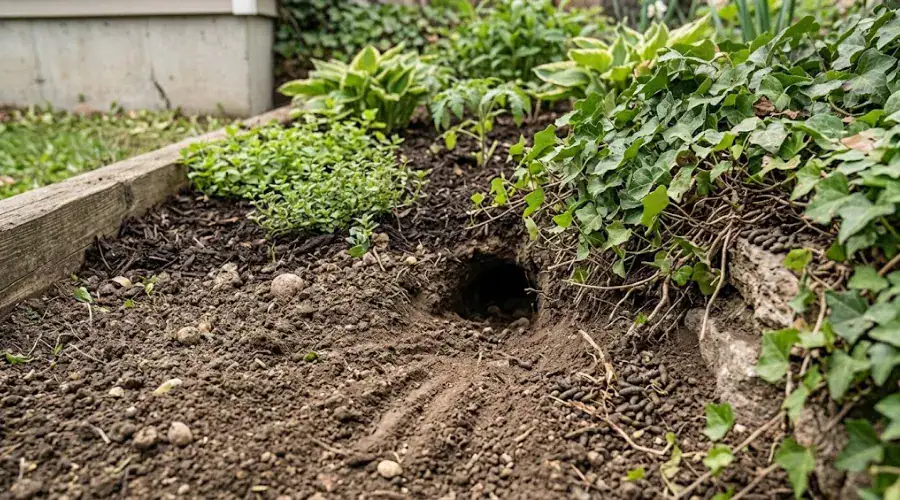
Rat burrows are easy to confuse with mole tunnels, ground squirrel dens, or vole runs, but a few details separate them. A rat burrow hole is typically 2 to 4 inches across with smooth, compacted walls rather than loose or crumbly soil. You'll usually find at least two openings per system — a main entrance used for regular travel and a secondary bolt hole that's kept lightly covered as an emergency exit. Around an active hole, look for a worn dirt path or flattened grass runway leading to cover, fresh droppings (dark, capsule-shaped, roughly ¾ inch long), and greasy rub marks where oil from the rats' fur has darkened the entrance edge over repeated use.
Burrows cluster in predictable spots: along foundations, under sheds and decks, inside compost piles, beneath dense ivy or shrubs, and next to woodpiles or debris that offer cover from predators. Norway rats — the species responsible for the overwhelming majority of yard burrowing in California — prefer ground-level nesting to climbing, which is why yard holes are so common even on properties with no attic activity.
Rat Holes in Yard Soil: How to Tell If They're Still Active
Before you spend time or money treating anything, confirm a hole is currently in use. Lightly pack the entrance with loose soil, mulch, or crumpled paper and check back in 24 hours. If it's been pushed open again, the burrow is active. Other confirmation signs include:
- Fresh, moist droppings clustered near the entrance
- Newly displaced soil that looks darker and looser than the surrounding ground
- Gnaw marks on nearby irrigation lines, wood, or plastic
- A faint ammonia smell around heavily trafficked burrow entrances
- Rustling or scratching sounds near the burrow at dusk, when rats are most active
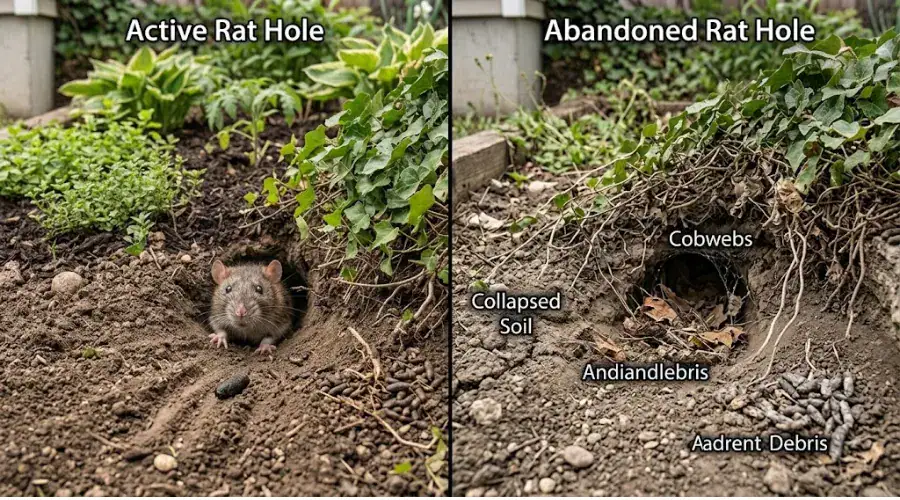
An abandoned hole, by contrast, often has spiderwebs across the opening, undisturbed leaf litter inside, or soil that's eroded and rounded rather than freshly excavated.
Do Rats Burrow Underground? How Deep and How Far They Dig
Yes — Norway rats are capable diggers, and a mature burrow system is more extensive than most homeowners expect. Depth generally runs 12 to 18 inches, though tunnels can reach 3 feet in loose or sandy soil. Horizontally, a single colony's tunnel network can extend 10 feet or more, connecting a main nest chamber, food storage pockets, and multiple escape routes. This is why "just filling the hole" so often fails — you're sealing one doorway into a house with several others.
Burrow depth and complexity also explain why surface-level deterrents (ultrasonic stakes, scent granules scattered on top of soil) tend to underperform: they don't reach the nesting chamber where the colony actually lives.
How to Find Every Rat Burrow Before You Treat the Yard
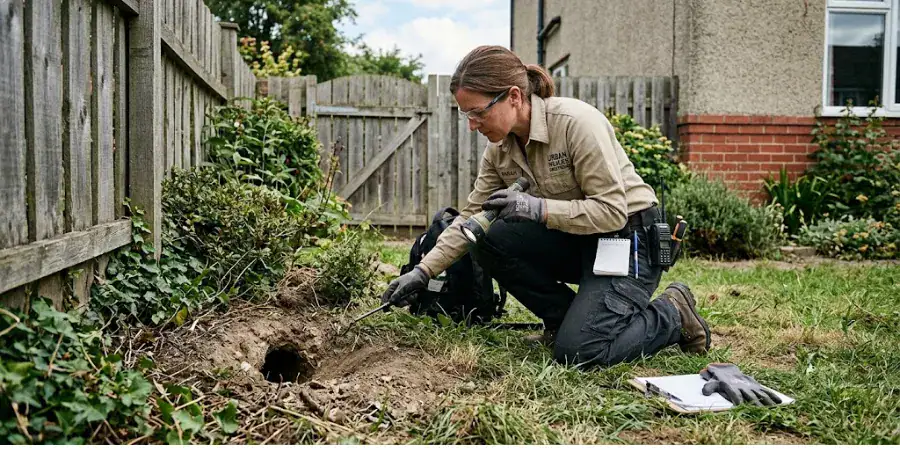
Missing even one secondary entrance means the colony survives whatever treatment you apply to the main hole. Walk the entire perimeter of your yard — especially foundation lines, fence bases, shed undersides, and garden borders — during daylight, since rats are largely nocturnal and burrows are easiest to spot when undisturbed. Use a flashlight to check under decks and dense shrubs where visibility is poor. Mark every hole you find with a small flag or stake, then run the 24-hour paper-plug test on each one to build an accurate map of which entrances are actually in use before you start treatment.
How to Get Rid of a Rat Burrow: Step-by-Step
Once you've mapped active burrows, work through these steps in order. Skipping the food-source step is the single most common reason DIY burrow treatment fails — traps and fumigants only work if rats don't have an easier meal a few feet away.
Cut off food, water, and shelter.
Secure trash cans with locking lids, pick up fallen fruit and birdseed, store pet food indoors, seal compost in a rodent-proof bin, and fix dripping outdoor faucets or irrigation valves. Trim dense ground cover and stacked debris that give rats safe cover near the burrow.
Trap at the entrance.
Place snap traps or covered bait stations directly at each active hole, positioned perpendicular to the opening so rats run straight into them. Peanut butter, nesting material like cotton or string, and dried fruit are effective bait. Check and reset daily, and expect activity to drop noticeably within a week if the colony is fully mapped.
Fumigate where legal and safe.
Carbon monoxide or smoke cartridges rated for rodent burrows can treat the full underground network at once. These are not appropriate near foundations, basements, or gas lines where fumes could migrate indoors, and some California jurisdictions restrict use to licensed applicators — check local rules before purchasing.
Flood small, isolated systems.
For a single shallow burrow well away from structures, some property owners flood the tunnel with a hose to force rats to the surface, then collapse the empty tunnel immediately. This only works on small systems and requires a plan for safely handling rats as they exit.
Fill and seal once confirmed empty.
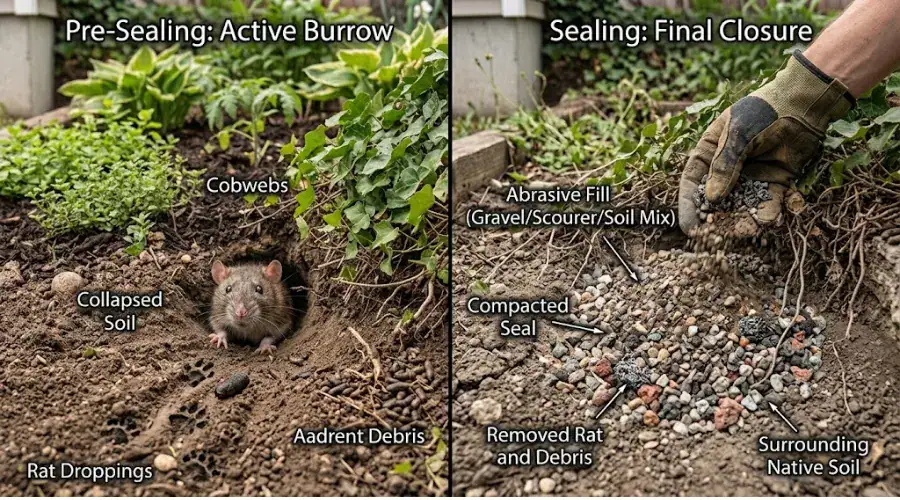
Never fill a burrow you haven't verified is inactive. Pack the tunnel tightly with soil mixed with gravel, crushed stone, or steel wool — abrasive fill is far harder for rats to re-dig than plain dirt — then tamp it down firmly and recheck weekly for two weeks.
If trapping and fumigation clear the burrow but you're finding dead rats in wall voids, crawl spaces, or other hard-to-reach areas afterward, our dead rodent removal service handles safe extraction and odor remediation without you needing to access the space yourself.
Rat Burrows Under a Shed, Deck, or Foundation
Burrows against a structure carry extra risk beyond the rats themselves — extended tunneling can erode soil support near footings and slab edges over time, and a foundation-adjacent burrow often means rats are only inches from finding a gap into the crawl space or wall cavity. If you're already seeing burrow activity at the foundation line, it's worth checking the attic and wall voids for signs of movement indoors, since Norway rats that start in yard burrows frequently establish a second colony inside once a gap is found. Our guide to attic rodent solutions covers how to check for and seal those interior entry points.
How to Stop Rats From Digging Holes in Your Yard Long-Term
Clearing existing burrows only solves half the problem — the yard conditions that attracted rats in the first place will draw new ones unless you address them:
- Bury ¼-inch hardware cloth 6 to 12 inches deep around foundations, sheds, and deck perimeters as a physical digging barrier
- Keep firewood, lumber, and stored materials elevated at least 12 inches off the ground and away from exterior walls
- Trim ivy, ornamental grasses, and dense shrubs back from structures to remove burrow cover
- Replace mulch with gravel in a border strip along foundations — rats find it far harder to dig through
- Inspect compost bins, birdfeeder areas, and pet food storage monthly for spillage that restarts the food supply
Rats vs. Mice: Confirming What's Actually Burrowing in Your Yard
Not every yard hole is a rat burrow — mice occasionally dig shallow surface tunnels, though they're far less common outdoors than in wall voids and attics. Mouse holes tend to be smaller (under 1.5 inches), shallower, and less structured than the multi-chamber systems Norway rats build. If droppings, gnaw marks, and indoor sightings point to mice rather than a yard burrow, our same-day mouse removal service is built specifically for that faster-moving, indoor-focused problem.
When Yard Burrow Removal Needs a Professional
DIY trapping and sealing handles a lot of single-burrow situations, but call in an on-site crew if:
- You've mapped multiple separate burrow systems across the property
- Burrowing runs directly along or under the foundation
- Two or more weeks of consistent trapping hasn't reduced activity
- You suspect the yard colony has already moved indoors
Professional treatment can access fumigants and bait formulations that aren't sold over the counter, and a field inspection catches secondary entrances that are easy to miss from ground level.
Rat Burrow FAQs
Most Norway rat burrows run 12 to 18 inches below the surface, though tunnel systems can extend 3 feet deep and several feet wide when rats have been established for months. Depth depends on soil type — rats dig faster and deeper in loose, sandy, or mulched soil than in compacted clay.
Do not fill it immediately. First confirm it's active by loosely packing the entrance with soil or paper and checking in 24 hours. If it's reopened, set traps at the entrance, clear nearby food sources, and only backfill the tunnel once trapping shows no further activity for at least a week.
No. Moles push soil into raised ridges and volcano-shaped mounds while foraging for grubs, and their tunnels have no visible entrance hole. Rat burrows have a distinct, smooth-edged circular opening 2 to 4 inches wide, usually near structures, woodpiles, or dense vegetation, with a second bolt-hole exit nearby.
A typical Norway rat hole measures 2 to 4 inches in diameter — roughly the size of a tennis ball. The soil around an active hole looks packed and worn smooth from repeated entry and exit, unlike the loose, crumbly edges of an abandoned or insect-made hole.
Yes. Rats commonly burrow along foundation lines, under concrete slabs, and beneath sheds or decks where soil is undisturbed and shaded. Left untreated, foundation burrowing can undermine soil support near footings and create direct access points into crawl spaces.
Only fill a burrow after confirming it's empty. Pack the tunnel tightly with a mix of soil and coarse gravel, crushed stone, or steel wool, then tamp it firmly. Abrasive fill materials are far more effective than plain soil because rats struggle to re-dig through them.
PestPunt — Rat Burrow Removal Service Area
- PestPunt
- Service Area (California Statewide): Providing 100% on-site mobile services directly to your property.
- As a Service Area Business (SAB), we do not have physical office visits. Our local expert field representatives are dispatched directly to your location.
- 24/7 Dispatch Phone: (888) 217-6759
- Email: [email protected]
For additional science-backed detail on Norway rat biology and burrowing behavior, the UC IPM Norway rat pest note and CDC rodent prevention guidance are strong references. If you're evaluating rodenticide or fumigant products, the EPA's rodenticide safety information covers current label requirements, and the EPA's citizen's guide to pest control outlines least-toxic options worth trying before chemical treatment.
Connect with a Professional Burrow Specialist in California
When yard burrows threaten your property or peace of mind, proper mapping and treatment are essential. Reach out to our professionals at (888) 217-6759 to discuss your specific situation and explore mobile burrow removal solutions tailored to your area.
Information on this page is based on established environmental health and sanitation standards. It is provided for educational purposes and is not a substitute for a professional on-site evaluation or direct medical advice. If you suspect an acute health concern related to environmental exposure, consult a registered healthcare provider immediately.