How to Get Rid of Sewer Rats: A Complete Homeowner's Guide
Sewer rats get rid of themselves in exactly one way: you block the pipe they're using before you deal with the rat already inside. Most sewer rat problems start underground, in aging sewer laterals, storm drains, and cracked cleanout caps, which means the fix has to start there too. This guide walks through how to confirm you actually have a sewer rat problem, why properties are especially exposed to it, and the sealing, trapping, and prevention steps that stop it for good.
Sewer Rat Removal — What You Need to Know First
- Sewer rats are almost always Norway rats, and they enter through plumbing, not walls or rooflines.
- A cracked wax ring, an unused floor drain, or a missing sewer cleanout cap is the most common entry point.
- Trapping without sealing the pipe just removes one generation; new rats keep coming.
- A one-way sewer check valve is the single most effective long-term fix for repeat sewer rat activity.
- Rodenticide near sewer lines should stay in secured, tamper-resistant stations only, per EPA guidance.
What Are Sewer Rats?
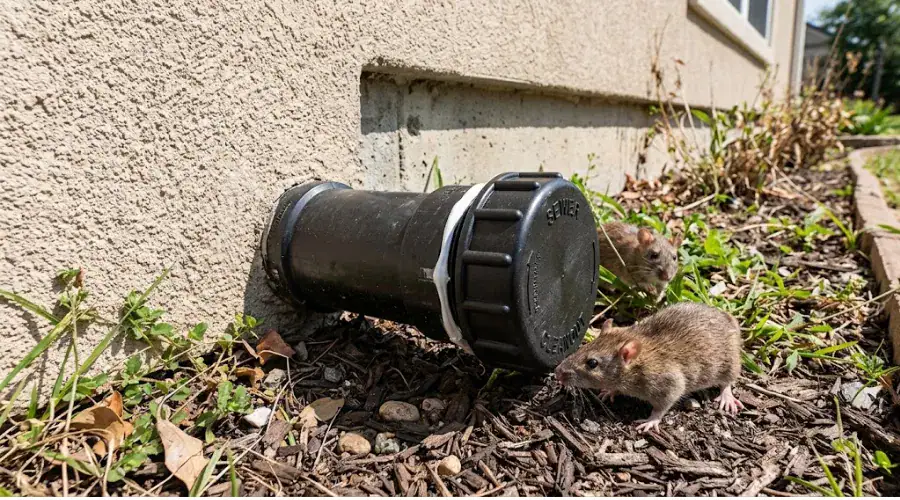
"Sewer rat" describes behavior and location, not a separate species. Typically, the rat living in your sewer system is the Norway rat, a burrowing, ground-dwelling rodent that thrives in the damp, dark, food-rich environment of municipal sewer lines and storm drains. Norway rats swim well, chew through concrete mortar and aging pipe joints, and travel long distances underground between a food source and a nesting site.
Norway Rats vs. Roof Rats: Why the Distinction Matters
Roof rats, another common rat species in many areas, climb and nest above ground in attics, palm trees, and dense vegetation. They rarely use sewer lines as a primary route. If your rat activity centers on a toilet, floor drain, or basement plumbing rather than your roofline or attic, you're dealing with a sewer-dwelling Norway rat, and the fix needs to target the plumbing system directly rather than exterior wall gaps.
Signs You Have Sewer Rats, Not Just Regular Rats
Sewer rat activity produces a distinct pattern of evidence, and reading it correctly saves time and money on the wrong treatment approach.
Physical Signs Near Plumbing Fixtures
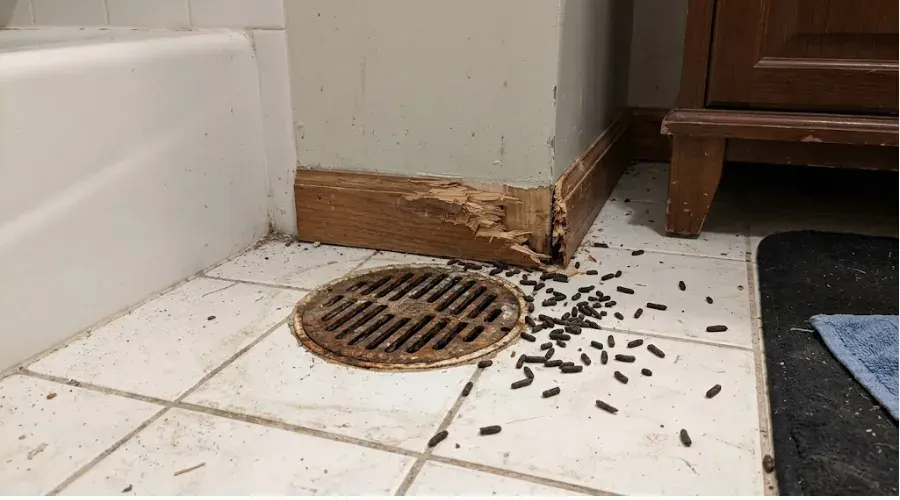
- Droppings clustered near toilets, floor drains, or below-grade cleanouts, roughly three-quarters of an inch long with tapered ends.
- Gnaw marks on PVC or cast iron pipe joints, often where a pipe transitions through a foundation wall.
- Grease smears along baseboards or pipe runs, left by the oils in a rat's fur as it repeatedly uses the same route.
- A strong, persistent ammonia odor near a bathroom or utility area with no other obvious source.
Behavioral Signs Inside the Home
Scratching sounds from inside walls near bathroom plumbing, water movement or splashing in a toilet bowl with no one nearby, and a toilet that seems to refill or bubble on its own are all classic sewer rat indicators. None of these point to a roofline or attic issue, which is why a plumbing-first inspection matters before any trapping begins.
Why Sewer Rats Invade Homes Through Pipes and Drains
Aging municipal infrastructure, drought-cycle soil shifting, and dense urban rat populations combine to make sewer entry a growing problem for modern homeowners.
Aging Sewer Laterals
Many homes, particularly in historical neighborhoods and densely populated urban centers, still run on original clay or cast iron sewer laterals installed decades ago. These materials crack and shift with soil movement, creating gaps large enough for a rat to squeeze through, since an adult Norway rat can fit through an opening about the size of a quarter.
Unused or Dry Fixtures
A bathroom that sees infrequent use lets the water trap in the toilet or floor drain dry out, removing the water barrier that normally blocks sewer gas and rat entry. Vacation homes, guest bathrooms, and unfinished basements are disproportionately affected for this exact reason.
Seasonal Behavior Patterns
Sewer rat activity typically rises from October through March. When cooler, wetter weather sets in, it pushes rats to seek stable, warm shelter underground rather than foraging above ground. Properties in regions with distinct cold or wet seasons see this pattern strongly, while areas with consistent rainfall tend to have steady year-round activity due to reliable underground moisture.
Health Risks Sewer Rats Carry
Sewer rats present a higher contamination risk than typical rodent activity because they move directly through wastewater before entering living space. The CDC's rodent control guidance notes that rodent droppings, urine, and saliva can transmit disease through direct contact or through breathing in contaminated dust. Leptospirosis, salmonellosis, and rat-bite fever are the most relevant risks tied to sewer rat exposure specifically, since these pathogens are concentrated in the wastewater environment rats travel through daily. The CDC's rat-bite fever overview explains that this bacterial infection can develop from a bite, scratch, or even contact with contaminated surfaces, without requiring direct contact with a live rodent.
If a sewer rat dies inside a wall cavity or crawlspace after a DIY trapping attempt, the decomposition creates a separate bacterial and odor problem that requires proper removal and disinfection rather than simple cleanup. Our dead rodent removal service handles this specific situation, locating the carcass and sanitizing the area before odor and bacteria spread further into the structure.
How to Get Rid of Sewer Rats: Step-by-Step
Confirm the Entry Point
Walk the property and check every toilet, floor drain, and exterior sewer cleanout for physical signs of rat entry. A dry-trap fixture or a cleanout with a missing or cracked cap is almost always the source. Run water through unused drains for a few minutes to refill the water trap while you continue the rest of the process.
Install a One-Way Sewer Check Valve
A backwater or check valve installed on the main sewer line allows wastewater to flow out but physically blocks anything, including rats, from traveling back up the pipe. This single fix addresses the root entry route rather than treating individual fixtures one at a time, and it's the step most DIY approaches skip.
Seal Toilet Bases and Drain Openings
Replace any cracked or dried-out wax ring at the base of a toilet, tighten loose toilet mounting bolts, and cover unused floor drains with a fitted metal mesh screen. These gaps are small enough to overlook visually but wide enough for a rat to pass through repeatedly.
What to Check on Older Toilets
Inspect original plumbing fixtures, particularly pre-1990s models with wider traps that are easier for rats to swim through compared to modern low-flow models. If your home still has original fixtures in a rarely used bathroom, prioritize that room first.
Remove Attractants Near Plumbing Areas
Eliminate exposed food, pet food, and standing water that draw rats toward plumbing entry points. Store pet food in sealed containers, fix slow leaks near utility sinks, and clear clutter from crawlspaces and basements where rats might nest once inside.
Trap the Rats Already Inside
Place snap traps or enclosed, tamper-resistant bait stations along confirmed travel paths to eliminate the remaining interior population. Check them daily for the first week, and reset as needed. The EPA's guidance on safe rodent bait use recommends keeping any bait in secured stations inaccessible to children and pets.
Verify the Fix Holds
Re-inspect sealed points monthly for the first three months, since shifting soil and aging pipe joints can reopen gaps. Catching a reopening early is far cheaper than restarting the whole process after a new rat gets back in.
DIY vs. Professional Sewer Rat Removal
| Factor | DIY Approach | Professional Service |
|---|---|---|
| Entry point diagnosis | Visual inspection only, easy to miss underground cracks | Camera-assisted pipe inspection where needed |
| Check valve installation | Requires plumbing skill and permits in some jurisdictions | Coordinated with licensed plumbing partners |
| Bait station placement | Risk of improper, unsecured placement | Placed and monitored per EPA safety standards |
| Dead rodent cleanup | Bacterial exposure risk without proper PPE | Handled with sanitization protocols |
| Follow-up verification | Depends on homeowner consistency | Scheduled re-inspection included |
What Professional Sewer Rat Removal Involves
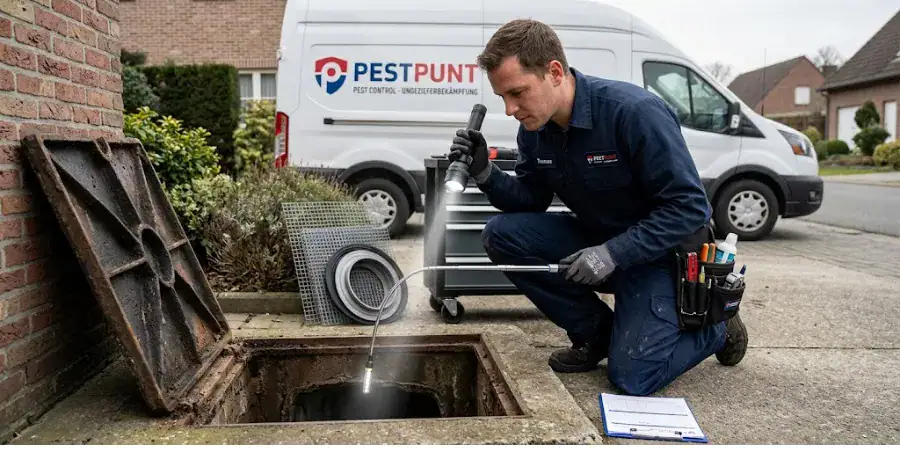
A field technician starts with a full inspection of every plumbing fixture, exterior cleanout, and crawlspace access point on the property, not just the room where activity was noticed. Sewer rats frequently use more than one entry point, so a single-fixture fix often just delays the next intrusion rather than resolving it.
Once entry points are confirmed, the technician recommends the appropriate combination of check valve installation, mesh screening, and sealed bait placement based on the property's specific plumbing layout. If the rats have already moved beyond the plumbing area into an attic space, our attic rodent solutions service covers the exclusion work needed there, since attic entry points require different sealing methods than pipe-level fixes. Properties dealing with a mouse problem alongside sewer rats can also use our same-day mouse removal service, since mice and rats sometimes share the same structural gaps even though they require slightly different trapping approaches.
As a Service Area Business, PestPunt dispatches a local field expert directly to your property for the inspection and treatment. There's no office visit involved; every appointment happens on-site, at the property where the sewer rat activity is occurring.
Preventing Sewer Rats From Returning
- Run water through rarely used drains and toilets at least once a month to keep the water trap intact.
- Check exterior sewer cleanout caps twice a year for cracks or looseness, especially after heavy rain.
- Keep exterior sewer vent pipes on the roof capped with rodent-proof mesh, since some rats attempt entry from above as well as below.
- Store pet food and bird seed in sealed metal or thick plastic containers, since exposed food is the single biggest attractant near any entry point.
- Schedule a plumbing inspection if your property has original sewer laterals older than 30 years, since material fatigue is a leading cause of repeat sewer rat entry.
Sewer Rats and Long-Term Plumbing Damage
Beyond the immediate infestation, sewer rats cause real structural cost over time. Their teeth grow continuously, which drives them to gnaw through PVC, gaskets, and even thin cast iron sections to keep entry points open or widen them for easier passage. A pipe joint compromised this way can develop a slow leak that goes unnoticed for months, leading to foundation moisture issues that cost significantly more to repair than the original rodent problem. Addressing entry points early, before gnawing widens a small crack into a structural gap, is the most cost-effective point to intervene.
Local vector control authorities classify rats as a public health vector precisely because of this combination of structural damage and disease risk, which is why sewer rat activity on a property is treated as a priority issue rather than a routine pest complaint in most municipalities.
Frequently Asked Questions About Sewer Rats
Sewer rats are typically Norway rats (Rattus norvegicus) that live and travel through underground sewer and storm drain systems, entering homes through pipes rather than through walls, attics, or foundation gaps. Regular attic or wall rats are more often roof rats, which climb and nest above ground. Both species can occupy the same property, but sewer rats require plumbing-specific fixes like check valves, not just exterior sealing.
Yes. Rats can swim through trap seals and hold their breath long enough to pass through a toilet's water trap, especially in older homes with wider-diameter pipes or dry, unused bathroom lines. This is uncommon but well documented, and it is the main reason plumbers and pest control technicians recommend closing the lid and installing check valves in properties with confirmed sewer rat activity.
Sewer rat droppings measure about three-quarters of an inch and taper at the ends, while mouse droppings are smaller and rod-shaped. Sewer rats also leave grease marks along baseboards from their oily fur, gnaw through PVC and cast iron pipe joints, and produce a stronger ammonia-like odor near their entry point than mice typically do.
Rodenticide use near sewer lines carries real risk to pets, wildlife, and groundwater if bait is placed loosely rather than in tamper-resistant, secured stations. The EPA restricts several rodenticide active ingredients specifically because of these risks, so most pest professionals favor exclusion and trapping as the primary method, reserving bait stations for interior use only where children and pets cannot access them.
Cost depends on the extent of the plumbing work involved. A straightforward inspection and check valve installation costs less than a job requiring pipe repair, crawlspace sealing, or multiple entry points across a larger property. Professionals usually provide a property-specific quote after a field inspection, since sewer rat jobs vary more than standard interior pest treatments.
Trapping out an active sewer rat population typically takes one to three weeks once entry points are sealed, since remaining rats already inside need to be removed after the pipeline is blocked. Properties with multiple entry points or ongoing sanitation issues nearby can take longer, because new rats keep attempting entry until the surrounding attractants are addressed.
Sewer rats carry the same disease profile as other Norway rats, but their constant contact with wastewater increases the concentration of bacteria like Leptospira on their fur and in their urine. The CDC notes that rodents can spread pathogens through direct contact, droppings, and contaminated water, which makes cleanup after sewer rat activity a higher-risk task than typical rodent cleanup.
PestPunt — Sewer Rat Removal Service Area
- PestPunt
- Service Area (California Statewide): Providing 100% on-site mobile services directly to your property.
- As a Service Area Business (SAB), we do not have physical office visits. Our local expert field representatives are dispatched directly to your location.
- 24/7 Dispatch Phone: (888) 217-6759
- Email: [email protected]
Connect with a Professional Sewer Rat Specialist
When sewer rats are active in your plumbing, proper exclusion and trapping are essential to protect your property and health. Reach out to our professionals at (888) 217-6759 to discuss your specific situation and explore mobile sewer rat solutions tailored to your area.
Information on this page is based on established environmental health and sanitation standards. It is provided for educational purposes and is not a substitute for a professional on-site evaluation or direct medical advice. If you suspect an acute health concern related to environmental exposure, consult a registered healthcare provider immediately.