
How to Spot Rodent Entry Points Around Your Home: A Ground-to-Roof Inspection Guide
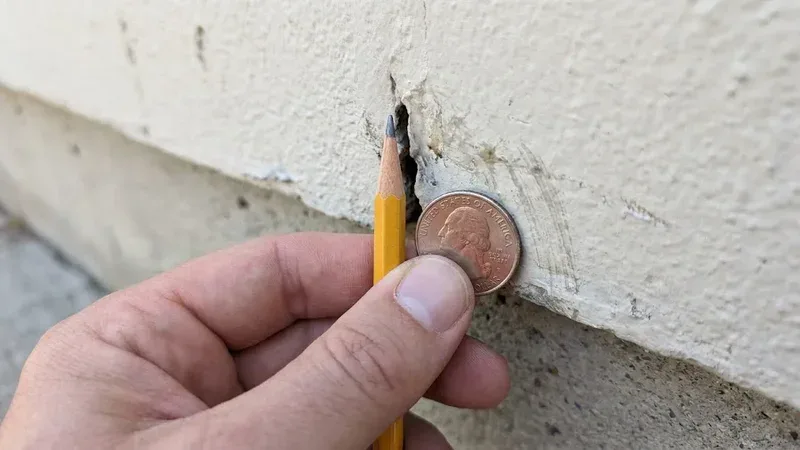
Mice and rats do not need a door. They need a gap the size of a pencil or a coin. This guide walks you around your home from the foundation to the roofline, shows you the entry points we find most often in California, and explains how to close them safely.
Rodent Entry Points — At a Glance
Key sizes: Mouse: larger than 1/4 inch. Rat: about 1/2 inch. If you can fit a pencil in, a mouse may fit too.
Top spots: Door bottoms, utility lines, dryer and foundation vents, garage doors, roof edges, and chimney chases.
Best clues: Grease smears, gnaw marks, droppings, and cobweb-free gaps.
Next step: Trap or treat first, then seal each gap with steel wool, hardware cloth, or sheet metal.
How Mice and Rats Get Into a Home
Rodents use their heads as a measuring tool. If the skull fits, the flexible body follows. The UC IPM house mouse guidelines state that mice can enter through openings larger than 1/4 inch. The UC IPM rat guidelines add that rats can squeeze beneath a door with only about a 1/2 inch gap.
Those sizes are smaller than most people expect. A gap around a plumbing pipe, a missing vent screen, or a worn door sweep can all be enough. Rodents also gnaw to widen a small gap, so a hole that starts at 1/4 inch can grow quickly.
Mice and Rats Use Different Routes
House mice usually stay low and enter through ground-level gaps, door bottoms, and utility openings. Roof rats climb, so they use tree limbs, wires, fences, and rooflines to reach attics. Norway rats burrow and often enter near foundations and drains. Knowing which animal you face tells you where to start looking.
Why Finding Entry Points Matters More Than Trapping Alone
Trapping removes the animals inside. Exclusion keeps new animals out. UC IPM calls exclusion the most successful and permanent form of house mouse control. If you trap without sealing, new rodents often replace the old ones within weeks, because the scent trail and the open route remain.
What Open Entry Points Cost You
- Repeat infestations: The same gap serves every new rodent.
- Wiring and insulation damage: Rodents gnaw once inside. Read our guide to chew marks on wood vs wire to spot it.
- Health exposure: Droppings and urine build up inside walls and attics.
- Energy loss: Gaps let air in and out, along with the rodents.
Clues That Tell You a Gap Is Active
Not every gap is a rodent route. Look for clues that rodents use the opening now.
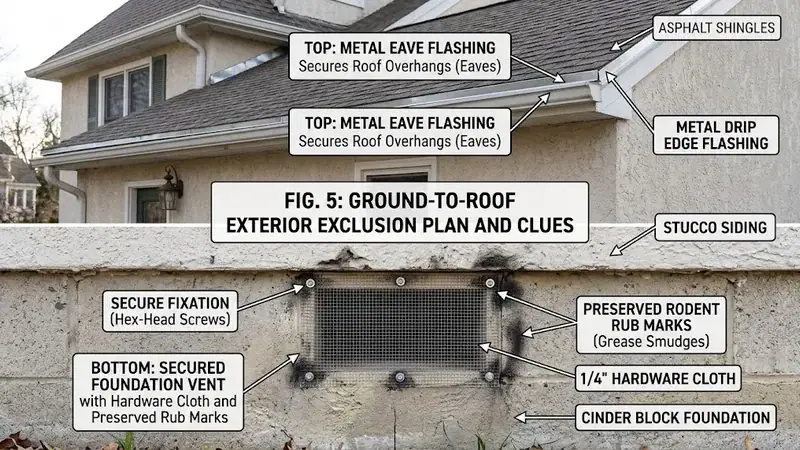
- Grease and rub marks: Dark smudges around a hole where fur and body oil rub the edges.
- Gnaw marks: Fresh, pale tooth marks on the edge of the opening.
- Droppings: Pellets near the gap, inside the gap, or along the nearest wall.
- Clean edges: A gap with no cobwebs or dust while nearby areas look dusty.
- Nest scraps: Shredded paper, fiber, or insulation near the opening.
- Tracks: Tiny prints or tail lines in dust, mud, or fine soil nearby.
A fine dust test can also help. Sprinkle a thin line of unscented baby powder across a suspect gap in a secure indoor spot, and check for prints the next morning. Keep pets and children away from the powder.
Tools and Safety for an Entry Point Inspection
You need only a few tools to inspect your home well. A good flashlight, a mirror, a ruler, and your phone cover most of the work.
- A bright flashlight or headlamp
- A small inspection mirror on a handle
- A ruler or a pencil as a gap gauge
- A phone for dated photos
- Gloves, an N95 respirator, and safety glasses
- Sidewalk chalk or flagging tape to mark each gap
Handle Dust With Care
Crawl spaces, attics, and garages often hold old droppings. Do not stir up dust. Photograph and mark, and do not sweep or vacuum dry material. Our guide to the safe hantavirus cleanup guide explains the wet method.
How to Inspect the Outside of Your Home: Step by Step
Start at the ground and work upward. Walk the whole perimeter slowly, and mark every gap larger than a pencil.
Start at the Foundation
Walk the full perimeter and look for cracks, loose mortar, and holes where the foundation meets the siding. Pay attention to gaps near vents, hose bibs, and gas lines.
Check Utility Penetrations
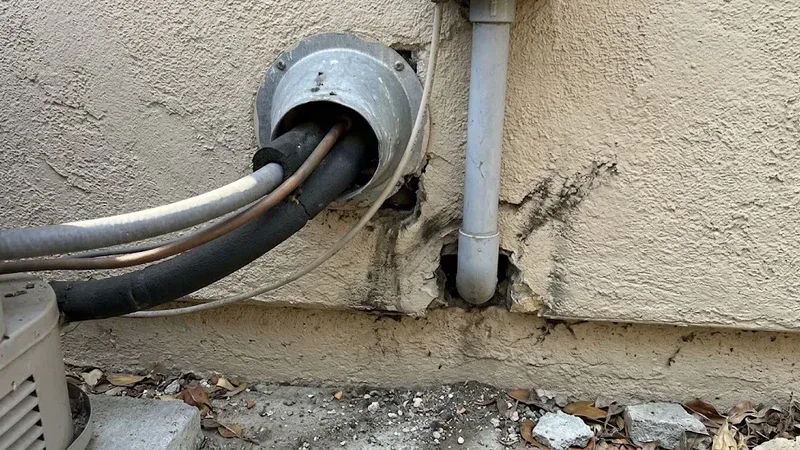
Look at every place a pipe, cable, or conduit enters the house. Gaps around these lines are among the most common rodent routes. Check the AC line set, the gas meter, and the electrical service entry.
Inspect Vents and Screens
Check dryer vents, crawl space vents, attic vents, and soffit vents. Look for torn screens, missing covers, and gaps around the frame.
Examine Doors and the Garage
Close each door and check for light at the bottom. Check the garage door seal and the corners where the door meets the frame. See our guide to signs of rodents in the garage for related clues.
Scan Trees, Fences, and Wires
Look for branches that touch the roof and wires that lead to the roofline. Roof rats use these as bridges to reach upper openings.
Look at the Roofline With Binoculars
Scan the eaves, fascia boards, roof vents, and chimney flashing. Look for gnawed wood, bent screens, and gaps where two roof sections meet.
How to Check Inside for Hidden Entry Points
Inside checks find the gaps you cannot see from outside. Turn off lights in each room during the day and look for light that leaks in.
Check Under Sinks
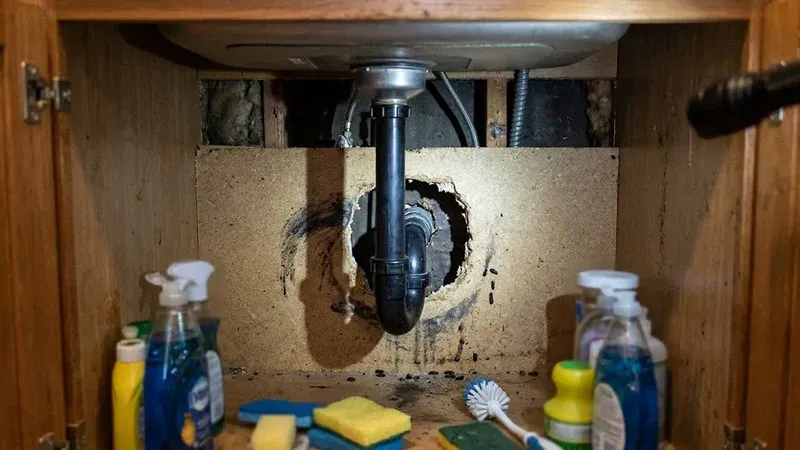
Open the cabinets under the kitchen and bathroom sinks. Look at the holes around the pipes. A wide gap around a pipe with droppings nearby is a clear route.
Inspect Behind Appliances
Pull out the stove, refrigerator, and dishwasher if you can do so safely. Check the wall behind each one for holes around gas lines and water lines.
Look at the Water Heater and Furnace Closet
These warm closets often have floor gaps and ductwork openings. Rodents use them as quiet travel routes between floors.
Check Attic and Crawl Space Edges
Look along the edges of the attic and under floors for daylight, droppings, and nest material. Mark any pipe or wire that passes through a wall plate.
Inspect Fireplace and Chimney Areas
Check the damper and the gap around the fireplace surround. Rodents and other animals can use chimneys if the cap is missing.
Map Your Findings
Draw a quick map and number each gap. Photograph each one with a ruler. This helps a technician plan the repair and shows which gaps need the most urgent work.
Common Entry Points: Which Rodent Uses Which?
This table matches each common entry point to the rodent most likely to use it and the safest way to seal it.
| Entry Point | Most Likely Rodent | What You May See | Best Sealing Material |
|---|---|---|---|
| Door bottom or sweep | Mouse, young rat | Light gap, chewed seal | New metal-backed sweep |
| Pipe and wire openings | Mouse, rat | Grease, droppings, loose collars | Steel wool plus sealant, or sheet metal |
| Dryer and crawl space vents | Mouse, rat | Torn screens, missing covers | 1/4 inch hardware cloth |
| Foundation cracks | Norway rat, mouse | Burrows, gnawed edges | Cement patch or metal mesh |
| Roof vents and eaves | Roof rat | Gnawed wood, bent screens | Metal flashing, hardware cloth |
| Garage door corners | Mouse, rat | Worn seals, droppings | Tight bottom and side seals |
Use metal for every repair. UC IPM notes that rats can chew through plastic, foam, wood, and caulk, so these soft fillers should not stand alone.
Entry Points We See Across California Neighborhoods
California homes differ by climate, age, and landscape. PestPunt field representatives travel statewide, and the entry point patterns below repeat in each region.
Southern California
In Los Angeles, older homes in Highland Park (90042) and Silver Lake (90026) have raised foundations, vented crawl spaces, and mature trees near the roofline. Roof rats often enter through gaps near vents and fascia boards. In San Diego, North Park (92104) and Hillcrest (92103) homes sit close together, so rodents travel along shared fences and utility lines. Read our Los Angeles rodent control page and San Diego page.
Bay Area and Sacramento Valley
San Francisco homes in Noe Valley (94114) and the Sunset District (94122) often have wall voids and shared utility chases. In San Jose, Willow Glen (95125) has mature fruit trees and garages. Sacramento neighborhoods such as Midtown (95816) have older crawl spaces and porch gaps. See our San Francisco and Sacramento pages.
Mountains and Foothills
In mountain communities such as Truckee (96161), Big Bear Lake (92315), and South Lake Tahoe (96150), deer mice use cabins, sheds, and garages, especially in the colder months. California health officials track hantavirus in deer mice, so sealing these structures matters. Our guide to hantavirus symptoms and risk in California explains the risk.
What to Do After You Find Entry Points
Marking gaps is the first half of the job. The second half is closing them in the right order.
- List and photograph every gap.
- Start trapping or call a professional.
- Confirm that activity stops, usually after several days without new signs.
- Seal each gap with metal mesh and sealant.
- Recheck the repairs weekly for a month.
Why the Order Matters
If you seal first, rodents inside the walls may stay trapped and chew new holes. If you trap first and then seal, you remove the animals and close the door behind them. Combine both steps for lasting results.
The Right Materials for Closing Entry Points
The wrong material fails within weeks. Choose gnaw-resistant materials for each opening.
Materials That Work
- Steel wool or copper mesh: Pack tightly into small gaps, then cover with sealant. UC IPM notes steel wool makes a good temporary plug, though it may rust.
- Hardware cloth: Use 1/4 inch mesh over vents and larger holes, and screw it into framing.
- Sheet metal and flashing: Use for door bottoms, soffit gaps, and large holes.
- Cement patch: Use for cracks in concrete and block walls.
Materials That Fail
Foam, plain caulk, plastic mesh, and paper-based patches fail because rodents chew them. Foam is acceptable only as a top layer over metal mesh.
DIY Sealing vs Professional Exclusion
Many homeowners can seal small ground-level gaps. Some jobs, however, need a trained eye or special access.
When DIY Works
- You find a few small gaps at ground level.
- You can reach each gap safely.
- No active signs appear inside the house.
- You have the right metal materials.
When to Call a Professional
- You see signs on the roof or in the attic.
- Gaps appear at heights you cannot reach safely.
- You hear activity in the walls.
- Seals fail after repeated repairs.
- Rodents continue to appear after sealing.
- You live in a deer mouse area and want a thorough check.
What a Professional Exclusion Visit Covers
A field representative inspects the foundation, utility lines, vents, doors, attic access, and roofline. They mark each route, explain the likely species, and describe the control and sealing sequence so that you know what to expect.
Health Considerations During Entry Point Work
Entry point work puts you near droppings, nests, and dust. Take simple precautions. Wear gloves and a respirator in crawl spaces and attics. Wet any droppings with disinfectant before you disturb them. Wash your hands after each session. For background on hantavirus, see the CDC hantavirus overview.
Protect Yourself While You Work
Wear gloves, a fitted N95 respirator, and safety glasses. Avoid stirring up dust. Do not sweep or vacuum dry droppings. Wash your hands with soap and warm water when you finish.
Know When to Seek Care
If you develop fever, body aches, cough, or breathing trouble in the weeks after working in a rodent-contaminated space, tell your doctor about the exposure.
Seasonal Entry Point Maintenance Checklist
Entry points reopen as buildings age and settle. Repeat this short check each season.
- Check door sweeps and garage seals
- Inspect vent screens and covers
- Recheck utility openings and collars
- Trim branches back from the roof
- Clear leaves and debris from the foundation
- Store firewood and bins away from walls
- Repair damaged siding or trim promptly
- Keep a dated photo log of each repair
Make It Easy on Yourself
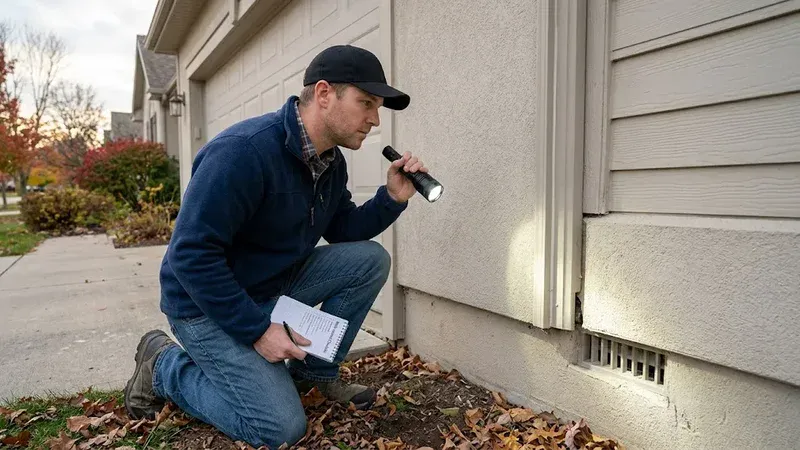
Schedule the check with a calendar reminder and keep your photo log in the same folder each time. A short, regular check takes about twenty minutes and often saves hours of repair work later.
Six Mistakes When Closing Entry Points
Sealing With Foam Only
Rodents chew foam quickly. Pack metal mesh in first.
Sealing Before Control
Rodents inside can chew new holes or die in walls. Remove them first.
Missing the Roofline
Roof rats use high gaps. Check eaves and vents with binoculars.
Ignoring Small Gaps
A mouse needs only about 1/4 inch. Measure with a pencil.
Using Thin Screen
Light window screen tears easily. Use hardware cloth for vents.
Skipping Rechecks
Repairs fail over time. Recheck every season.
Frequently Asked Questions About Rodent Entry Points
A house mouse can pass through openings larger than 1/4 inch, according to UC IPM. A pencil is a handy gauge, because if a pencil fits in the gap, a mouse may fit too. Mice can also gnaw to widen small openings, so seal gaps early with metal mesh.
Rats can use gaps near 1/2 inch, and UC IPM notes that rats can squeeze under a door with a gap of about 1/2 inch. Roof rats also climb trees, wires, and fences to reach upper openings, so check eaves, vents, and the roofline as well as ground-level gaps.
Common routes include gaps under doors, openings around pipes and wires, dryer and crawl space vents, foundation cracks, garage door corners, roof vents, and chimney gaps. The best way to find the active route is to look for grease marks, gnaw marks, and droppings near each opening.
Metal works best. Pack steel wool or copper mesh into small gaps, use 1/4 inch hardware cloth over vents, and use sheet metal for larger openings. Rodents can chew through foam, plastic, and plain caulk, so use those only as a finish over metal.
Yes. Remove the rodents first, then seal. If you close gaps while rodents remain inside, they may chew new holes or die inside walls. Trap or treat, wait until signs stop, and then close each opening with metal mesh and sealant.
Check inside as well as outside. Look under sinks, behind appliances, in the water heater closet, and along attic edges. Turn off lights in the daytime and look for daylight. A technician can also trace droppings, rub marks, and gnaw marks to locate hidden routes.
Often yes, for small ground-level gaps. Use metal materials and wear gloves and a respirator in dusty spaces. Call a professional for roofline work, attic gaps, repeated failures, or any home where activity continues after sealing.
Yes. PestPunt is a California statewide service area business with 24/7 dispatch. Field representatives travel to your property, inspect the exterior and interior, identify likely routes, and explain a control and sealing plan. Call (888) 217-6759 to schedule a visit.
Final Takeaways
Mice use gaps larger than 1/4 inch, and rats use gaps near 1/2 inch. Inspect door bottoms, utility openings, vents, foundations, garage doors, rooflines, and chimneys. Look for grease marks, gnaw marks, and droppings. Control rodents first, then seal with metal mesh and sealant, and recheck every season. Next, learn why entry points matter for health in our guide to hantavirus symptoms and risk in California.
If you find active signs, call PestPunt at (888) 217-6759. Our field representatives travel directly to your California property.
Mobile Rodent Control Services
Close the Gaps Before the Next Rodent Finds Them
A short inspection can reveal routes you cannot see. Call (888) 217-6759 to schedule an on-site visit anywhere in California and get a clear plan to remove rodents and seal each route.