Hantavirus Cleanup: Safety Precautions for Rodent Droppings, Nests, and Dead Rodents
Cleaning up after rodents is where most avoidable exposure happens. The safe method is simple: air out the space, wear protection, wet everything first, and never sweep or vacuum dry droppings. This guide walks you through each step and shows you when to hand the job to a professional.
Safe Hantavirus Cleanup — At a Glance
Ventilate first: Air out closed spaces for at least 30 minutes before you start.
Protect yourself: Wear gloves and a fitted respirator, and add eye protection overhead.
Wet, then wipe: Soak the material with disinfectant, wait the contact time, and use paper towels.
Know your limit: Attics, crawl spaces, insulation, and heavy droppings call for a professional.
Why Safe Cleanup Matters for Hantavirus Prevention
Hantavirus exposure happens when people breathe in particles from infected rodent urine, droppings, or nests. The CDC hantavirus overview describes this route, and our guide on how hantavirus spreads from deer mice droppings explains it step by step. Cleanup is the moment when you are closest to that material, so the method you choose decides how much dust you create.
A careless cleanup can turn a small problem into a real exposure. A careful cleanup, in contrast, keeps the material wet, keeps dust out of the air, and gets the waste out of your home. The steps below follow the approach in the CDC guidance on how to clean up after rodents, adapted for California homes, cabins, garages, and sheds.
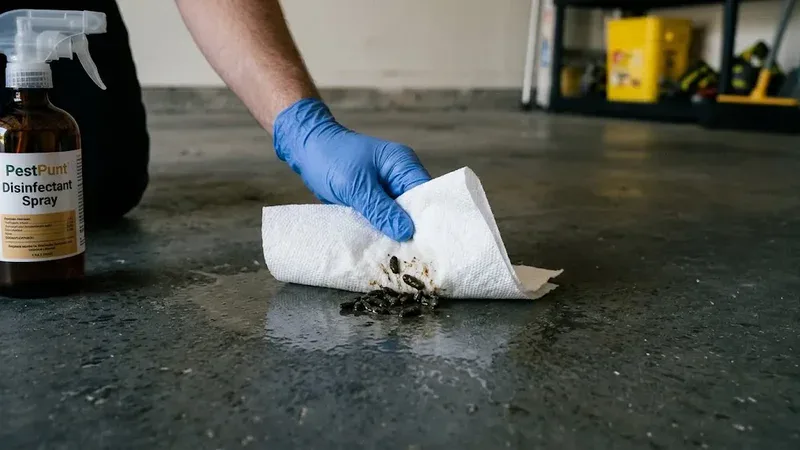
Three Rules Cover Almost Every Situation
- Ventilate: Fresh air dilutes airborne particles in closed spaces.
- Wet it: Disinfectant keeps droppings and nests on the surface.
- Never sweep or vacuum dry waste: Dry cleaning lifts particles into the air.
Before You Start: Decide Whether to Clean Yourself
Pause before you pick up a spray bottle. The right first move depends on how much contamination you see and where it sits. A few droppings on a garage floor differ greatly from a nest inside attic insulation.
Quick Self-Check
- Amount: Do you see a small number of droppings or a large area?
- Location: Is it a hard floor or a hidden, enclosed space?
- Materials: Is the waste on a hard surface, or in fabric, insulation, or stored goods?
- Activity: Are rodents still active?
- Health: Does anyone cleaning have a lung condition or weakened immunity?
Light contamination on hard surfaces usually suits a careful homeowner. Heavy contamination, enclosed spaces, and insulation call for a professional. When in doubt, wait and call. Waiting a day costs nothing, while a rushed dry cleanup can create exposure.
Supplies and Protective Gear for a Safe Cleanup
Gather everything before you enter the space. You should not need to leave halfway to find a missing item.
- Disposable rubber, latex, vinyl, or nitrile gloves
- A fitted N95 respirator, or better for heavy jobs
- Safety glasses or goggles
- EPA-registered disinfectant, or a fresh bleach solution mixed according to CDC guidance
- A spray bottle and plenty of paper towels
- Heavy plastic bags, at least two per load
- A covered garbage can for disposal
- Soap, water, and a clean change of clothes
Choosing a Disinfectant
Read the label for the contact time, which is the time the product must stay wet on the surface. CDC guidance also describes a bleach and water mix for droppings and urine. Whatever you choose, prepare it fresh, apply it generously, and never rush the wait.
How to Clean Rodent Droppings and Urine: Step by Step
Use this sequence for a small amount of droppings or urine on a hard surface in a space with good airflow. Complete every step in order.
Ventilate the Space
Open doors and windows and leave the area for at least 30 minutes. Keep pets and children away. Do not start cleaning in a closed, dusty room.
Put On Protection
Wear disposable gloves, a fitted respirator, and eye protection. Check that the respirator seals against your face.
Spray Until Thoroughly Wet
Spray droppings, urine spots, and nearby surfaces with disinfectant until they are soaked. Do not blast the spray at high pressure, which can scatter material.
Wait the Full Contact Time
Let the disinfectant sit for the time on its label. Use the waiting time to prepare your bags and paper towels.
Wipe Up With Paper Towels
Pick up the wet droppings with paper towels and place them in a plastic bag. Then wipe the area again with fresh disinfectant and new towels.
Bag, Seal, and Wash
Seal the bag, place it inside a second bag, and put it in a covered garbage can. Wash your gloved hands, remove the gloves, and wash your hands and face with soap and water.
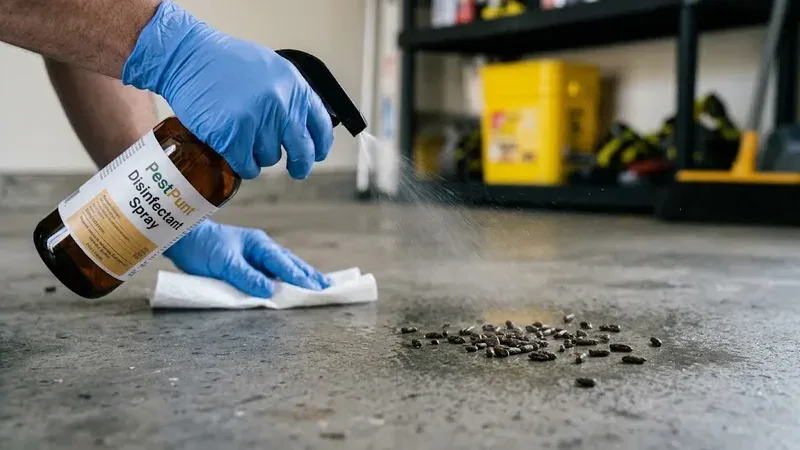
How to Clean Nests and Dead Rodents Safely
Nests and dead rodents carry the same wet-method rule. The difference is handling and disposal.
Ventilate and Gear Up
Air out the space for at least 30 minutes and put on gloves, a fitted respirator, and eye protection.
Spray the Nest or Rodent
Soak the nest or dead rodent and the area around it with disinfectant. Wait for the contact time to pass.
Remove With Paper Towels or a Shovel
Pick up the wet material with paper towels, or lift it with a shovel if it sits on a dirt floor. Place it directly into a plastic bag.
Double Bag and Seal
Seal the first bag, place it inside a second bag, and seal again. Do not squeeze air out of the bag.
Dispose of Waste and Traps
Place the bag in a covered garbage can that is emptied regularly. Dispose of snap traps or disinfect them before reuse.
Disinfect and Wash Up
Clean the area again with disinfectant. Wash your gloved hands, remove the gloves, and wash with soap and water.

Cleaning Different Surfaces and Materials
Hard floors are the easy case. Other materials need extra care because they hold waste and release dust.
Hard Floors and Countertops
Wet, wipe, and then mop or wipe again with disinfectant. Wash cloths or mop heads, or discard them.
Carpets and Upholstery
Wet the surface with disinfectant, remove visible waste, and then steam clean or shampoo the fabric. Heavily soiled items may need replacement.
Bedding and Clothing
Wash items in hot water with detergent. Handle them gently and do not shake them out in a closed room.
Stored Boxes and Cardboard
Cardboard absorbs urine and cannot be fully disinfected. Wet the box, bag it, and discard it if it holds droppings or nest material.
Insulation, Attics, and Crawl Spaces
Insulation holds droppings and nest material that you cannot easily wet or wipe. These spaces also have poor airflow and often include sharp edges and wiring. Call a professional for this work.
Which Cleanup Method for Which Material?
Use this table as a quick reference. When your situation sits between two rows, choose the more cautious one.
| Material or Area | Method | Protection Level | Call a Professional? |
|---|---|---|---|
| Hard floor or counter | Wet, wait, wipe, disinfect | Gloves and respirator | Not for small amounts |
| Carpet or upholstery | Wet, remove waste, steam clean | Gloves and respirator | If heavily soiled |
| Bedding and clothing | Hot water wash with detergent | Gloves while handling | Rarely |
| Cardboard and stored goods | Wet, bag, discard | Gloves and respirator | If many boxes are affected |
| Insulation and attic | Specialist removal and replacement | Professional equipment | Yes |
| Crawl space or HVAC | Specialist inspection and cleaning | Professional equipment | Yes |
For local cleanup service information, you can also read our pages on cleaning areas contaminated by mice and rodent cleanup and decontamination services.
Cleanup Situations We Hear About Across California
PestPunt field representatives travel statewide, and cleanup questions follow the seasons and the building type.
Cabins and Vacation Homes in the Mountains
In Mammoth Lakes (93546), Truckee (96161), South Lake Tahoe (96150), and Big Bear Lake (92315), homeowners often reopen cabins in spring or early summer. Those first visits call for ventilation, caution, and the wet method. Our guide to hantavirus symptoms and risk in California explains why those regions get extra attention.
Garages and Attics in Cities
In Los Angeles neighborhoods such as Highland Park (90042) and Sherman Oaks (91403), cleanup usually involves roof rat droppings in attics and garages. San Francisco homes in the Mission District (94110) and Sacramento homes in Midtown (95816) often involve wall voids and crawl spaces. See our Los Angeles droppings cleanup page and San Francisco page.
Sheds, Barns, and Outbuildings
Rural properties in Fresno County foothills and Sacramento Valley farms often have outbuildings that sit closed for weeks. Apply the same sequence: ventilate, assess, wet, wipe, and bag.
After the Cleanup: Wash Up, Watch Your Health, and Stop New Waste
The job does not end when the last bag leaves the house. Three follow-up steps protect you and keep the problem from returning.
Clean Yourself and Your Tools
Wash your hands and face with soap and water. Launder your clothes in hot water. Disinfect reusable tools, and discard or wash protective items according to their labels.
Watch Your Health
Public health sources describe symptoms that can begin one to eight weeks after exposure. If you develop fever, aches, fatigue, cough, or trouble breathing after a cleanup, tell your doctor about the cleanup. The CDPH hantavirus page offers more background. If you have trouble breathing, call 911 or go to the emergency room.
Stop New Waste
Cleaning without control invites the same problem next month. Find and seal entry points, store food in sealed containers, and trap or treat any remaining rodents. Our guide to spotting rodent entry points around your home shows you where to start.

Health Notes for Anyone Who Cleans
Some people should avoid cleanup altogether, and others should take extra steps. Think about who in your home should stay out of the work area.
Who Should Not Do the Cleanup
- People with asthma, COPD, or other lung conditions
- People with weakened immune systems
- Pregnant people who want to reduce all exposure
- Children and teenagers
- Anyone without a fitted respirator
Extra Steps for Everyone
- Keep pets and children out of the space
- Change clothes before you enter the house
- Wash hands and face after the job
- Launder work clothes in hot water
- Tell your doctor about any exposure if you feel ill
DIY Cleanup vs Professional Decontamination
You can clean small, light contamination on hard surfaces with the right gear and steps. Some situations belong with a trained team.
When DIY Works
- You see a small number of droppings on a hard surface.
- The space is open and has good airflow.
- You have gloves, a fitted respirator, and disinfectant.
- No nests, insulation, or heavy staining appear.
When to Call a Professional
- You find nests or heavy droppings in an attic or crawl space.
- Insulation shows contamination.
- Droppings sit inside ducts or HVAC equipment.
- A cabin or shed has been closed for months.
- Rodents keep returning after cleanup.
- Someone cleaning has a lung condition or weakened immunity.
What a Professional Visit Covers
A PestPunt field representative inspects the property, identifies the rodent and its routes, and explains the control, sealing, and cleanup sequence. We do not diagnose illness or provide medical advice. For health questions, contact a healthcare provider or your local health department.
Keep the Space Clean: Prevention Checklist
A clean space stays clean only when rodents stay out. Use this checklist after any cleanup.
- Seal gaps larger than 1/4 inch with metal mesh
- Replace worn door sweeps and vent screens
- Store food and pet food in sealed containers
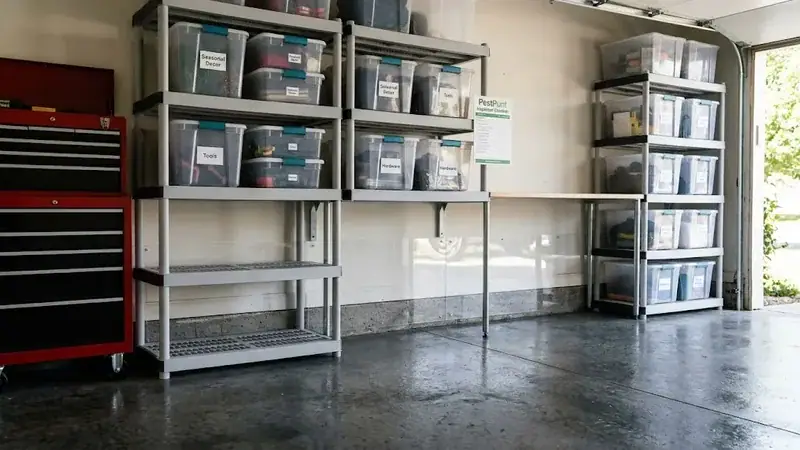
- Use plastic bins instead of cardboard in garages and sheds
- Keep stored items off the floor and away from walls
- Set snap traps in vacant cabins and sheds
- Inspect the space each season with a flashlight
- Repeat the wet cleanup if you find new droppings
Six Cleanup Mistakes That Raise Exposure Risk
Sweeping Dry Droppings
A broom lifts particles into the air. Wet and wipe instead.
Vacuuming Waste
A household vacuum can send fine particles back into the room.
Skipping the 30-Minute Airing
Closed rooms hold concentrated dust. Ventilate before you enter.
Rushing the Contact Time
Disinfectant needs time on the surface to work. Follow the label.
Cleaning Without Gear
Gloves and a fitted respirator protect your hands and lungs.
Cleaning Without Control
New waste appears unless you seal entry points and control rodents.
Frequently Asked Questions About Hantavirus Cleanup
Ventilate the space for at least 30 minutes, then wear gloves and a fitted respirator. Spray droppings with disinfectant until wet, wait the label contact time, and wipe up with paper towels. Bag the waste in two bags, disinfect the area, and wash your hands with soap and water.
Sweeping and vacuuming can lift fine particles from dry droppings into the air, where you can breathe them in. Public health agencies recommend wet cleanup instead, because disinfectant keeps the material on the surface and paper towels remove it without creating dust.
For light cleanup, wear disposable gloves, a fitted N95 respirator, and eye protection. Add a change of clothes for the job. Heavy contamination, attics, crawl spaces, and insulation need professional equipment. Do not rely on a loose dust mask or a face covering that does not seal.
CDC guidance describes a bleach and water solution as one option, and many people use an EPA-registered disinfectant instead. Mix bleach fresh, follow the product label, and never mix it with ammonia or other cleaners. Keep the space ventilated and wait the full contact time.
Spray the nest or rodent with disinfectant, wait the contact time, and pick it up with gloves and paper towels. Place it in a plastic bag, seal it, and put that bag in a second bag. Dispose of it in a covered garbage can, then wash your hands with soap and water.
Call a professional for heavy droppings, nests, contaminated insulation, attics, crawl spaces, HVAC areas, or cabins that have been closed for months. Also call if anyone doing the work has a lung condition or weakened immunity, or if rodents keep returning after cleanup.
Watch for fever, fatigue, muscle aches, headache, chills, stomach upset, cough, or shortness of breath. Symptoms can begin one to eight weeks after exposure. Tell your doctor about the cleanup if you feel ill, and call 911 or go to the emergency room if you have trouble breathing.
Yes. PestPunt is a California statewide service area business with 24/7 dispatch. Field representatives travel to your property, inspect the rodent activity, find entry points, and explain a control, sealing, and cleanup plan. We do not provide medical advice. Call (888) 217-6759 to schedule a visit.
Final Takeaways
Safe hantavirus cleanup follows one pattern: ventilate for at least 30 minutes, wear gloves and a fitted respirator, wet droppings and nests with disinfectant, wait the contact time, wipe up with paper towels, bag the waste twice, and wash your hands. Never sweep or vacuum dry droppings. Call a professional for attics, crawl spaces, insulation, and heavy contamination. After cleanup, seal entry points and control rodents. To recognize new damage early, read our guide to chew marks on wood vs wire.
If you need help, call PestPunt at (888) 217-6759. Our field representatives travel directly to your California property.
Mobile Rodent Control Services
Get Rodent Waste Handled Safely and Stop It From Coming Back
Cleanup works best alongside control and sealing. Call (888) 217-6759 to schedule an on-site visit anywhere in California and get a clear plan to remove rodents, close their routes, and handle the cleanup safely.