Rodent Entry Point Inspection: Find Every Gap Before Rodents Use It
Scratching, droppings and gnawed corners all point to an opening you cannot see yet. A PestPunt field representative traces the evidence, checks the roof, attic, foundation and garage, and shows you exactly where rats and mice get in.
Rodent Entry Point Inspection — At a Glance
What it finds: Roofline, vent, pipe, door and foundation openings.
How it works: We read droppings, grease marks and gnaw marks to trace routes.
What you get: A prioritized list of openings and a clear plan.
Next step: Call (888) 217-6759 for on-site dispatch.
What a Rodent Entry Point Inspection Covers
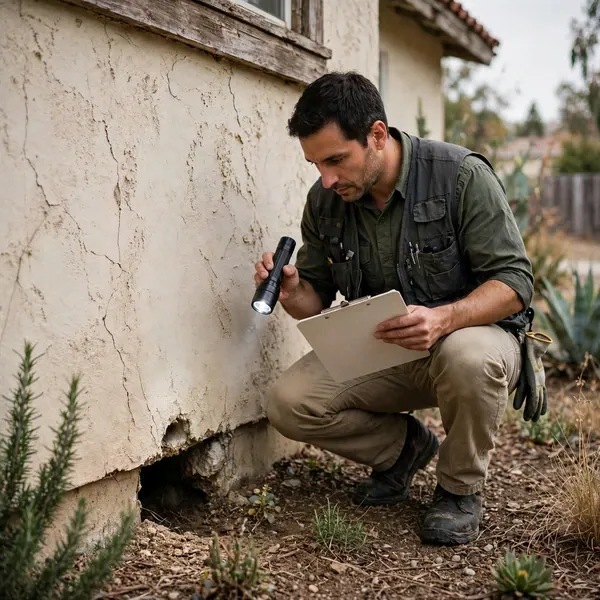
A rodent entry point inspection answers one question: where do rats and mice get in? A field representative walks your property, follows the evidence and marks every opening that a rodent can use. You get a clear list of what to fix, in what order, and why.
Many homeowners guess. They see a hole in the garage and assume it is the only one. In practice, rodents use several openings at once. A single mouse can enter through a gap at a door corner while a roof rat uses a vent at the eave. If you fix one opening and miss the other, the noise in the attic continues.
PestPunt performs this inspection on-site. We do not operate a walk-in office. Our field representatives travel to your Los Angeles home, condo or business and check the building from the outside in.
Inspection First, Sealing Second
The inspection comes before any repair. It tells you whether you need a small sealing job, a repair of damaged building parts or a full exclusion project. After the inspection, you can move to rodent entry point repair when the opening comes from damaged parts, or to rodent entry point sealing when a gap only needs closing. Our broader rodent exclusion services page explains how all the steps connect.
What You Receive
You receive a verbal walk-through at the property and a clear list of the openings we found. We explain each one in plain language. We also tell you which openings carry the highest risk, such as roofline gaps for roof rats or garage corners for mice.
The Eight Zones We Check on Every Property
Rodents use the whole building. We inspect eight zones, from the roof to the soil.
1. Roofline and eaves
We look at the tile ends, fascia boards, soffits, ridge vents and the places where branches or wires touch the roof.
2. Attic
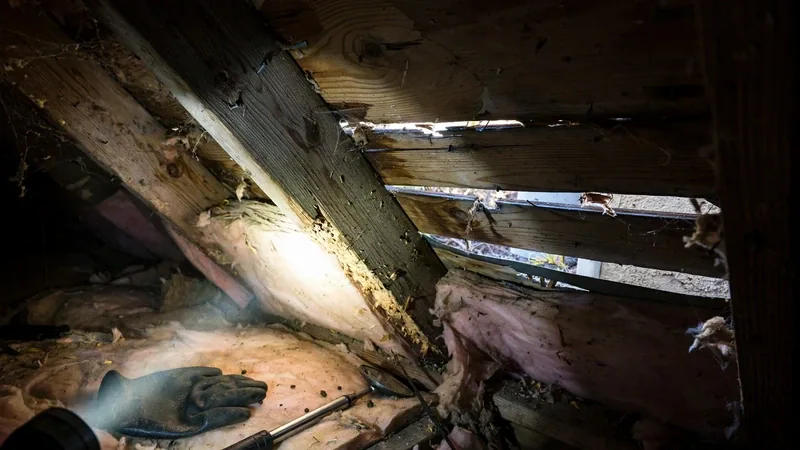
We check for droppings, runways, nests, daylight at the eaves and gaps around ducts and wiring.
3. Exterior walls
We check stucco cracks, siding gaps, weep screed, window frames and utility penetrations.
4. Foundation and crawl space
We check vent screens, access doors, plumbing gaps and signs of burrowing.
5. Garage
We check the door corners, the bottom seal, the side seals and the entry door sweep.
6. Kitchen and bathrooms
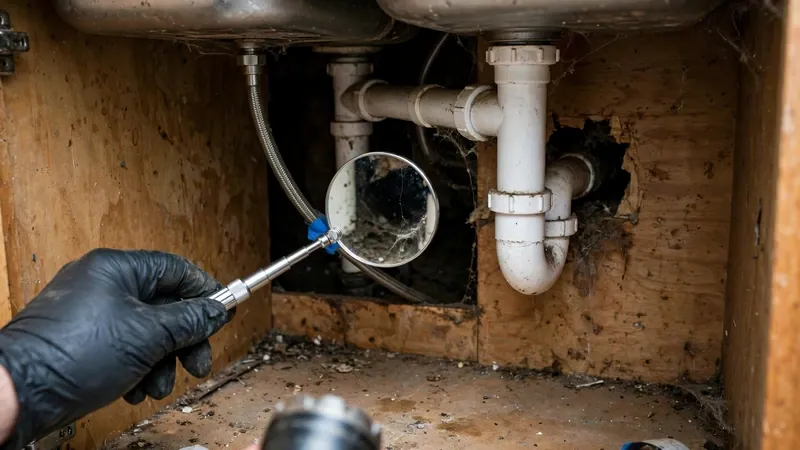
We check the cabinet backs under the sink, the dishwasher line and the gap around supply pipes.
7. Utility areas
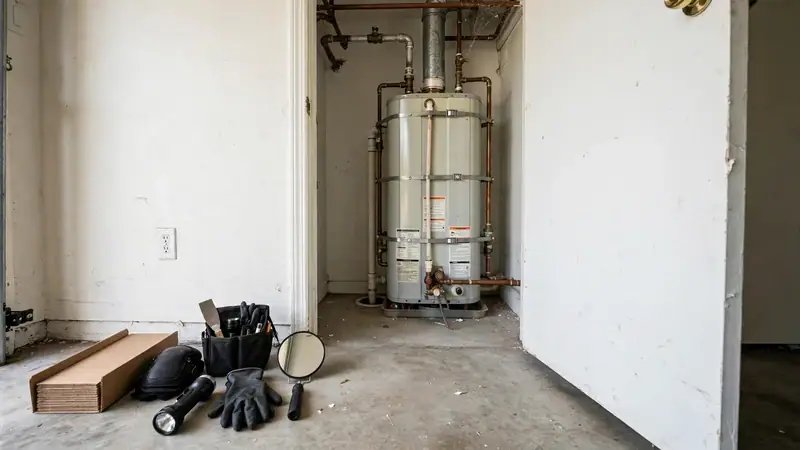
We check the water heater closet, the HVAC platform, the dryer vent and the gas and AC lines.
8. Yard and landscape
We check trees, palms, fences, ivy, wood piles, trash bins, pet food and fruit on the ground.
How We Read Evidence to Find the Real Opening
Rodents leave a record. We read droppings, grease marks, gnaw marks, tracks and nest material to trace the route. A hole is rarely the first clue. The route is.
Droppings
Mouse droppings measure about a quarter inch and have pointed ends. Rat droppings are larger. Fresh droppings look dark and moist, while old droppings look dry and gray. Our guide to fresh versus old droppings explains the difference. Concentrated droppings often mark a feeding station or a path near the entry.
Grease and rub marks
Rodents carry oil and dirt on their fur. They leave dark smudges where they brush against walls, pipes and beams. Read more about grease marks and rub stains. A smudge that stops at a gap shows us where the animal goes through.
Gnaw marks
Fresh gnawing looks pale and clean. Old gnawing looks dark. Rats leave larger marks than mice. Our article on rodent chew marks on wood and wire helps you recognize them.
Tracks and tail drags
In dusty areas, rodents leave footprints and a thin line from the tail. We follow them toward the opening.
| What we see | What it often suggests | Where we look next |
|---|---|---|
| Grease along a fascia board | Roof rat route at the eave | Roof tile ends, soffit vents, tree contact |
| Droppings by the garage door | Mouse entry at a door corner | Side seals and the bottom seal |
| Gnawed vent screen | Active attempt to widen an opening | The frame and the wall behind it |
| Fresh soil mound by the slab | Burrowing rat | Foundation cracks and drain lines |
| Droppings under the sink | Gap around supply pipes | The back wall of the cabinet |
| Daylight in the attic at midday | Open gap at the eave or vent | The exterior side of the same spot |
Evidence supports a conclusion but does not prove it. We confirm each suspected opening by checking from both sides whenever possible.
Simple Tests That Confirm an Entry Point
Experienced inspectors use a few simple tests. You can try some of them yourself before our visit.
The Pencil Test
The CDC advises you to check for gaps that a pencil can pass through. A mouse can use a gap that size. Slide a pencil along door corners, pipe collars and vent frames. If it goes in, seal the gap.
The Dark Attic Test
Close the attic hatch on a bright day and let your eyes adjust. Daylight that enters at the eaves, the vents or the roof edge shows an open path. Rodents use these same paths.
The Door Light Test
Close the garage door and look at the corners and the bottom from inside with the lights off. Light at the edges means a gap.
The Sound Map
Note where and when you hear noises. Sounds at dusk and in the first part of the night often point to a nest near an entry route. Our guide on mouse noises in walls at night explains the patterns.
Wear gloves and a respirator in attics and crawl spaces. Do not sweep or vacuum dry droppings. Wet them with disinfectant and wipe them up. The CDC rodent guidance describes the safe cleanup steps.
When to Schedule a Rodent Entry Point Inspection
Rodents stay active in Los Angeles all year because the climate stays mild. Still, certain moments make an inspection especially valuable.
After You Notice Early Signs
Fresh droppings, a faint ammonia smell or a single sighting often mean that rodents have already found a way in. Inspect within days, not months. Early action keeps the problem small and the repair simple.
After Roof, Plumbing or Landscaping Work
Contractors often open walls, move vents or cut utility lines. They do not always close every gap afterward. A quick inspection after major work catches new openings before rodents find them.
Before You Buy, Rent Out or Renovate
Buyers, landlords and property managers use inspections to learn the condition of the building shell. The findings help you plan repairs before move-in or before a renovation covers the openings.
At the Start of Cooler Weather
The UC Statewide IPM Program notes that rats and mice can cause problems all year, but they seek warmth indoors when the weather turns cold. An inspection in early fall gives you time to seal openings before rodents move in.
After a Neighbor Reports Rodents
Rodents travel along fences, wires and shared walls. When a neighbor finds activity, check your own property soon. Multi-unit buildings and townhomes benefit from a full-building check.
If none of these situations apply, a yearly inspection still helps. Roofs settle, screens rust and trees grow. A short annual check keeps the building shell tight.
How a PestPunt Inspection Works
Six steps cover the whole property and end with a plan you can act on.
Call and share the signs
Call (888) 217-6759 and describe the sounds, droppings, odors or damage you notice.
Receive field dispatch
A field representative arrives at your address with the tools needed for the roof, attic and crawl space.
Walk the exterior
The representative checks the roofline, walls, vents, utilities, garage and yard before entering the building.
Check the interior
Next, the representative inspects the attic, garage, kitchen, utility closets and crawl space when access allows.
Mark and explain
Each opening receives a note about its location, size, cause and risk level.
Plan the next step
You decide whether to repair, seal or run a full exclusion project. We never seal before animals are handled.
What Happens After the Inspection
The inspection leads to a plan. These six steps show how most properties move forward.
Review the findings
We go through every opening with you, starting with the highest-risk ones.
Separate repair from sealing
Rotted trim and broken flashing need repair. Plain gaps need sealing.
Handle live rodents first
If animals remain inside, we plan trapping before the final seal.
Schedule the work
You choose the order of repair, sealing and proofing that fits your property.
Clean after the entries close
Cleanup comes last, so rodents cannot recontaminate the area.
Recheck on a set date
A follow-up visit confirms that no new gaps have appeared.
Entry Points We Find Often in Los Angeles Homes
Local building styles shape where rodents enter. These patterns appear often in Los Angeles inspections, but every property is different.
Open tile ends
Spanish and barrel tile roofs leave open ends at the eave when closure pieces break or slip.
Palm and tree bridges
Palms, ficus and neighboring branches give roof rats a path above the fence line.
Aging vent screens
Foundation vents on older bungalows often have rusted or bent screens.
Utility gaps
Pipe and cable penetrations in stucco walls often receive only a thin layer of caulk.
Garage door wear
Rubber seals harden in the sun and leave corner gaps.
Hillside burrows
Slopes and retaining walls hide burrow entrances behind ivy and ice plant.
Our existing guide to finding mouse and rat entry points gives homeowners a way to start checking. A professional inspection adds roof access, attic coverage and trained eyes.
Neighborhoods and ZIP Codes Where We Inspect
PestPunt inspects homes across Los Angeles. Hillside and older neighborhoods often need extra attention to rooflines and crawl spaces. ZIP codes below are guides, not strict borders, so give us your exact address.
Hills and Eastside
- Hollywood Hills and Hollywood (90028, 90068)
- Los Feliz (90027)
- Silver Lake (90026, 90039)
- Echo Park (90026)
- Mount Washington and Glassell Park (90065)
- Highland Park (90042) and Eagle Rock (90041)
Central and South LA
- Koreatown (90005, 90010, 90020)
- Mid-City (90019, 90035)
- West Adams (90016, 90018)
- Leimert Park (90008)
- Hyde Park (90043)
- Downtown LA (90012, 90013, 90014)
Westside, Valley and Harbor
- Venice (90291) and Palms (90034)
- Westchester (90045)
- Brentwood (90049) and Pacific Palisades (90272)
- Studio City (91604) and Sherman Oaks (91403)
- Encino (91316) and Van Nuys (91401)
- San Pedro (90731)
For more local pages, visit our locations page or read about 24/7 service in Los Angeles.
DIY Checks and Professional Inspections
You can check the lower parts of your home on your own. A professional covers the places that are hard to reach, hard to see or unsafe to enter.
What you can check yourself
- Garage door corners and bottom seal
- Cabinet backs under sinks
- Visible vent screens at ground level
- Pet food and trash storage
- Droppings in the garage and pantry
What a professional covers
- Roofline and tile ends
- Attic and eave areas
- Crawl spaces and foundation vents
- Hidden utility gaps and wall voids
- Burrows and drainage areas
If you find fresh droppings or hear animals, avoid disturbing the area. Call us first so we can trace the route without scattering the activity.
What a Good Inspection Report Should Include
A thorough inspection leaves you with more than a vague answer. Before you hire anyone, ask what they will tell you after the visit.
- Each opening, with its location and approximate size
- The animal most likely to use it
- The evidence that supports the finding
- A recommended repair or sealing method
- A clear order of work, including trapping if needed
- Advice on landscape and sanitation
Be cautious about a quote that appears before anyone looks at the roof or attic. A fair plan comes after the inspection, not before.
Hear scratching or find droppings? Call (888) 217-6759 to schedule an on-site inspection with a field representative.
How to Prepare for the Inspection
Preparation helps us find the answer faster.
- Write down where and when you hear noises
- Clear access to the garage, water heater and under-sink areas
- Unlock the attic hatch and side gates
- Note when your roof, plumbing or HVAC last received work
- Keep pets in another room
- Avoid poison, because rodents may die in walls
Seal food in containers and pick up fallen fruit. The UC Statewide IPM winter pest article recommends tight lids on trash and compost, and thinned vegetation near buildings.
Six Mistakes That Make Inspections Less Effective
Inspecting only the ground
Roof rats enter at height. Ground-level checks miss them.
Stopping at the first hole
Properties often hold several entry points. Keep looking after you find one.
Moving evidence
Droppings and grease marks show the route. Disturbing them hides the trail.
Trusting noise alone
Sound shows that animals live inside but rarely shows where they enter.
Using poison first
Poisoned rodents can die in walls and attract more problems.
Waiting for the problem to grow
Rodents reproduce quickly. Early inspection costs less effort than late repair.
Frequently Asked Questions About Rodent Entry Point Inspection
A rodent entry point inspection is a property check that locates every opening rats and mice use. The inspector examines the roof, attic, walls, foundation, garage and yard, and explains each opening and its risk.
Time depends on the size of the property and the access to the attic and crawl space. A typical home takes a focused visit. Large homes, multi-unit buildings and hillside properties take longer.
We start with evidence: droppings, grease marks, gnaw marks and nest material. These clues trace the route from the nest to the opening, which is faster than searching every surface.
UC IPM advises sealing cracks and gaps larger than ¼ inch. The CDC suggests checking for gaps that a pencil can pass through. Both guides describe openings that mice can use.
You can check garage corners, under-sink cabinets and ground-level vents. Roofs, attics and crawl spaces carry safety risks and need trained eyes. Wear gloves and a respirator if you enter them.
The inspection comes first so we can explain the findings. We then plan repair or sealing in the right order, and we handle live rodents before the final seal.
Yes. We inspect restaurants, offices, retail units and multi-unit buildings. Loading doors, trash rooms and drains often need extra attention.
PestPunt serves neighborhoods including Hollywood, Silver Lake, Highland Park, Koreatown, Venice and Sherman Oaks, and our service area covers California statewide. Share your ZIP code when you call.
Final Takeaways
An entry point inspection turns a guess into a plan. It uses evidence to trace the route, checks both sides of each opening, and ranks the openings by risk. With that information, you can repair damaged parts, seal gaps in the right order and avoid sealing animals inside.
After the inspection, the next step is often rodent entry point repair. Call PestPunt at (888) 217-6759 to schedule on-site service.
Mobile Rodent Control Services
Find the Openings Before the Problem Grows
Call (888) 217-6759 and a PestPunt field representative will inspect your property and explain every opening.