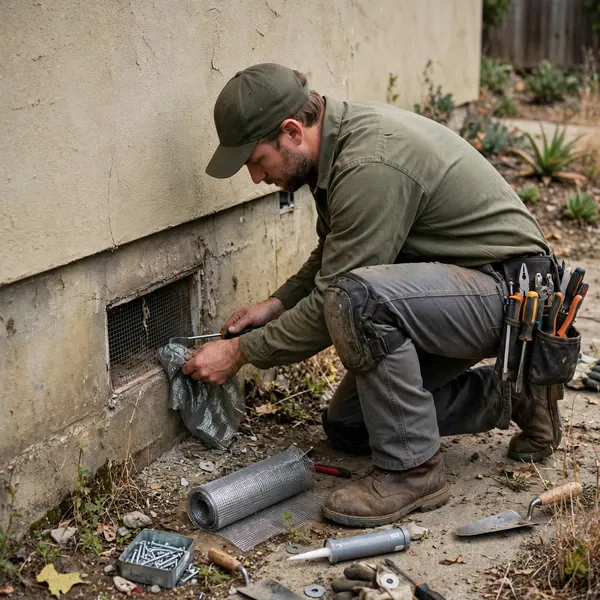
Rodent Entry Point Repair: Fix the Damage That Lets Rats and Mice In
A torn vent screen, a gnawed board or a worn door seal gives rodents an open invitation. PestPunt repairs the damaged parts, closes the joints with gnaw-resistant materials and explains which jobs belong to other trades.
Rodent Entry Point Repair — At a Glance
What it fixes: Screens, trim, closures, door seals, access doors and utility covers.
Why it matters: A seal over rot or a loose frame fails quickly.
Order of work: Handle live rodents, repair, seal, then clean.
Next step: Call (888) 217-6759 for on-site dispatch.
What Rodent Entry Point Repair Means
Rodent entry point repair fixes the building parts that failed and gave rats and mice a way in. A cracked vent screen, a rotted fascia board, a broken tile closure and a worn door frame all count as repairs. Plain gaps are different. You can close a plain gap with mesh and sealant. A damaged part needs restoration, because a seal on top of rot or a loose frame does not last.
PestPunt sends a field representative to your Los Angeles property to repair rodent entry points and to explain which problems need a specialist. Some repairs, such as structural roof work or major stucco work, belong to licensed trades. We tell you when that is the case, and we keep the rodent-proofing part of the job coordinated with that work.
Repair sits in the middle of a three-step path. First you inspect with a rodent entry point inspection. Then you repair damaged parts. Finally you close remaining gaps through rodent entry point sealing.
Why Repairs Matter More Than People Expect
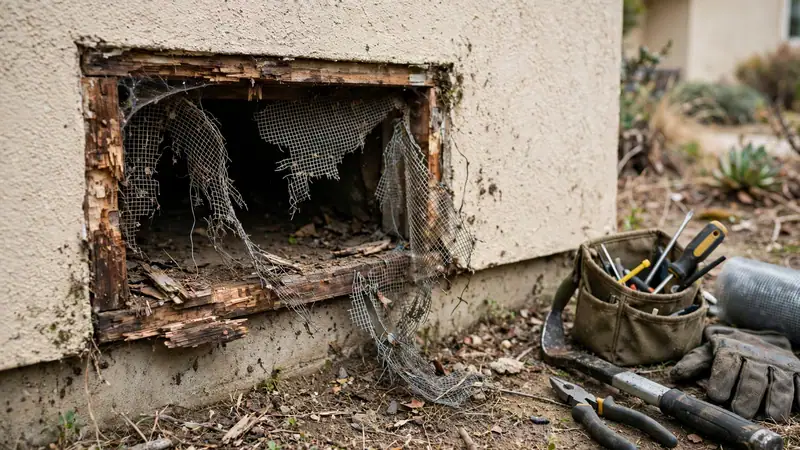
Rodents attack weak points. They gnaw soft or damaged materials first, because those materials give way. The UC Statewide IPM Program states that rodents can gnaw through softer materials such as plastic or wood, and it recommends sheet metal or hardware cloth for sealing. A weak frame around a good seal still fails. The repair gives the seal something solid to hold.
Repair or Seal? How to Decide
Use this table to decide what each opening needs. Our field representative confirms the choice at your property.
| Condition we find | Best response | Why |
|---|---|---|
| Small crack in solid stucco | Seal with metal backing and exterior sealant | The wall is sound, only the gap is open |
| Vent screen torn or rusted | Repair: replace the screen | The old screen cannot hold a seal |
| Fascia or trim rotted and gnawed | Repair: replace the damaged board | Rot leaves nothing solid to fasten to |
| Roof tile closure missing | Repair: replace the closure piece | Sealant cannot replace a missing part |
| Round gap around a pipe | Seal with copper mesh and sealant | The pipe is sound, the gap is the issue |
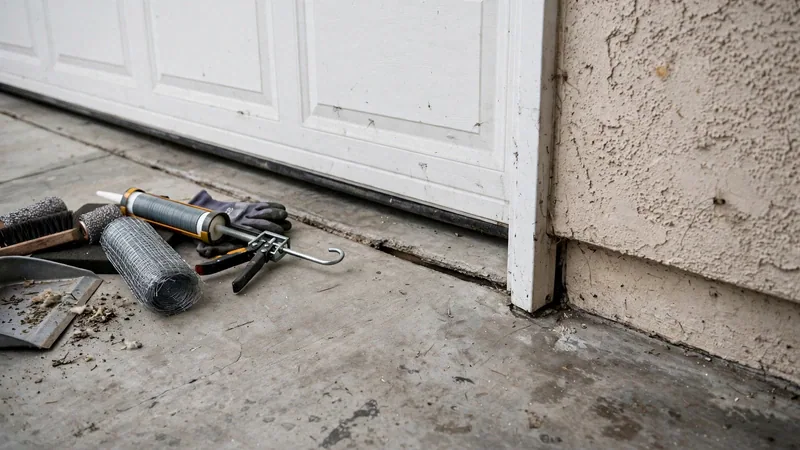
| Garage door seal curled | Repair: replace the seal and corner guards | The seal shape has failed |
| Crawl space access door warped | Repair: rehang or replace the door | A warped door leaves gaps that mesh cannot cover |
| Dryer vent cover missing | Repair: install a metal cover with a damper | The opening needs a working cover |
When both repair and sealing apply, we repair first. A sealed gap over damaged material gives you a short-lived fix.
The Most Common Rodent Entry Point Repairs
Six repairs make up most of the work we see on homes and small commercial buildings.
Vent and louver screens
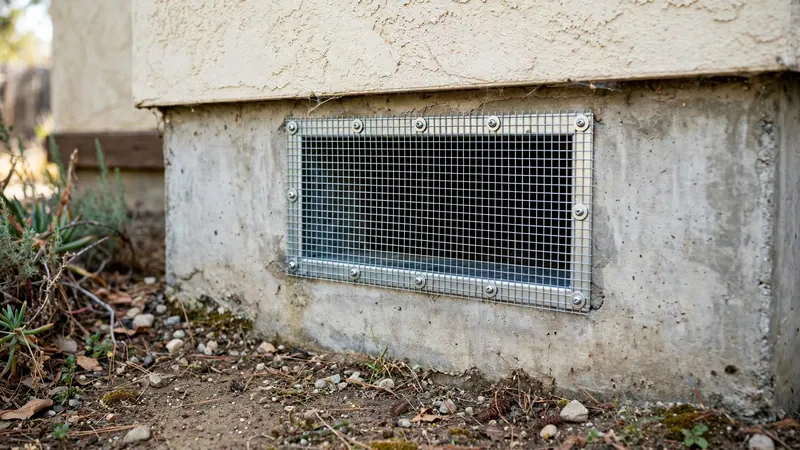
We replace torn or rusted screens with galvanized or stainless hardware cloth. We fasten it with screws and washers so rodents cannot push it loose.
Fascia, soffit and trim
Gnawed and rotted boards get replaced where the damage reaches the structure. Rats return to the same weak spot until the board is sound.
Roof edge and tile closures
Broken or missing closure pieces at the eave leave open channels. Restoring them blocks the path to the attic.
Doors and frames
Garage and entry doors wear at the corners and the threshold. New seals, sweeps and corner guards close those gaps.
Crawl space access and vents
Warped access doors and corroded vent screens leave ground-level openings. We repair or replace them.
Utility covers and penetrations
Missing dryer vent covers, loose escutcheon plates and open line-set gaps need proper covers, not only caulk.
How Rodent Damage Differs From Normal Wear
A building wears out with age. Rodents add a different kind of damage. Knowing the difference helps you decide how urgent a repair is.
Signs of Rodent Gnawing
Fresh gnaw marks look pale and show clean tooth tracks. Rats leave larger marks than mice. Gnawing often concentrates around corners, edges and openings. Our guide to rodent chew marks on wood and wire shows how to recognize them.
Signs of Natural Wear
Weathering looks uniform. Rust, peeling paint and soft rot spread across a surface. Normal wear weakens a part, which then gives rodents an easy target.
Why Gnawing Matters Beyond the Hole
Rodents chew continuously because their front teeth keep growing. Our article on why rats chew through wires and wood explains the habit. Gnawed wiring creates a safety risk, so schedule an electrician when you see exposed copper.
If you find gnawed or exposed wire, switch off the circuit if you can do so safely and call a licensed electrician. Do not touch exposed copper. PestPunt handles the rodent side of the problem, not electrical repair.
How a PestPunt Rodent Entry Point Repair Works
Six steps keep the repair organized, safe and long-lasting.
Confirm the opening
We start with the inspection findings and confirm which openings come from damaged parts.
Handle any live activity
If rodents remain inside, trapping comes first so no animal stays behind the repair.
Remove damaged material
We cut out rotted, gnawed or failed parts back to solid material.
Install a gnaw-resistant replacement
We fit new screens, closures, trim or seals that rodents cannot chew easily.
Seal the joints
Metal mesh and exterior-grade sealant close the seams around the repaired part.
Recheck and record
We inspect the finished work from both sides and note each repair for your records.
What to Do After the Repair
A repaired opening still needs a short monitoring period and a cleanup plan.
Monitor for two weeks
Check the attic, garage and cabinet areas for new droppings or sounds.
Keep traps active if needed
Traps stay along routes until captures stop, as the CDC advises for post-sealing monitoring.
Move to full sealing
Close any remaining gaps with rodent entry point sealing.
Clean and disinfect
Clean droppings and nesting areas with wet methods only.
Replace damaged insulation
Replace soiled insulation after the openings are closed.
Plan whole-home protection
Add door sweeps, landscape changes and yearly checks through home rodent proofing.
For the final step, see our guide to home rodent proofing. For cleanup, see rodent cleanup and decontamination services.
Repair Materials That Hold Up Against Rodents
The right material makes the difference between a repair that lasts for years and one that fails in weeks.
- Galvanized or stainless hardware cloth. UC IPM recommends sheet metal or hardware cloth for gaps larger than ¼ inch. Stainless steel resists rust in coastal air.
- Sheet metal flashing. It covers larger holes and protects edges that rodents like to gnaw.
- Copper mesh. It fills round gaps around pipes and resists corrosion.
- Exterior-grade sealant. It seals the edges of metal, but it does not stop rodents alone.
- Cement-based patch. It fills foundation and slab cracks where soil meets the wall.
- Replacement seals and sweeps. New door seals restore the closure at the base and the sides.
We avoid expanding foam, plastic and wood as stand-alone barriers. Rodents chew through them. Foam works only when a metal layer protects it. You can read the UC guidance in the UC Statewide IPM article on rats and mice.
What Affects the Scope of a Repair Project
Every property needs a different amount of work. You can plan better when you know which factors change the scope. We explain these factors during the visit and confirm the plan with you before work starts.
Access to the Opening
A vent at ground level takes less effort than a ridge vent on a steep roof. Tall rooflines, tight crawl spaces and hillside lots change how the crew reaches the work.
Type and Condition of the Material
Solid stucco needs a simple seal. Rotted fascia needs replacement. Old tile closures may need matching parts. The condition of the material decides whether a repair or a seal fits.
Number of Openings
Rodents often use several openings at once. A property with one failed screen differs from a property with a dozen gaps across the roofline, the garage and the foundation.
Live Activity
Active rodents add steps. We trap first and confirm that activity stops before the final repair. This protects the work and prevents trapped animals from creating new damage.
Related Work by Other Trades
Roof, electrical and stucco work can happen in the same project. Coordinating the order keeps materials in the right place. Tell us about any contractors on site when you call.
We do not publish a flat list of prices because each property differs. We explain the scope on-site so you understand the plan before you approve it.
Repairs Common in Older Los Angeles Homes
Los Angeles includes many homes built before modern rodent-proofing practices. Age alone does not cause rodent problems, but older materials fail in predictable ways.
Raised-foundation bungalows
Crawl space vents, small access doors and old plumbing penetrations leave ground-level gaps. Moisture speeds up rust and wood rot near the foundation.
Mid-century and hillside homes
Open eaves, wood fascia and sloped lots give roof rats and mice many routes. Dense plants against the wall make the gaps harder to see.
Spanish-style homes
Tile roofs rely on closure pieces and flashing at the eave. These parts crack, slip or disappear over time.
Converted garages and ADUs
Added walls and utility runs often leave gaps at the seams where old and new construction meet.
Our attic rodent solutions page explains how attic repairs connect to cleanup and insulation work.
When Repair Needs a Licensed Trade
Not every opening falls under rodent control. Some repairs need roofers, electricians, stucco contractors or garage door technicians. Honest providers tell you where that line sits.
- Structural roof repair and tile replacement across large areas
- Electrical repair after gnawing
- Plumbing repair at damaged lines
- Major stucco or siding replacement
- Garage door replacement
- HOA or landlord approvals for exterior changes
We explain which repairs belong with a trade and which ones we handle as part of rodent proofing. Where several trades are involved, we sequence the work so that rodent-proofing materials go in at the right moment. Send us your project dates when you call, and we will plan around them.
Neighborhoods and ZIP Codes We Repair
PestPunt dispatches field representatives to older and newer neighborhoods across Los Angeles. ZIP codes below guide you, but boundaries overlap, so confirm your address when you call.
Older Eastside neighborhoods
- Highland Park (90042)
- Eagle Rock (90041)
- Boyle Heights (90033)
- Echo Park (90026)
- Silver Lake (90026, 90039)
- Atwater Village (90039)
Central and Southwest LA
- West Adams (90016, 90018)
- Mid-City (90019, 90035)
- Koreatown (90005, 90020)
- Hyde Park (90043)
- Leimert Park (90008)
- Watts (90002)
Westside, Valley and Harbor
- Venice (90291)
- Mar Vista (90066)
- Westchester (90045)
- Van Nuys (91401, 91405)
- Sylmar (91342)
- San Pedro (90731)
Visit our locations page for the full service area, or call for a Los Angeles home not listed here.
How to Choose a Rodent Entry Point Repair Provider
Good repair work looks plain but lasts. Look for these qualities when you compare providers.
Questions to Ask
Ask who repairs the damaged parts and who closes the gaps. Ask which materials they use at each opening, and ask whether they replace failed parts or only cover them. Also ask how they handle rodents still inside and what records they leave.
Warning Signs
Be careful when a provider offers only foam, poison or sprays. Also be careful when the quote arrives before an inspection or when the provider will not name the materials.
Found gnawed trim or a broken screen? Call (888) 217-6759 and a field representative will inspect the damage and explain your repair options.
How to Prepare for Repair Day
A few steps keep the repair on schedule.
- Clear access to the affected walls, vents and garage doors
- Move cars, bikes and storage away from work areas
- Trim plants that block the repair area
- Tell us about nearby roof, stucco or plumbing projects
- Secure pets indoors
- Avoid poison before the visit
Six Repair Mistakes That Let Rodents Return
Most failed repairs share the same cause: someone treated the symptom and skipped the weak point behind it. A homeowner patches a hole, the rodents chew an inch to the left, and the cycle repeats. The mistakes below explain why. Avoid them, and your repair holds through winter storms, summer heat and the seasonal shifts that move rodents toward your home.
Patching over rot
A patch over soft wood fails. Remove the damaged material first.
Using foam as the barrier
Rodents chew foam. Always back it with metal.
Fixing only the visible hole
The gnawed hole often marks a larger weak point behind it.
Skipping the roofline
Roof rats enter at height. Repair the eave, not only the ground floor.
Ignoring wiring damage
Gnawed wires need an electrician, even after the rodents are gone.
Waiting for the next season
Delay lets rodents widen openings and nest deeper.
Frequently Asked Questions About Rodent Entry Point Repair
Rodent entry point repair restores the damaged building parts that let rats and mice enter. Examples include torn vent screens, gnawed trim, missing tile closures and worn door seals. The repair gives sealing materials a solid base.
Repair replaces or restores a failed part. Sealing closes a plain gap in a sound part. Many properties need both, and repair comes first because sealant fails over rot or loose frames.
We use gnaw-resistant materials such as galvanized or stainless hardware cloth, sheet metal, copper mesh and exterior-grade sealant. UC IPM recommends sheet metal or hardware cloth because rodents chew softer materials.
We handle rodent-related repairs and coordinate with other trades. Structural roof work, electrical repair and major stucco work belong to licensed specialists. We tell you when a job falls into one of those groups.
Handle live rodents first. Repairs that close the last exit while animals remain inside can trap them in the walls. Trapping comes first, then repair, then sealing and cleanup.
Fresh gnaw marks look pale with clean tooth tracks. Old marks look dark and worn. A fresh mark near an opening shows that rodents still use it.
Yes. Older bungalows, hillside houses and Spanish-style homes often need screen, trim and closure repairs. We serve neighborhoods such as Highland Park, Eagle Rock, West Adams and Venice.
We recheck the work, advise you on monitoring and plan cleanup after the openings close. Home rodent proofing adds door sweeps, landscape changes and yearly checks.
Final Takeaways
Rodents attack weak parts first, so a durable fix replaces the failed part and then seals the joints. Repair comes after trapping and before cleanup. It also works best when you separate rodent repairs from work that belongs to roofers, electricians and other licensed trades.
When the repairs are done, the next step is home rodent proofing. Call PestPunt at (888) 217-6759 to schedule an on-site visit.
Mobile Rodent Control Services
Repair the Weak Points Rodents Use
Call (888) 217-6759 and a PestPunt field representative will inspect the damage and explain the repair plan.