What Attracts Mice Into a Home
Mice do not wander into houses by chance. They follow clear signals of food, warmth, moisture, and safe places to nest. Understanding those signals lets you remove the invitation before a single mouse becomes a colony.
This guide draws on field observations from California properties, university extension research, and the practical patterns pest professionals see every season. You will learn exactly which everyday conditions pull mice indoors, how those conditions change with the seasons, and the concrete steps that stop the cycle.
The Three Core Needs That Pull Mice Indoors
Every mouse infestation starts with the same three requirements: calories, cover, and a place to raise young. Homes supply all three more reliably than most outdoor environments, especially once nights cool.
Food: The Strongest Magnet
House mice eat frequently. An adult needs only about one-tenth of an ounce of food each day, yet it samples many sites. University of California Integrated Pest Management notes that mice prefer cereal grains and seeds but readily shift to any high-calorie item they find.
Inside California homes the most common food attractants include:
- Dry pet food left in bowls overnight or stored in paper or thin plastic bags
- Birdseed, grass seed, and sunflower seeds kept in garages or sheds
- Open cereal boxes, crackers, rice, oats, and baking mixes in pantries
- Grease films on stovetops, range hoods, and under appliances
- Crumb trails under toasters, behind refrigerators, and along baseboards
- Sweets, chocolate, peanut butter residues, and discarded snack packaging
Mice detect these odors through cardboard and thin plastic. A single overnight bowl of kibble can draw activity from the garage into the kitchen within days.
Field note: Technicians routinely trace the first droppings in a clean kitchen back to pet-food stations or a half-empty bag of birdseed in the garage. Removing those sources often cuts new activity faster than any trap placement alone.
Water and Moisture
House mice obtain most of their water from the food they eat and can survive with almost no free liquid. They still exploit any reliable drip or standing water. Common indoor sources include leaky under-sink pipes, condensation around water heaters and air-conditioning lines, pet water bowls left out, and damp laundry areas.
In California’s drier inland valleys a slow leak under a kitchen sink becomes especially valuable. Fixing that leak removes one reason for mice to linger once they enter.
Shelter, Warmth, and Nesting Material
Once food draws a mouse inside, shelter keeps it there. Mice prefer dark, undisturbed voids close to food. Wall cavities, spaces behind refrigerators and stoves, attic insulation, cluttered closets, and cardboard storage boxes all serve this purpose.
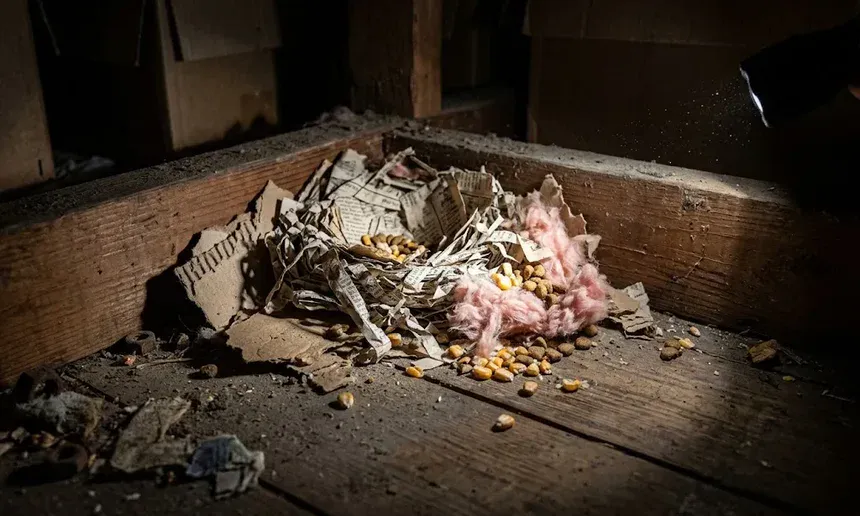
Nesting materials matter equally. Mice shred paper, fabric, insulation, and even dryer lint. Stacks of old newspapers, cardboard boxes on the floor, and soft storage in garages or attics give them ready building supplies. Research from cooperative extension services consistently lists clutter reduction as one of the highest-impact prevention steps.
Seasonal Patterns Across California
Mouse pressure rises sharply when outdoor temperatures drop and natural food sources thin. In most California regions this shift begins in late September and peaks through winter. Coastal areas experience a milder version of the same pattern; inland valleys and foothill communities see stronger influxes.
Warm air leaking from foundation gaps, utility penetrations, and poorly sealed doors acts as a beacon. Mice follow the temperature gradient straight to the opening. Homes with older weatherstripping, unsealed pipe entries, or gaps under garage doors become primary targets.
By spring many populations have already established indoor colonies. Early fall sealing and sanitation therefore deliver the greatest return on effort.
Outdoor Conditions That Guide Mice Toward Your Property
Mice rarely travel long distances when food and cover sit close to a structure. Conditions within fifty feet of the foundation often decide whether a mouse investigates your walls.
Bird Feeders and Seed Spillage
Birdseed ranks among the most powerful outdoor attractants. Seed that falls to the ground creates a continuous buffet. Bags stored in open containers in the garage complete the pathway indoors. Switching to tray-style feeders, sweeping spill zones daily, and moving seed into metal or heavy plastic bins with tight lids sharply reduces this pressure.

Trash, Compost, and Fallen Fruit
Unsecured trash cans, overflowing recycling bins, and compost piles near the house supply both food and nesting material. Fruit trees that drop uneaten fruit create similar problems. Tight-fitting lids, regular removal of fallen fruit, and locating compost at least twenty feet from the foundation remove these lures.
Vegetation and Harborage Against the Foundation
Dense ground cover, ivy growing up walls, stacked firewood, and debris piles give mice protected runways right to potential entry points. Keeping a clear zone of at least eighteen to twenty-four inches around the foundation forces mice into open space where predators and exposure discourage them.
How Mice Actually Enter: The Quarter-Inch Rule
Attraction means little without access. A house mouse compresses its body and passes through any opening approximately one-quarter inch wide—about the diameter of a pencil or the thickness of a standard dime. Extension entomologists and the Centers for Disease Control and Prevention both emphasize this measurement.
Common entry routes on California homes include:
- Gaps under exterior doors and garage doors where weatherstripping has worn
- Unsealed openings around water pipes, gas lines, electrical conduit, and cable entries
- Dryer vents and exhaust openings without tight screens
- Foundation cracks, weep holes in brick veneer, and sill-plate gaps
- Attic vents, soffit openings, and roof-line junctions
- Pet doors and poorly fitted window screens
Mice also hitch rides in cardboard boxes, stored furniture, and firewood brought indoors. Inspecting these items before storage prevents accidental introduction.

For a deeper look at how many mice typically occupy a single nest once they establish, see our related guide on how many mice live in one nest.
Specific Household Areas That Draw Activity
Kitchens and Pantries
Kitchens concentrate food odors and grease. Even homes that appear spotless often retain residue under appliances and along the toe-kicks of cabinets. Mice travel these edges at night, sampling crumbs and grease films. Storing dry goods in glass, metal, or thick plastic containers with tight lids removes the primary food reward.
Garages and Storage Spaces
Garages frequently house pet food, birdseed, and cardboard storage. The large door creates multiple gap opportunities. Elevating storage on shelves, switching to sealed bins, and installing a tight door sweep eliminate the majority of garage-related activity.
Attics, Crawl Spaces, and Wall Voids
These areas offer darkness, stable temperatures, and nesting material in the form of insulation. Once mice reach them they rarely leave voluntarily. Sealing exterior penetrations and reducing clutter on the floor of storage areas limits the appeal.
Laundry Rooms and Utility Closets
Warmth from water heaters and dryers, plus occasional moisture, makes these spaces attractive secondary sites. Checking for gaps around pipe and duct penetrations here pays repeated dividends.
Experience-Based Prevention Steps That Deliver Results
Effective prevention combines sanitation, exclusion, and ongoing monitoring. The sequence matters. Removing food first reduces the reward for any mouse that still finds a way in. Sealing entry points then stops new arrivals. Monitoring confirms the problem has ended.
Immediate Actions You Can Take This Week
- Store all pet food, birdseed, and dry pantry goods in rodent-resistant containers
- Clean under and behind appliances; degrease stovetops and range hoods
- Empty and rinse pet bowls after each feeding; do not leave food out overnight
- Sweep seed under bird feeders daily or relocate feeders farther from the house
- Install or replace door sweeps and weatherstripping on exterior and garage doors
- Inspect and seal gaps around pipes and utility lines with copper mesh and exterior-grade sealant
- Move firewood and debris piles at least twenty feet from the foundation
- Trim vegetation to create a clear buffer zone around the exterior walls
For larger or established problems, professional exclusion work addresses hard-to-reach penetrations and confirms that every gap receives proper materials. Mice chew through ordinary expanding foam and soft fillers; steel wool, copper mesh, and hardware cloth resist their teeth.
Explore available options through our services overview or check coverage for your area on the locations page.
Signs That Attractants Have Already Drawn Mice Inside
Early detection prevents population growth. Watch for these indicators:
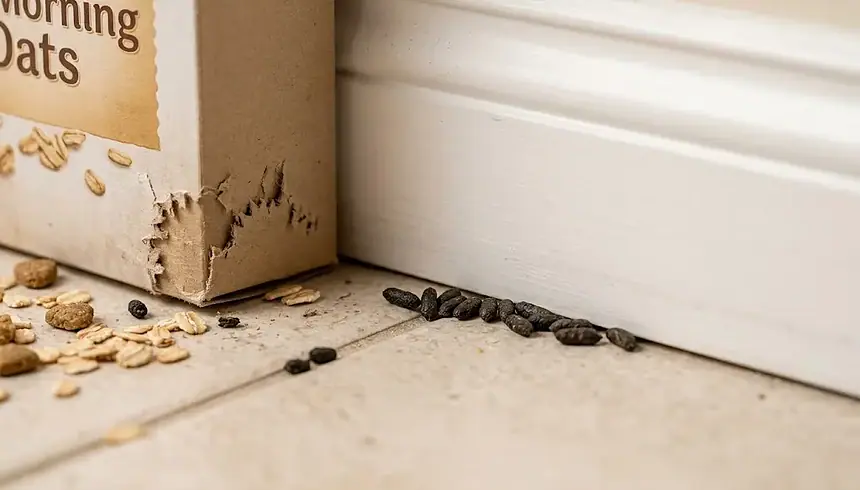
- Small dark droppings concentrated along walls, inside cabinets, or near food sources
- Gnaw marks on packaging, wood, or wiring
- Grease or dirt rub marks along baseboards and entry points
- Scratching or scurrying sounds in walls or ceilings at night
- Shredded paper, fabric, or insulation forming nests in secluded spots
- A persistent musky odor in enclosed areas
Fresh droppings appear soft and dark; older ones harden and fade. Finding new droppings after a thorough cleaning confirms active presence.
Why Ordinary Cleaning Alone Rarely Solves the Problem
Many homeowners assume a deep clean ends mouse activity. Sanitation helps, yet mice survive on tiny amounts of food and travel through voids that cleaning never reaches. Without exclusion they simply shift feeding sites or re-enter through the same gaps.
University extension publications stress the three-part approach: sanitation to reduce resources, exclusion to block entry, and population reduction when mice are already present. Skipping any leg leaves the system incomplete.
In California’s varied climate the same principles hold from San Diego to the Sacramento Valley. Local building styles differ, but the biology of the house mouse remains constant.
Materials and Methods That Actually Keep Mice Out
Successful exclusion relies on materials mice cannot easily chew. Copper mesh or stainless-steel wool packed tightly into gaps, then covered with exterior sealant, outperforms foam alone. Hardware cloth with openings no larger than one-quarter inch protects vents. Door sweeps made of durable rubber or brush material close the gap under doors.
Avoid relying solely on ultrasonic devices. Extension research consistently finds that mice quickly habituate to the sound, rendering the devices ineffective for long-term control.
For authoritative guidance on house mouse biology and management, consult the University of California IPM house mouse page and the CDC rodent control recommendations.
When Professional Help Becomes the Practical Choice
Some situations exceed DIY capacity: multiple entry points high on the structure, activity inside wall voids, or repeated re-infestation after homeowner efforts. A trained technician inspects the entire exterior and interior, identifies active runs, seals openings with appropriate materials, and places monitoring devices to verify results.
Because PestPunt operates as a service-area business, technicians travel directly to your property across California. No office visit is required. The focus remains on solving the specific conditions that attracted mice to that individual home.
Frequently Asked Questions
Food ranks as the strongest attractant. Mice detect accessible calories from pet food, grains, cereals, seeds, kitchen grease, and crumbs. Warmth, shelter, and easy entry points follow closely, especially when outdoor temperatures drop in fall and winter across California.
House mice obtain most of their moisture from food and can survive with little or no free water. They still drink when sources such as leaky pipes, pet bowls, condensation, or standing water appear, which helps them stay longer once inside.
A house mouse squeezes through openings as small as one-quarter inch—roughly the width of a pencil or the thickness of a dime. Any gap that size or larger around doors, pipes, vents, or the foundation becomes a potential entry route.
Cooler outdoor temperatures and declining natural food sources drive mice indoors. Heated homes offer stable warmth, protection from predators, and reliable calories. California’s mild winters still trigger this seasonal shift in many inland and coastal areas.
Yes. Even tidy kitchens leave grease films, pet food residue, or birdseed spills that mice detect. Outdoor clutter, vegetation against the foundation, and unsealed utility penetrations create pathways regardless of interior cleanliness.
Bird feeders and spilled seed, unsecured trash, stacked firewood against walls, dense ground cover, fallen fruit, and compost piles near the structure all supply food and cover. These conditions shorten the distance a mouse travels to find an entry point.
Putting the Knowledge to Work
Mice respond to opportunity. When you remove the food sources, eliminate moisture, clear harborage, and seal every quarter-inch opening, the home loses its appeal. The same principles apply whether you live in a coastal bungalow, an inland ranch house, or a hillside property in the foothills.
Start with the highest-impact changes: secure pet food and birdseed, clean grease and crumbs, install door sweeps, and seal visible gaps around pipes. Monitor for new signs over the following two weeks. If activity continues, expand the inspection to the full exterior and consider professional exclusion support.
For additional resources and a complete list of topics, visit the site map.
Consistent attention to these attractants protects your home far more effectively than reacting after an infestation has already taken hold.
California Mobile Mouse Control Services
Ready to stop the attractants at the source?
Call 24/7 dispatch at (888) 217-6759 or email [email protected] to schedule an on-site assessment.