Salmonella and Rodents: How Contamination Happens
Rodents carry Salmonella in their intestines, and they leave droppings, urine, and bacteria wherever they walk. This guide shows how contamination reaches your food and surfaces, which items to throw away, how to disinfect a kitchen, and when to bring in a California field representative.
Salmonella and Rodents at a Glance
How it spreads: Droppings and rodent contact leave bacteria on food and surfaces. You swallow them from your hands or your food.
Typical symptoms: Diarrhea, stomach cramps, and fever, usually starting within hours to several days.
Safe response: Discard exposed food, wet-clean and disinfect surfaces, wash dishes, and wash your hands often.
Best prevention: Remove the rodents, seal gaps, and store food in sealed containers.
What Salmonella Is and Why Rodents Carry It
Salmonella is a group of bacteria that lives in the intestines of many animals. It causes a diarrheal illness in people that can range from mild to life-threatening. The CDC’s fact sheet on pet and feeder rodents states that rodents can carry Salmonella and still look healthy, which means a clean-looking mouse can still contaminate your kitchen.
University of California pest guidance also lists salmonella among the diseases house mice can carry, alongside leptospirosis and lymphocytic choriomeningitis. Wild mice and rats do not carry salmonella in every case, but you cannot tell which ones do. Treat every rodent as a possible carrier.
Where the Bacteria Live
Salmonella lives in the gut and leaves the body in droppings. A rodent also spreads it through fur and feet after it walks through its own waste. Every surface the animal crosses can pick up bacteria.
Why a Kitchen Is the Worst Place for It
Kitchens combine food, water, warmth, and shelter. Rodents come for all four. They also travel at night, when no one sees them walk across plates, open boxes, and food prep areas.
How Rodent Contamination Reaches Your Food
Contamination follows a few predictable routes. Understanding them helps you decide what to clean, what to keep, and what to throw away.
Droppings in Food and on Packaging
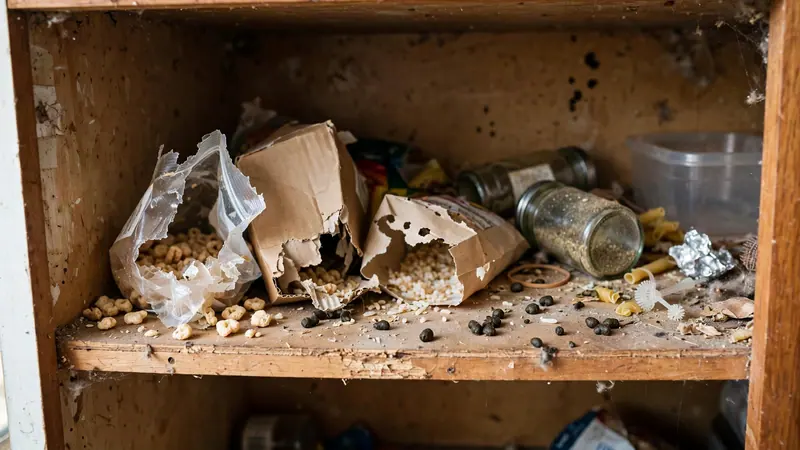
A mouse leaves dozens of droppings in a single night. Droppings land on open food, in cereal boxes, inside cabinets, and along the edges of shelves. Mice also gnaw through cardboard and thin plastic to reach food, which leaves saliva and bacteria on the packaging.
Urine and Body Contact
Rodents urinate as they travel. Urine soaks into paper, cloth, and wood. Fur and feet carry bacteria from droppings onto clean surfaces.
Hands, Sponges, and Cross-Contamination
People move bacteria themselves. You touch a contaminated shelf, then touch a utensil, a dish, or your mouth. A sponge that wipes a contaminated counter spreads bacteria to the next surface. This secondary spread explains why careful hand washing matters as much as disinfecting.
Pet Food and Bowls
Pet food attracts rodents, and pets can carry bacteria on their paws and fur. Wash bowls, scoops, and feeding mats after any rodent activity.
Contaminated Dust and Cleanup Mistakes
Dry sweeping lifts dried droppings into the air and onto nearby surfaces. A wet method keeps particles on the paper towel instead of in your kitchen.
Where Rodents Contaminate a Kitchen Most Often
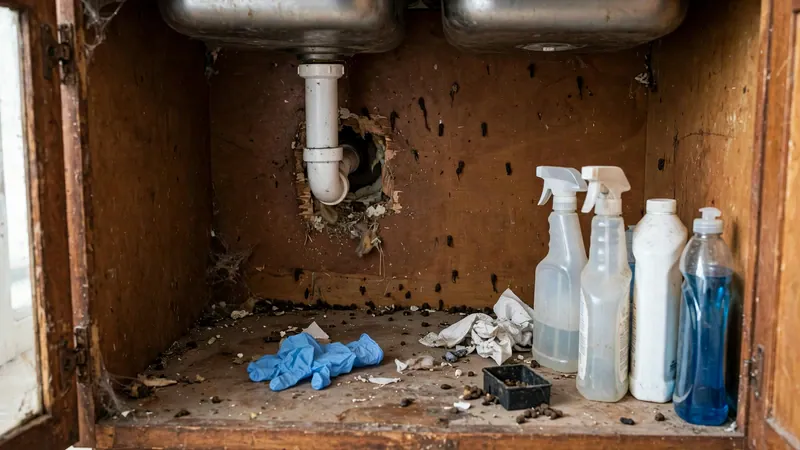
Field inspections show the same hotspots again and again. Check these places with gloves on, and look for droppings, gnaw marks, grease rubs, and shredded nesting material.
- Pantry shelves: Cereal, rice, flour, pasta, and snack boxes top the list. Look at the corners and the back of each shelf.
- Under the sink: Pipes and wall gaps give rats and mice a direct path from wall voids into the cabinet.
- Behind the stove and refrigerator: Warm motors and crumbs attract mice. Droppings collect in the dust behind appliances.
- Drawers and utensil trays: Mice nest in rarely used drawers. Wash everything stored in them.
- Pet feeding stations: Open kibble bags and bowls left out overnight feed rodents.
- Garage and storage freezers: Stored bulk food, bird seed, and pet food supply a steady meal.
If you find droppings in several of these areas, rodents likely live in the walls. Call our team for a full inspection, and review our guide to cleaning areas contaminated by mice before you begin.
Salmonella Symptoms and When to Call a Doctor
Salmonella illness, called salmonellosis, usually begins within hours to several days after you swallow the bacteria. Most healthy adults recover on their own within about a week, but some people become seriously ill.
Common Symptoms
- Diarrhea, sometimes bloody
- Stomach cramps and nausea
- Fever and chills
- Vomiting and headache
People Who Face Higher Risk
The CDC advises that children younger than five, older adults, and people with weakened immune systems face a higher risk of severe illness. Keep these family members out of cleanup areas, and do not let them handle contaminated items.
What You Should Do
Drink fluids to prevent dehydration. Call your doctor if symptoms are severe, if you cannot keep liquids down, if diarrhea lasts several days, or if fever stays high. Tell the doctor you found rodent contamination in your kitchen.
Six Steps to Decide What Food to Keep or Throw Away
When rodents reach your pantry, you must decide what stays and what goes. These six steps keep the decision simple and safe.
Empty the Affected Area
Take everything off the shelf or out of the cabinet. Work on a clean surface and wear gloves.
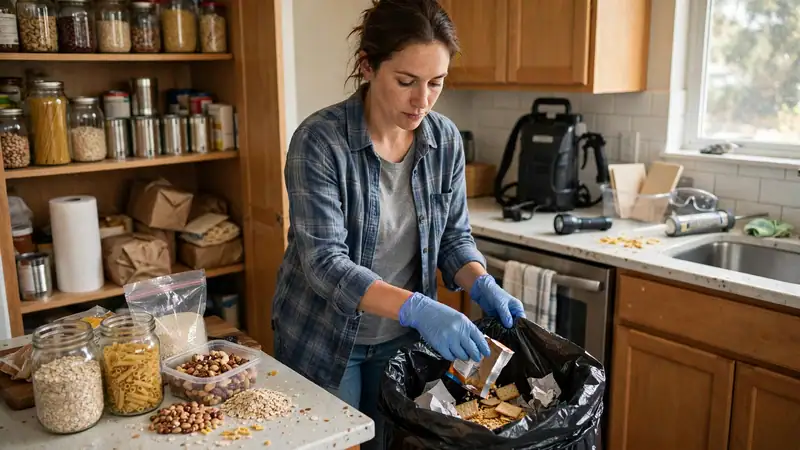
Throw Away Open and Gnawed Items
Discard food in paper, cardboard, thin plastic, or cloth packaging that rodents touched. Do the same for any item with droppings, urine, or gnaw marks.
Discard Food That Rodents May Have Reached
The CDC advises people not to eat food that rodents may have had access to. If you doubt it, throw it out.
Handle Sealed Cans and Jars With Care
Wash undamaged cans and jars with soap and water, then wipe them with disinfectant and rinse. Throw away any that are dented, leaking, or swollen.
Wash Dishes, Utensils, and Containers
Wash every dish, pan, and utensil stored in the affected area with hot, soapy water. Run what you can through the dishwasher on a hot cycle.
Restock Only After the Rodents Are Gone
Hold back new food until a professional confirms that activity has stopped and the entry points are sealed. New food draws a new wave.
How to Disinfect a Kitchen After Rodent Contamination
Use a wet method on every surface. Our page on whether you can clean rodent droppings yourself explains the safety side in more depth.
Ventilate and Gear Up
Open windows and doors for at least 30 minutes. Put on rubber or nitrile gloves, eye protection, and a respirator if the area is dusty or enclosed.
Wet the Droppings and Stains
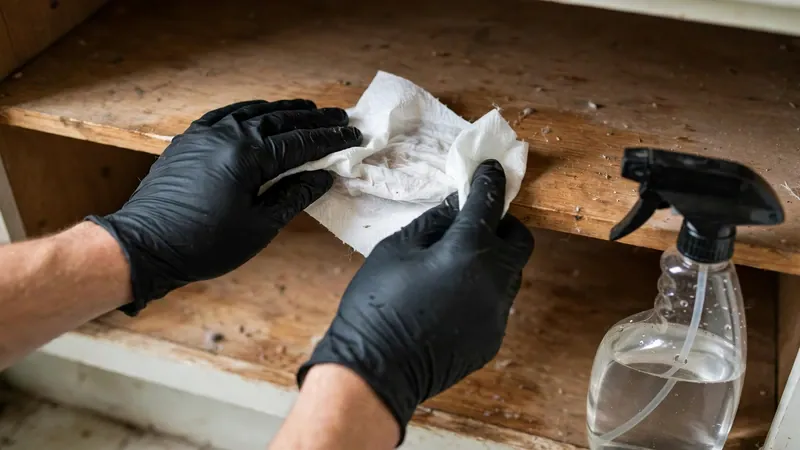
Spray droppings, urine stains, and nesting material with disinfectant until they are soaked. Never sweep or vacuum dry material.
Wipe Up and Bag the Waste
After the label contact time, wipe up the material with disposable paper towels. Seal everything in a plastic bag, then place that bag in a second bag.
Wash Hard Surfaces First
Clean shelves, drawers, and counters with hot, soapy water to remove grime. Disinfectants work better on clean surfaces.
Disinfect and Let Surfaces Air Dry
Apply a disinfectant that lists food-contact use on its label, follow the contact time, and rinse any surface where food touches directly.
Remove Gloves, Wash Hands, and Replace Sponges
Wash your gloved hands, take the gloves off, and wash your hands again with soap and water. Throw away sponges and cloths that touched contaminated areas.
Kitchen and Pantry Rodent Help Across California Neighborhoods
PestPunt sends local field representatives to your door. We inspect the kitchen, find the rodent routes, and explain what to clean and what to seal. Here are neighborhoods where we regularly dispatch crews:
- Los Angeles area: Silver Lake (90039), Koreatown (90005), Studio City (91604), Santa Monica (90401), and Pasadena (91101). Visit our rapid rodent control in LA page and our rodent droppings cleanup in Los Angeles page.
- Bay Area: Noe Valley (94114), Bernal Heights (94110), the Marina District (94123), and Rockridge (94618). See our 24/7 rodent removal in San Francisco page.
- San Diego: Hillcrest (92103), La Jolla (92037), and Downtown (92101).
- Central Valley and Sacramento: Fig Garden in Fresno (93704), Land Park in Sacramento (95818), and Natomas (95834).
- San Jose: Rose Garden (95126), Willow Glen (95125), and Almaden Valley (95120).
Older apartment buildings in neighborhoods such as Koreatown and Hillcrest share walls, pipes, and trash rooms, so mice travel between units. Single-family neighborhoods such as Land Park and Willow Glen see rodents enter through garages and rooflines. We tailor each inspection to the building style. See all areas on our California locations page.
Keep or Throw Away: A Quick Reference After Rodent Contact
Use this table as a quick reference. When you feel unsure, throw the item out.
| Item | Decision | Why | How to handle |
|---|---|---|---|
| Open cereal, flour, rice, pasta | Throw away | Droppings and urine can reach open food | Double-bag and remove from the home |
| Food in cardboard or thin plastic | Throw away | Rodents gnaw through it | Discard the item and wipe the shelf |
| Undamaged cans and glass jars | Clean and keep | Intact seals protect the contents | Wash, disinfect, rinse, and dry |
| Dishes and utensils | Wash again | Rodent contact can leave bacteria | Hot soapy water or a hot dishwasher cycle |
| Pet food and bowls | Discard food, wash bowls | Pet food draws rodents repeatedly | Replace with sealed storage |
| Sponges and dish cloths | Throw away | They spread bacteria between surfaces | Replace after cleanup |
Our next guide, on rat-bite fever symptoms and causes, covers a different illness that rats spread through contact and contaminated food.
Restaurants, Rentals, and Shared Buildings
A rodent problem in a restaurant, café, or rental unit carries extra consequences. Owners must protect customers and tenants, and they must document what they did. We handle these jobs with that responsibility in mind.
Restaurants and Food Businesses
Work with a pest control provider that inspects, removes rodents, seals entry points, and explains the cleanup steps in writing. Ask your local environmental health office what it expects from your business, because rules differ by county.
Landlords and Property Managers
Shared walls and trash rooms spread problems between units. Treat the whole building, not one apartment. Tell tenants what to store, what to throw away, and when the visit happens.
Tenants
Report droppings and gnaw marks in writing. Photograph what you find. Keep food in sealed containers while you wait for treatment.
See how our professional rat removal and decontamination services fit a commercial property, or call us for a custom plan.
Handle It Yourself or Call a Professional?
A small, recent problem can suit careful cleanup. A recurring, hidden, or widespread problem needs trained help.
DIY Cleanup May Work When
- You find a few droppings in one cabinet.
- You can remove and replace every exposed food item.
- You have gloves, disinfectant, and plastic bags ready.
- No young child or immunocompromised person handles the area.
Call a Professional When
- You find droppings in several rooms or behind appliances.
- You hear scratching in walls or ceilings.
- Droppings return after you clean.
- You run a food business or manage a rental property.
- You see gnawed wires or hear activity at night.
Cleaning a kitchen without removing the rodents wastes time and money. Our rodent services cover inspection, removal, sealing, and cleanup, and our same-day mouse removal option helps when you cannot wait.
How to Keep Rodents and Salmonella Out of Your Kitchen
Rodent control experts agree on one principle: remove food, water, and shelter, and block entry. The UC Integrated Pest Management program notes that exclusion is the most successful and permanent form of house mouse control and that mice squeeze through openings the size of a dime.
- Store dry food in glass, metal, or thick plastic containers with tight lids.
- Wipe crumbs and spills every night, and sweep floors before bed.
- Take out the trash daily if you see activity, and use a lidded can.
- Pick up pet food at night or store it in sealed bins.
- Seal gaps around pipes, vents, and cabinets with metal mesh and sealant.
- Fix leaks under sinks and around dishwashers.
- Keep stored boxes off the floor and away from walls in the garage.
- Wash hands with soap and water after handling trash or cleaning supplies.
Six Mistakes That Spread Rodent Contamination
1. Wiping Without Washing Hands
You move bacteria from a counter to your mouth or to food. Wash your hands after every cleanup task.
2. Keeping Gnawed Food
Cutting off the damaged part does not remove bacteria. Throw the whole item out.
3. Sweeping Dry Droppings
Sweeping scatters particles across the kitchen. Use a wet method with disinfectant.
4. Skipping the Soap Step
Disinfectant works poorly on greasy surfaces. Wash first, then disinfect.
5. Reusing Sponges
A contaminated sponge carries bacteria to every surface it touches. Replace it.
6. Cleaning Without Sealing
Rodents return to open entry points. Seal gaps and remove the rodents before you restock.
Frequently Asked Questions About Salmonella and Rodents
Yes. Rodents can carry Salmonella in their intestines and shed it in droppings, even when they look healthy. University of California pest guidance lists salmonella among the diseases house mice can carry. Treat every rodent sign in your kitchen as a possible contamination source.
Droppings, urine, and bacteria on rodent fur and feet reach open food, packaging, dishes, and counters. You then swallow the bacteria from contaminated food or from your hands. Sealed containers and fast cleanup stop most of this spread.
Common symptoms include diarrhea, stomach cramps, nausea, fever, and vomiting. They usually start within hours to several days after exposure. Call a doctor if symptoms are severe or long-lasting, and mention rodent contamination.
Yes, in most cases. The CDC advises people not to eat food that rodents may have reached. Discard open, gnawed, or stained packages. Wash and disinfect undamaged cans and jars before use.
Ventilate the room, wear gloves, wet the droppings with disinfectant, wipe them up with paper towels, and bag the waste. Wash surfaces with soap and water, then apply a disinfectant and follow the label. Never sweep or vacuum dry droppings.
Yes. Open kibble and bowls left out overnight feed rodents, and rodents leave droppings in the food. Store pet food in sealed containers, remove bowls at night, and wash feeding areas after any rodent activity.
The CDC lists children younger than five, older adults, and people with weakened immune systems as groups at higher risk of severe illness. Keep them away from cleanup and contaminated items, and ask a professional to handle heavy contamination.
Call when you find droppings in several areas, hear noises in walls, or see activity after you clean. Call right away if you run a food business or manage rental units. PestPunt field representatives travel to your California property 24/7.
Final Takeaways
Rodents can spread Salmonella through droppings, urine, and contact with food and surfaces. You reduce the risk when you throw away exposed food, wash and disinfect surfaces with wet methods, wash your hands, and store food in sealed containers. Cleaning works only when you also remove the rodents and seal how they enter.
Call (888) 217-6759 to book an inspection, then read our next guide on rat-bite fever symptoms and causes.
Mobile Rodent Control Services
Stop the Contamination at the Source
Call our team at (888) 217-6759 for an on-site inspection in California. We will find how rodents reach your kitchen, remove them, and explain the cleanup steps.