Is It Safe to Clean Rodent Droppings Yourself?
Sometimes it is, if you follow the right method and the problem is small. Dry sweeping and vacuuming are never safe. This guide shows you exactly when DIY cleanup works, how to wet-clean step by step, what protective gear you need, and which red flags mean you should call a trained team.
Cleaning Rodent Droppings Yourself at a Glance
Safe when: The area is small, ventilated, on hard surfaces, and you have gloves and disinfectant.
Never do this: Never sweep, dust, or vacuum dry droppings. That lifts contaminated dust into your breathing zone.
Wet method: Ventilate, glove up, soak with disinfectant, wipe, double-bag, disinfect, and wash your hands.
Call a pro when: Contamination is heavy, hidden, in an attic or crawl space, or repeats after cleanup.
When DIY Droppings Cleanup Is Safe, and When It Is Not
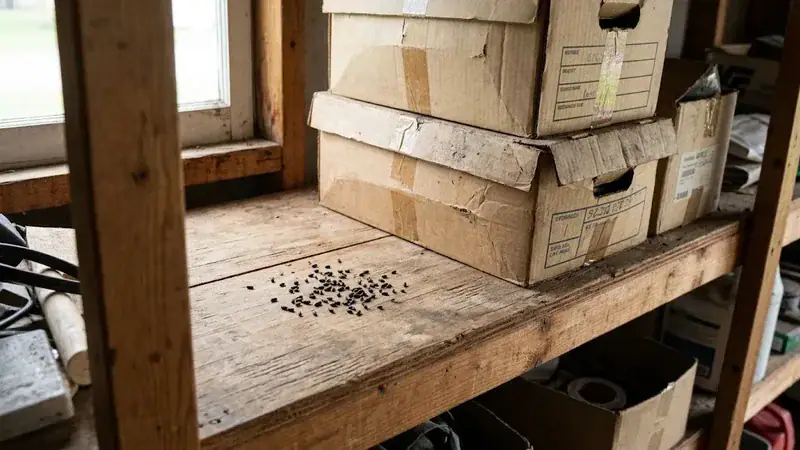
The honest answer depends on three things: how much contamination you have, where it sits, and who lives in your home. A handful of droppings on a garage shelf is a very different job from a heavily soiled attic.
The reason for caution is simple. Rodent droppings, urine, and nests can carry germs. The CDC explains that hantavirus spreads when people breathe in dust from rodent waste, and that sweeping or vacuuming can stir that dust into the air. Other germs, such as those that cause leptospirosis and salmonella, spread through contact with urine and droppings.
DIY Usually Works For
- A small number of droppings on a hard, easy-to-clean surface
- A well-ventilated garage, kitchen cabinet, or pantry
- A single dead rodent that you can reach and bag
DIY Usually Fails For
- Attics, crawl spaces, and wall voids with heavy droppings
- Soaked insulation, large nests, or old accumulations
- Spaces that have been closed for months or years
- Homes where a child, pregnant person, or immunocompromised person lives
Why You Must Never Sweep or Vacuum Dry Droppings
Every health agency repeats one rule: do not sweep or vacuum rodent droppings. The reason is physical. Dried droppings and urine crumble into fine dust. A broom throws that dust into the air. A standard vacuum blows the finest particles through its exhaust.
What Happens in Your Breathing Zone
When you sweep, particles rise to chest and face height, exactly where you breathe. They also settle on nearby surfaces, food, and clothing. You can transfer them to your mouth and eyes without noticing.
What Wet Cleaning Does Instead
Soaking droppings with disinfectant keeps them heavy and stuck to the surface. It also begins to kill germs before you touch the material. The San Diego County environmental health guidance on wet cleaning makes the same point: use disinfectant and a wet method, never sweeping or vacuuming.
A California Reminder
Local health departments, including San Diego County, have reminded residents to use wet cleaning after finding hantavirus-positive wild mice. Deer mice live in many California regions and can enter garages, sheds, and cabins. Treat any dry droppings in those spaces with extra care.
The Protective Gear and Supplies You Need
Gather everything before you start, so you never leave a contaminated area half cleaned.
Protective Gear
- Gloves: Rubber, nitrile, or vinyl gloves that cover your wrists. Do not use thin cloth gloves.
- Eye protection: Goggles that seal around your eyes help block splashes and dust.
- Respirator: For dusty, enclosed, or heavily contaminated spaces, use a fitted respirator rated for fine particles, such as an N95 or better. Follow the manufacturer’s fit instructions.
- Clothing and shoes: Long sleeves, long pants, and closed shoes or boots you can wash or discard.
Cleaning Supplies
- A spray bottle with disinfectant, or a mix of one part bleach to nine parts water, made fresh
- Disposable paper towels
- Heavy plastic trash bags, two per load
- Soap and water for your hands and for pre-cleaning
Safety Reminders
Never mix bleach with ammonia or other cleaners. Keep pets and children out. Follow each product’s label for contact time and ventilation.

Six Steps to Decide Whether You Should Clean It Yourself
Use these six steps before you pick up a spray bottle. They take five minutes and can prevent a serious mistake.
Estimate the Amount
Look at the size of the area from a distance. A few droppings on one shelf differ from a full corner or an entire attic floor.
Check the Location
Hard surfaces such as shelves and tile clean easily. Insulation, carpet, upholstery, and wall voids do not. Enclosed attics and crawl spaces raise the risk.
Look for Nests and Dead Rodents
Nests hold concentrated waste. If you see shredded material or a carcass, decide whether you can wet and bag it safely.
Consider Who Lives in the Home
Ask whether anyone has asthma, a weakened immune system, or pregnancy. If so, let a professional handle the cleaning.
Confirm You Have Protective Gear
Gloves, eye protection, disinfectant, bags, and a respirator for dusty spaces should be in hand before you begin.
Confirm Rodents Are Gone or Call for Removal
If activity continues, fresh droppings will return. Arrange rodent removal before or alongside cleanup.

How to Clean Rodent Droppings Safely, Step by Step
This wet-cleaning method follows public health guidance from the CDC and local California health departments. It also works for urine stains. Read our guide to leptospirosis from rat urine to see why urine needs the same care.
Ventilate for at Least 30 Minutes
Open doors and windows before you begin, and leave the area while fresh air moves through. Do not use fans that blow dust around.
Put On Gloves, Eye Protection, and a Respirator
Check that gloves cover your wrists. Seal the respirator on your face if the space is dusty or enclosed.
Spray Until Droppings Are Thoroughly Wet
Soak droppings, urine stains, and nesting material with disinfectant or a fresh one-to-nine bleach mix. Spray gently, so you do not scatter them.
Let It Soak, Then Wipe Up
Wait about five minutes, or follow the product label. Wipe the material up with paper towels and place them straight into a plastic bag.
Disinfect the Whole Area
Mop or wipe floors, shelves, and tools with disinfectant. Wash fabrics in hot water, and discard soaked cardboard and insulation.
Double-Bag, Remove Gloves, and Wash Your Hands
Seal the bag, place it inside a second bag, and throw it away. Wash your gloved hands, remove the gloves, and wash your bare hands with soap and water.

Droppings Cleanup Help Across California Neighborhoods
PestPunt field representatives travel to your property, inspect where the droppings came from, and explain what to clean and what to leave to trained hands. Typical dispatch neighborhoods include:
- Los Angeles: Highland Park (90042), Echo Park (90026), Koreatown (90005), Van Nuys (91401), and Pasadena (91101). See our rodent droppings cleanup in Los Angeles and 24/7 Los Angeles rodent control pages.
- San Francisco and Oakland: Mission District (94110), Bernal Heights (94110), Marina District (94123), and Rockridge (94618). See San Francisco rodent pest control.
- San Diego: Ocean Beach (92107), Hillcrest (92103), and Pacific Beach (92109). See emergency rodent removal in San Diego.
- Sacramento and Fresno: Curtis Park (95818), Midtown (95816), Fig Garden (93704), and Tower District (93728). See Sacramento rodent pest control.
- San Jose and Long Beach: Willow Glen (95125), Downtown (95113), Belmont Shore (90803), and Bixby Knolls (90807). See San Jose rodent exterminators.
Garages and detached sheds in these neighborhoods often hold years of stored boxes and dusty corners, which raise the stakes for DIY cleanup. Field representatives bring the right protective equipment and disposal method. See all coverage areas on our locations page.
Attics, Crawl Spaces, Sheds, and Dead Rodents
Some spaces call for extra planning. Know these before you start.
Attics
Heat, tight spaces, and heavy insulation make attics risky. Rodents flatten insulation into tunnels and urinate along the same routes. Standing in that dust without proper equipment invites trouble. Call a professional for anything beyond a few droppings near the hatch. See our attic rodent solutions.
Crawl Spaces
Crawl spaces stay damp and dark. Dampness helps germs survive longer, and tight quarters make wet cleaning and bagging hard. Plan professional help here.
Sheds, Cabins, and Garages
Spaces closed for long periods can hold large amounts of dried waste. Ventilate for longer than usual and use full protective gear. Local health departments in California advise caution for these spaces, especially where deer mice live.
Dead Rodents
Wet the body and the area under it with disinfectant, wear gloves, and place the animal in a bag with the paper towels. Double-bag and throw it out. If you cannot find or reach a body, our team offers dead rodent removal across California.
Food Areas
Throw away food that rodents touched, and wash and disinfect shelves and dishes. Read about salmonella and rodent contamination for a full kitchen plan.
DIY or Professional? A Quick Reference Table
Use this table to match the situation with a safe response.
| Situation | DIY reasonable? | Why | Better choice |
|---|---|---|---|
| A few droppings on a garage shelf | Often yes | Small, hard surface, easy ventilation | Wet cleanup with gloves |
| Droppings inside kitchen cabinets | Often yes | Contained, but food may need disposal | Wet cleanup, discard exposed food |
| Heavy droppings in an attic | No | Enclosed, dusty, and often wide-spread | Professional cleanup and insulation removal |
| Nest in a wall void | No | Hidden and hard to reach | Professional removal |
| Shed closed for months | Use caution | Dried waste and dust can build up | Ventilate longer, gear up, or hire help |
| Anyone with asthma or weak immunity at home | No | Higher health risk | Professional cleanup |
| Droppings return after cleanup | No | Rodents still have access | Rodent removal and exclusion first |
Our related guides, mouse droppings and asthma and rodent dander and indoor air quality, explain why sensitive households should lean toward professional cleanup.
What a Professional Visit Includes
A trained field representative handles the pieces that DIY cleanup cannot.
What You Handle Yourself
- Remove or protect food and pet bowls.
- Clear a path to the attic hatch, crawl space door, or garage corner.
- Note where you saw droppings, heard noises, or smelled odors.
- Keep children and pets away on the day of the visit.
What a Field Representative Handles
- Inspection of attics, walls, crawl spaces, and exterior entry points.
- Safe removal of rodents, nests, and heavily soiled material.
- Cleanup and decontamination planning in the right order.
- Sealing the gaps that let rodents in.
- Clear advice on what to do afterward.
Learn about our rodent cleanup and decontamination services, our guide to cleaning mouse-contaminated areas, and our full list of services. Read our about page to learn how our field model works.
Keep the Droppings From Coming Back
Cleanup only lasts if rodents cannot return. The UC Integrated Pest Management program states that exclusion is the most successful and permanent form of house mouse control, and that mice can slip through gaps about the size of a dime.
- Seal gaps larger than a quarter inch with metal mesh and durable sealant.
- Install door sweeps on garage and exterior doors.
- Store food, pet food, and bird seed in sealed containers.
- Keep trash in tightly lidded cans, away from walls.
- Move firewood and boxes away from exterior walls.
- Fix leaking pipes, hose bibs, and irrigation lines.
- Trim vegetation back from the roof and walls.
- Check the garage, attic, and shed every season for fresh droppings.
Fresh droppings tell you where activity is today. Old, dry droppings tell you where it used to be. Either way, they mean it is time to act.

Six Mistakes That Make Droppings Cleanup Unsafe
1. Sweeping or Vacuuming
Dry methods lift contaminated dust into your breathing zone. Always wet the material first.
2. Skipping the Respirator in Dusty Spaces
Attics, sheds, and crawl spaces hold fine dust. Use a fitted respirator and eye protection.
3. Cleaning Without Gloves
Droppings and urine can carry germs that enter through small cuts. Wear gloves and wash your hands afterward.
4. Mixing Cleaning Products
Bleach plus ammonia makes toxic fumes. Use one product at a time and ventilate.
5. Cleaning Before Removal
New droppings appear within days if rodents still have access. Remove the animals and seal the gaps.
6. Doing a Big Job Alone
Heavy contamination and hidden nests need training and equipment. Call a professional.
Frequently Asked Questions About Cleaning Rodent Droppings Yourself
It can be safe for a small amount on a hard surface if you use wet cleaning. Ventilate, wear gloves, soak the droppings with disinfectant, wipe them up, bag them, and wash your hands. Never sweep or vacuum dry droppings. Call a professional for attics, crawl spaces, or heavy contamination.
Dry droppings crumble into fine dust. Sweeping or vacuuming lifts that dust into the air, where you can breathe it in, and it can settle on food and skin. The CDC specifically advises against both. Use disinfectant and paper towels instead.
You need rubber, nitrile, or vinyl gloves, eye protection, disinfectant or a fresh one-to-nine bleach mix, paper towels, and heavy plastic bags. Add a fitted respirator for dusty or enclosed spaces. Wear long sleeves and closed shoes, and wash your hands afterward.
Open doors and windows for at least 30 minutes before you start, and leave the space while fresh air moves in. Avoid fans that blow dust around. Keep children and pets out, and continue to ventilate during and after cleanup.
Yes, a fresh mix of one part bleach to nine parts water is common public health guidance. Soak the droppings, wait about five minutes or follow the label, then wipe them up. Never mix bleach with ammonia or other cleaners, and ventilate the area.
Most homeowners should not. Those spaces are enclosed, dusty, and often heavily contaminated, and insulation may need removal. Hire trained professionals with proper protective equipment. If you must look, stay at the hatch and avoid disturbing material.
Double-bag the waste and throw it away. Wash your gloved hands, remove the gloves, and wash your bare hands with soap and water. Wash clothes in hot water. Then seal entry points and remove any remaining rodents so droppings do not return.
Call when contamination is heavy, hidden, or in an attic or crawl space, when you find nests, or when droppings return after cleanup. Also call when anyone at home has asthma or a weak immune system. PestPunt field representatives travel to your California property 24/7.
Final Takeaways
You can clean a small amount of rodent droppings yourself if you use wet methods, protective gear, and good ventilation. Never sweep or vacuum dry droppings. Attics, crawl spaces, heavy contamination, nests, and sensitive households call for a trained team. Cleanup works only when you also remove the rodents and seal the entry points.
Call (888) 217-6759 to schedule an inspection, or revisit the start of this series with our guide to leptospirosis from rat urine.
Mobile Rodent Control Services
Let a Trained Team Handle the Hard Parts
Call our team at (888) 217-6759 for a California on-site inspection. We will locate the source, remove the rodents, and plan safe cleanup.