Rodent Dander and Indoor Air Quality
Rodents leave more than droppings. Dander, hair, dried urine, and nesting debris break into tiny particles that float through your rooms and settle in dust. This guide explains how rodents lower indoor air quality, how to spot the warning signs, and which steps clean the air for good.
Rodent Dander and Indoor Air Quality at a Glance
What pollutes the air: Dander, hair, dried urine proteins, droppings, and shredded nest material.
How it spreads: Foot traffic, fans, HVAC ducts, and dry cleaning stir the particles into every room.
Typical signs: Musty or ammonia-like odor, more sneezing or coughing at home, droppings near vents.
Best fix: Remove the source first. Filters and purifiers help afterward but cannot replace removal.
What Rodent Dander Is and Why It Affects the Air You Breathe
Dander is the microscopic skin flakes that animals shed every day. Rodents also shed hair, saliva, and urine proteins. When those materials dry, they crumble into fine particles that you cannot see. Together, people call this mix rodent allergen.
University of California pest guidance notes that house mouse urinary proteins have been linked to early-onset asthma in sensitive children, and a study of U.S. homes found that mouse allergen exposure is associated with asthma symptoms. Those findings explain why a rodent problem is also an air quality problem.
Why Indoor Air Matters More Than You Think
Most people spend the majority of their time indoors. In California, hot summers, cold coastal nights, and wildfire smoke seasons often keep windows closed for days. Whatever floats inside your house stays inside your house, so a hidden allergen source matters more.
Dander Is Only One Piece
Air quality problems from rodents include dander, but also urine residue, dried droppings, nest fibers, and the odors that come from decay. Treating just one piece leaves the rest in place.
How Rodents Lower Indoor Air Quality
Rodents affect air through five pathways. Each one offers a clue about where to look.
1. Particles From Droppings and Urine
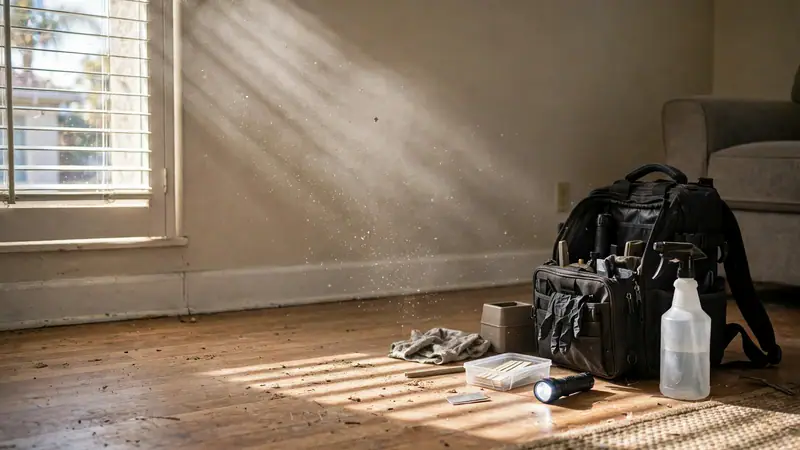
Fresh droppings stay moist and heavy. Old droppings dry and crumble. Urine dries into residue that flakes off wood, paper, and insulation. Any movement, from footsteps to a ceiling fan, lifts the particles.
2. Nesting Material
Rodents shred paper, fabric, and insulation into loose nests. Nests hold hair, dander, urine, and droppings in one concentrated spot. Disturb a nest and you release all of it at once.
3. Odors From Urine and Decay
A heavy infestation produces a strong musky or ammonia-like smell. A dead rodent in a wall produces a stronger, rotten odor. Odors signal that organic material is breaking down inside your building.
4. Moisture and Mold Risk
Rodents chew water lines and bring moisture into wall voids. Damp, urine-soaked materials can support mold growth. If you notice both rodent signs and a musty smell, address the moisture as well.
5. Air Movement Through the Building
Ducts, wall voids, and attic spaces connect rooms. Rodents travel through those same paths, and air follows them. The CDC explains that sweeping and vacuuming rodent waste can stir contaminated dust into the air, which shows how quickly cleaning mistakes spread particles.
Signs That Rodents Are Lowering Your Air Quality
No home sensor tells you rodent allergen levels directly. You must read the clues around you.
What You May Notice in the House
- A musky, ammonia-like, or musty smell in a closet, cabinet, garage, or attic
- Droppings or urine stains near vents, registers, or the furnace
- Scratching, squeaking, or scurrying in walls and ceilings at night
- Shredded paper, fabric, or insulation near ducts
- Greasy rub marks along baseboards and pipes
What You May Notice in Your Body
- More sneezing, coughing, or throat irritation when you are home
- Itchy or watery eyes in one room
- Wheezing or chest tightness that eases when you leave the house
- Worse symptoms after you open a long-closed space
These signs do not prove rodents caused your symptoms, since many things affect indoor air. They do tell you to investigate, to ask a doctor about symptoms, and to bring in a professional for inspection.
Rodent-Related Indoor Air Contaminants Compared
Different materials call for different responses. Use this table to match the source with the action.
| Contaminant | Where it collects | Possible effect | Best response |
|---|---|---|---|
| Dander and hair | Nests, bedding, stored fabric | Sneezing, itchy eyes, asthma triggers in sensitive people | Remove nests, wash fabrics, seal bins |
| Dried urine residue | Insulation, cardboard, wood, wall voids | Allergen release and odor | Wet-clean hard surfaces, discard soaked porous items |
| Droppings dust | Corners, shelves, attic floors | Airborne particles when disturbed | Wet and wipe, never sweep or vacuum dry |
| Nest fibers | Wall voids, ducts, attics | Particles plus concentrated allergen | Professional removal when heavy |
| Decay odors | Wall cavities, crawl spaces | Nausea, headache, lingering smell | Locate and remove the carcass, then clean |
For the full picture of allergen effects, read our guide on mouse droppings, asthma, and allergies.
Rodents, HVAC Systems, and Ductwork
Your heating and cooling system moves air through the entire house. If rodents reach it, they can spread contamination from one room to every room.
How Rodents Reach Ducts
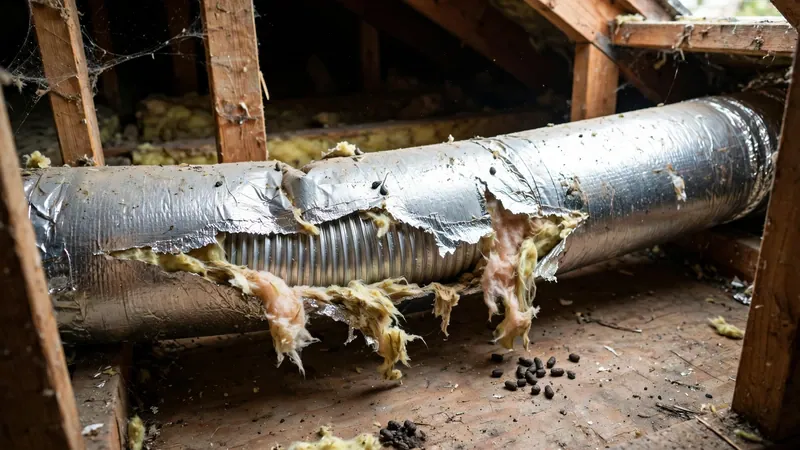
Mice and rats squeeze into attics, crawl spaces, and utility closets. Loose or damaged ducts give them a ready-made tunnel, and warm equipment attracts them in cooler months.
What to Look For
- Droppings or shredded material near registers and returns
- A sharp odor when the system starts
- Gnawed insulation wrap on ducts
- Gaps where ducts pass through walls, floors, or the attic
What to Do
Do not open ducts and clean them yourself if you find heavy contamination. Ask a licensed HVAC professional to assess the system after the rodents are removed, and ask them to seal duct gaps. Replace the filter on schedule, and use the highest-rated filter your system can handle without restricting airflow.
Six Steps to Check Your Home for Rodent-Related Air Problems
You can run a basic check in an afternoon. Wear gloves and a respirator in dusty areas, and never stir up dry material.
Follow Your Nose
Walk through each room and note musty, musky, or ammonia-like odors. Pay special attention to closets, the garage, and the area near the furnace.
Inspect Vents and Registers
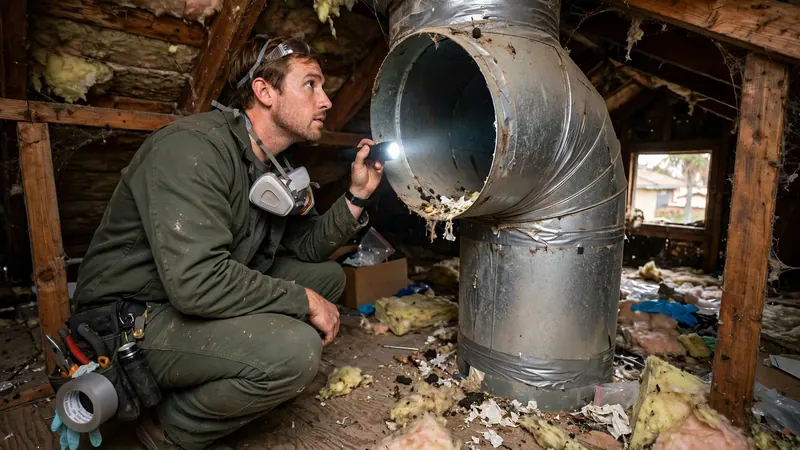
Look at supply and return vents with a flashlight. Check for droppings, shredded material, and gnaw marks without removing heavy debris yourself.
Check the Attic and Crawl Space From the Entry
Look from the hatch with a bright light. Watch for droppings, flattened insulation tunnels, and nests. Do not walk through heavy contamination.
Look Behind Appliances and Under Sinks
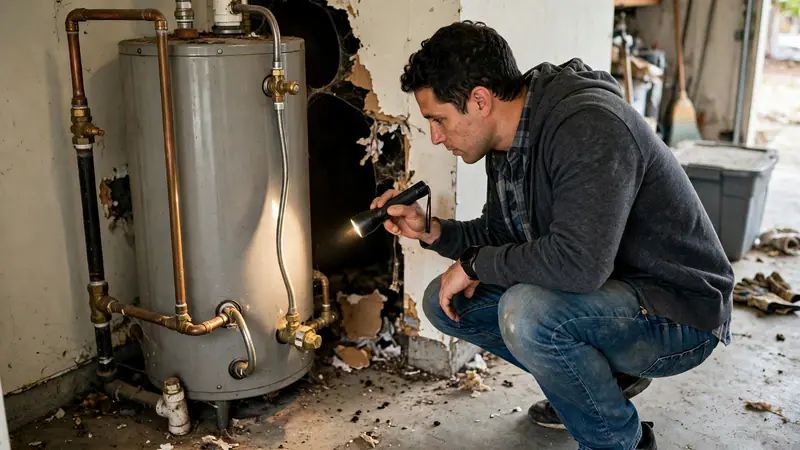
Check the spaces around the refrigerator, stove, water heater, and plumbing. Gaps and droppings reveal active routes.
Note Where Symptoms Get Worse
Track which rooms trigger sneezing, cough, or itchy eyes. Share that pattern with your doctor and with your field representative.
Call for a Professional Inspection
A trained team can find hidden nests, test routes, and plan removal and cleanup in the right order.
Six Steps to Improve Air Quality After Rodent Removal
Always remove the rodents first. Then use these six steps to lower leftover allergen. Our guide on cleaning rodent droppings safely explains the wet cleanup method in detail.
Confirm the Rodents Are Gone
Wait until activity stops and a professional seals every entry point. New rodents recontaminate a clean space quickly.
Remove Nests and Soiled Material
Wet nests and droppings with disinfectant, wipe them up, and double-bag the waste. Discard soaked cardboard, paper, and soiled insulation.
Replace Contaminated Insulation
Heavily soiled insulation holds odor and allergen. Ask a professional to remove and replace it with proper equipment.
Damp-Wipe and Wash Surfaces
Wipe shelves, baseboards, and vents with a damp cloth. Wash bedding, curtains, and clothes in hot water.
Upgrade Filtration
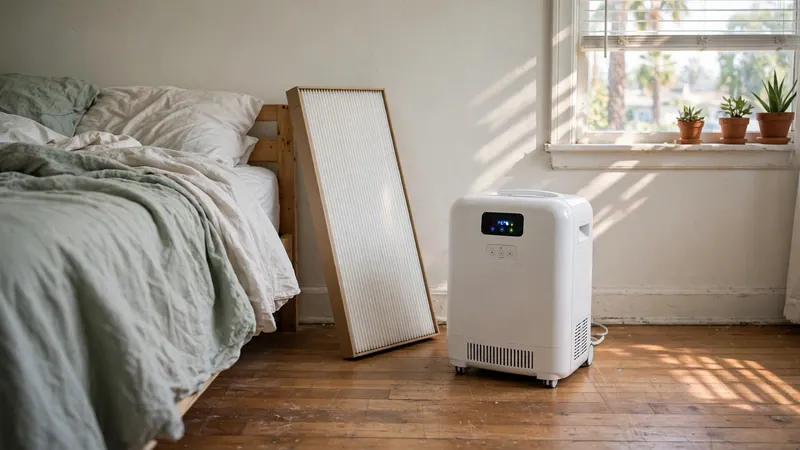
Replace the HVAC filter with the highest efficiency rating your system supports. A portable HEPA air cleaner can capture fine particles in bedrooms and living areas.
Ventilate and Control Moisture
Open windows when outdoor air is clean and safe. Fix leaks and keep humidity in a comfortable range to discourage mold and rodents.
Rodent Source Control Across California Neighborhoods
California’s climate zones change where rodents nest and how air moves through homes. PestPunt field representatives drive to your property and plan each visit around your neighborhood and building style. Typical dispatch areas include:
- Los Angeles: Highland Park (90042), Silver Lake (90039), Hollywood (90028), Studio City (91604), and Venice (90291). See our rapid rodent control in LA and the Highland Park rodent exterminator pages.
- San Francisco and the Bay Area: Sunset District (94122), Richmond District (94118), Noe Valley (94114), and Rockridge (94618). See our 24/7 rodent removal in San Francisco.
- San Diego: Pacific Beach (92109), La Jolla (92037), and North Park (92104).
- Sacramento and Fresno: East Sacramento (95819), Midtown (95816), Fig Garden (93704), and the Tower District (93728). See Fresno’s rodent exterminators.
- San Jose and Long Beach: Willow Glen (95125), Rose Garden (95126), Belmont Shore (90803), and Bixby Knolls (90807). See rodent control in Long Beach.
Coastal homes in the Sunset District and Pacific Beach battle damp, foggy air that supports mold and musty odors. Inland homes in Fresno and Sacramento run air conditioning for long stretches, so ducts and attic equipment matter more. Mid-century and older houses in Highland Park and Land Park often have gaps in attic floors and duct runs. We adjust our inspection accordingly. See every area on our locations page.
Air Purifiers Versus Removing the Source
Many homeowners buy an air purifier first. It helps, but it works best as part of a plan. This comparison shows what each tool does and does not do.
| Approach | What it does well | What it cannot do | Best use |
|---|---|---|---|
| Rodent removal and sealing | Stops new dander, urine, and droppings at the source | Does not clean existing dust by itself | Always step one |
| Wet cleaning and discarding soiled items | Removes settled allergen and odor sources | Cannot reach hidden nests in walls | After removal |
| Portable HEPA air cleaner | Captures fine airborne particles in a room | Does not stop rodents or clean surfaces | Support in bedrooms and living areas |
| Upgraded HVAC filter | Captures particles as air moves through the system | Does not fix duct gaps or contaminated insulation | Supplement, within system limits |
| Ventilation | Dilutes indoor air with outdoor air | Brings in smoke or pollen on poor-air days | Use when outdoor air is clean |
If you want cleanup help, learn about our rodent cleanup and decontamination services, or read our guide on rat urine and leptospirosis risks for the health side of urine contamination.
DIY Cleanup or Professional Help?
Indoor air problems from rodents often hide in walls, attics, and ducts. That hidden location makes professional help more likely than with surface droppings alone.
DIY May Work When
- You find a few droppings on a hard surface in one room.
- You can ventilate and clean with wet methods.
- No one at home has asthma, allergies, or a weakened immune system.
- You can seal the entry point the same day.
Call a Professional When
- You smell odors but cannot find the source.
- You find droppings near vents or ducts.
- Insulation, nests, or stored items show urine staining.
- Someone has asthma or allergies and symptoms continue.
- Rodents return after your cleanup.
Our field representatives find the source, remove the rodents, and plan cleanup. Browse our services page or learn how we handle attic problems through our attic rodent solutions.
A Prevention Checklist for Cleaner Indoor Air
Cleaner air starts with keeping rodents out. Work through this list at least once each season.
- Seal gaps larger than a quarter inch around pipes, vents, and rooflines.
- Seal duct joints and gaps where ducts pass through walls and floors.
- Replace HVAC filters on schedule.
- Store clothing, bedding, and papers in sealed plastic bins.
- Fix leaks and manage humidity to discourage mold and rodents.
- Keep food in sealed containers and clean crumbs daily.
- Trim vegetation away from the roof and walls.
- Inspect the attic, garage, and crawl space every season.
Our next guide answers a question many homeowners ask next: is it safe to clean rodent droppings yourself?
Six Mistakes That Keep Rodent Particles in Your Air
1. Buying a Purifier First
A purifier cannot stop new droppings. Remove the rodents, then add filtration.
2. Spraying Air Fresheners
Fragrance masks odor and leaves the source in place. Find and remove what smells.
3. Dry Dusting and Sweeping
Dry methods lift fine particles. Use damp cloths and wet methods.
4. Ignoring the Attic and Ducts
Hidden spaces hold most of the contamination. Inspect them or hire a professional.
5. Running the System During Cleanup
Fans and HVAC spread particles. Turn off the system in the work area, then ventilate.
6. Leaving Soiled Insulation
Contaminated insulation holds odor and allergen for years. Replace heavily soiled sections.
Frequently Asked Questions About Rodent Dander and Indoor Air Quality
Yes. Rodents shed dander, hair, urine proteins, and droppings that break into fine particles. Those particles mix with dust and move through rooms and ducts. Heavy infestations also create odors and moisture problems. Removing the rodents is the first step to cleaner air.
Rodent dander consists of tiny skin flakes that rodents shed daily. It mixes with hair, saliva, and dried urine proteins to form rodent allergen. These particles are too small to see, and they can irritate the eyes, nose, and lungs of sensitive people.
A portable HEPA air cleaner can capture fine airborne particles and may help reduce allergen in a room. It cannot stop rodents from producing more or clean the surfaces where particles settle. Use it as a supplement after removal and cleanup.
Yes. Mice and rats can enter ducts through gaps in attics, crawl spaces, and utility closets. Look for droppings near vents, a sharp odor when the system starts, and gnawed insulation. Ask a professional to inspect and seal ducts after removal.
Find and remove the source first, whether it is a nest, urine-soaked material, or a dead rodent. Clean with wet methods, discard soaked items, and ventilate. Air fresheners only mask the smell. If the odor persists, call a professional to inspect hidden spaces.
No. The CDC advises against sweeping or vacuuming rodent droppings because it stirs contaminated dust into the air. Wet the droppings with disinfectant and wipe them up. Use a sealed HEPA vacuum only after wet cleanup, if at all.
Replace heavily soiled insulation. It absorbs urine and holds odor and allergen for a long time. Ask a professional to remove and replace it with proper protective equipment. Light contamination in small areas may need only careful removal of the affected section.
Call when you smell odors you cannot trace, find droppings near vents or ducts, or see urine-stained insulation. Also call when someone has asthma or allergies and symptoms continue. PestPunt field representatives travel to your California property 24/7.
Final Takeaways
Rodent dander, urine proteins, droppings, and nest fibers break into fine particles that lower indoor air quality. They spread through rooms and ducts and can affect sensitive people. The best fix removes the rodents and seals entry points, then cleans with wet methods and adds filtration as support.
Call (888) 217-6759 to schedule an inspection, then read our next guide on cleaning rodent droppings safely.
Mobile Rodent Control Services
Clean Air Starts With Removing the Source
Call our team at (888) 217-6759 for a California on-site inspection. We will find the nests, remove the rodents, and explain the cleanup steps.