Deer Mouse Identification and Hantavirus Risk in California: A 2026 Homeowner Guide
Updated for 2026 · Written for California homeowners, cabin owners, RV owners, and property managers
Start Here: Deer Mouse & Hantavirus at a Glance
Quick answer: A deer mouse (Peromyscus maniculatus) has a two-tone coat, gray-brown on top and white underneath, with large, thinly furred ears, big dark eyes, and a furred tail that also shows two colors. In California, the deer mouse is the only rodent known to carry Sin Nombre virus, the hantavirus that causes hantavirus pulmonary syndrome (HPS). People get infected by breathing dust from dried droppings, urine, or nesting material. Never sweep or vacuum rodent waste. Wet-clean it, seal entry gaps, and call a professional for attics, crawl spaces, and heavy contamination.
What Is a Deer Mouse, and Where Does It Live in California?
The deer mouse is a small, wild-living rodent that lives across most of North America. Unlike the house mouse, which depends on human buildings, the deer mouse lives naturally in brush, grassland, woodland, rock piles, and forest edges. It moves indoors when a building offers food, shelter, or nesting material.
The California Department of Public Health (CDPH) states that deer mice live throughout the state in wild and undeveloped areas. They prefer brush, shrubs, and rocks, and they enter homes and buildings for food, shelter, and nesting material. That habit explains why hantavirus cases in California concentrate around cabins, rural properties, and buildings that sit empty for long stretches.
Why identification matters more than it seems
Most homeowners see a mouse and treat every mouse the same way. That approach fails here for two reasons. First, the correct cleanup precautions depend on the possibility that the animal is a deer mouse. Second, the species tells you where the animal likely came from. A house mouse suggests a food source inside your walls. A deer mouse suggests a nearby wild-edge habitat, a gap you have not found, or a building that stays closed for weeks at a time.
Deer mouse behavior you can observe
- Nocturnal activity. Deer mice forage at night, so you often see droppings and gnaw marks before you see the animal.
- Strong climbing and jumping. Deer mice reach shelves, rafters, and cabinet tops that ground-level barriers do not protect.
- Food caching. Deer mice hoard seeds, nuts, and pet food in hidden spots such as boots, glove boxes, drawers, and stored linens.
- Soft nests. Deer mice shred paper, fabric, insulation, and upholstery to build nests in dark, undisturbed corners.
How to Identify a Deer Mouse: A 7-Point Field Checklist
No single trait identifies a deer mouse with certainty, especially at night or from a photo of a fast-moving animal. Use the full checklist instead. If you can see three or more traits, treat the animal as a deer mouse and follow the safety steps below.
1. Look for a sharply two-tone coat
Deer mice have gray to brown fur on the back and sides and clean white fur on the belly. The color change happens along a distinct line. A house mouse has a solid, uniform gray-brown coat with a dusty tan or gray belly and no crisp boundary.
2. Check the ears
Deer mouse ears look large and thin, with very little fur on them. Ears that look oversized relative to the head point toward a deer mouse or another Peromyscus species.
3. Look at the eyes
Deer mice have large, dark, prominent eyes that give the face a bright, alert look. This trait suits an animal that forages at night.
4. Inspect the tail
The tail gives one of the clearest clues. A deer mouse tail is dark on top, white underneath, and covered with short fur. A house mouse tail is one color and looks nearly bare with visible scale rings.
5. Check the feet and legs
Deer mice have white feet and white lower legs. The white feet combined with the white belly create the "white-bottomed" look that gives you a quick field impression.
6. Estimate the size
CDPH describes deer mice as similar in size to house mice, roughly 4 to 7 inches from nose to tail tip. Size alone cannot separate the two species, so combine it with coat and tail traits.
7. Consider where you found it
Location adds context. Deer mice turn up in cabins, detached garages, sheds, barns, RVs, woodpiles, vehicle engine bays, and homes that border open land or brush. House mice turn up in kitchens, pantries, and dense residential neighborhoods. Habitat does not prove the species, but it shifts the odds.

Take photos safely
Photograph the animal from a distance or photograph a trapped animal without touching it. Capture the belly, tail, and ears. A clear photo speeds identification when you call for help, and it lets a field representative confirm the species on site. Do not handle live or dead rodents with bare hands.
Deer Mouse vs. House Mouse vs. Young Rat: What Sets Them Apart
Homeowners regularly mislabel small rodents. The table below covers the three animals people confuse most often in California homes.
| Feature | Deer mouse | House mouse | Young rat |
|---|---|---|---|
| Belly color | Sharply white | Gray or dusty tan, no crisp line | Gray to light, varies by species |
| Ears | Large, thin, sparsely furred | Medium, slightly furred | Small relative to a wide head |
| Tail | Bicolored and furred | One color, nearly bare, scaly | Thick, scaly, one color |
| Feet | White | Gray-brown | Large relative to body |
| Build | Slim and delicate | Slim and delicate | Sturdier, broad head |
| Usual habitat | Wild edges, cabins, sheds, garages | Homes, pantries, dense neighborhoods | Sewers, attics, yards, burrows |
| Hantavirus concern in California | Yes, the only known carrier of Sin Nombre virus | Not associated with Sin Nombre virus | Not associated with Sin Nombre virus |
Droppings do not identify the species
Many websites claim you can identify a deer mouse from its droppings. That claim overreaches. Small rodent droppings overlap in size and shape, and even an experienced technician treats the species as unconfirmed until he or she sees the animal or a trapped specimen. Treat any small rodent dropping in a cabin, garage, or shed as a potential hantavirus source, and clean it the wet way described below.
Young rats often pass for mice
Juvenile rats cause the most misidentifications we see. A young rat looks like a large mouse, but it has a broader head, a thicker tail, and oversized hind feet relative to body. If the "mouse" leaves droppings noticeably larger than typical mouse droppings, or you see repeated activity near a burrow, sewer line, or attic, suspect rats. Rats need a different control approach, and this guide covers the deer mouse specifically.
Other California mice you might see
California also hosts other native mice, including other Peromyscus species that share some deer mouse traits. Only the deer mouse is known to carry Sin Nombre virus in California, according to CDPH. Even so, you cannot tell species apart reliably from a glimpse, which is why a cautious cleanup protocol beats guessing.
Hantavirus Risk in California: What the Data Shows
Hantavirus infection in California is uncommon, but it is serious when it happens. The disease that concerns California residents is hantavirus pulmonary syndrome (HPS), a lung illness caused by Sin Nombre virus. Deer mice carry the virus without becoming sick, and they shed it in urine, droppings, and saliva.
How people get infected
People get infected mainly by breathing in tiny airborne particles that carry the virus. Those particles form when dried droppings, urine, or nesting material get disturbed. The CDC and state health departments describe the same pattern: exposure almost always occurs in enclosed indoor spaces where rodents lived and where someone stirs up dust.
- Sweeping and vacuuming put virus-laden dust into the air you breathe.
- Opening a long-closed space such as a cabin, shed, or trailer exposes you to stale, undisturbed dust.
- Handling nests or carcasses without gloves and disinfectant creates direct contact and dust.
- Bites and scratches can transmit the virus, though this route is less common.
What does not spread it in California
Person-to-person spread is not associated with the Sin Nombre strain found in the western United States, so a sick person does not pose a risk to family members through casual contact. Pets, snakes, and predators do not spread the infection to people. Your cat or dog can carry a dead or live mouse into the house, however, so the animal still matters as a way of bringing rodents indoors.
California numbers
Surveillance data presented by California health officials for 1980 through 2025 list 100 hantavirus infections among California residents, an average of about three per year. About one third of those cases were fatal. Roughly 40 percent of exposures happened in or around the home, a category epidemiologists call peridomestic exposure. Those numbers show a rare disease, but they also show that the home and its outbuildings matter.
Mono County has recorded 26 confirmed cases tied to exposures inside the county since 1993, the most of any California county. In March 2025, county officials confirmed a second hantavirus death in Mammoth Lakes. They noted that one exposure may have occurred while vacuuming rodent waste, and that the other likely occurred at home during a known infestation. They also noted that two cases in a three-week window in late winter were unusual, because most cases appear in spring and summer.
The 2012 Yosemite outbreak gives another lesson. Ten overnight visitors to Yosemite National Park became infected with Sin Nombre virus that year, and three died. Investigators tied the cluster to deer mice in cabins. The takeaway for property owners is that a building can host deer mice without any visible sign to occupants.
Symptoms and timeline
Symptoms usually start one to eight weeks after exposure. Early symptoms resemble the flu and include fever, fatigue, muscle aches (often in the thighs, hips, back, and shoulders), headache, chills, nausea, vomiting, or abdominal discomfort. The illness can then progress to coughing, chest tightness, and shortness of breath. Breathing problems often require intensive care.
If you may have been exposed: Contact a health care provider promptly, and tell the provider that you had contact with rodents, their droppings, or a cleaned-up nest. No specific treatment exists for hantavirus, but early supportive care improves outcomes. This page provides general information and does not replace medical advice.
For official guidance, read the CDC hantavirus prevention page and the California Department of Public Health hantavirus page.
Where Deer Mouse Exposure Happens: High-Risk Spaces
Risk climbs in enclosed, poorly ventilated spaces where rodents lived undisturbed. In inspections of rural and mountain properties, the same handful of spaces keep appearing.
Cabins and seasonal homes
A cabin that sits closed all winter gives deer mice weeks of quiet nesting time. Opening the door in spring and immediately sweeping is the most dangerous move a cabin owner can make. Open every door and window first, and leave for at least 30 minutes.
Garages, sheds, and barns
Stored cardboard, bird seed, pet food, and old furniture make ideal nesting stock. Deer mice also nest in vehicle engine bays and glove boxes, and they chew wiring in stored cars and RVs. Air out vehicles, then wet-clean the interior rather than blowing debris out with compressed air or a leaf blower.
Attics and crawl spaces
Attics and crawl spaces combine three risk factors: dust, insulation fibers, and limited airflow. A rodent presence in insulation also spreads contamination across a wide area. Read our guide on California attic rodent solutions by local experts before you enter one.
Stored RVs, trailers, and outdoor furniture
Mice nest inside cushions, storage compartments, and awnings. Treat these the same way as a closed cabin: ventilate, wear gloves, and wet-clean.
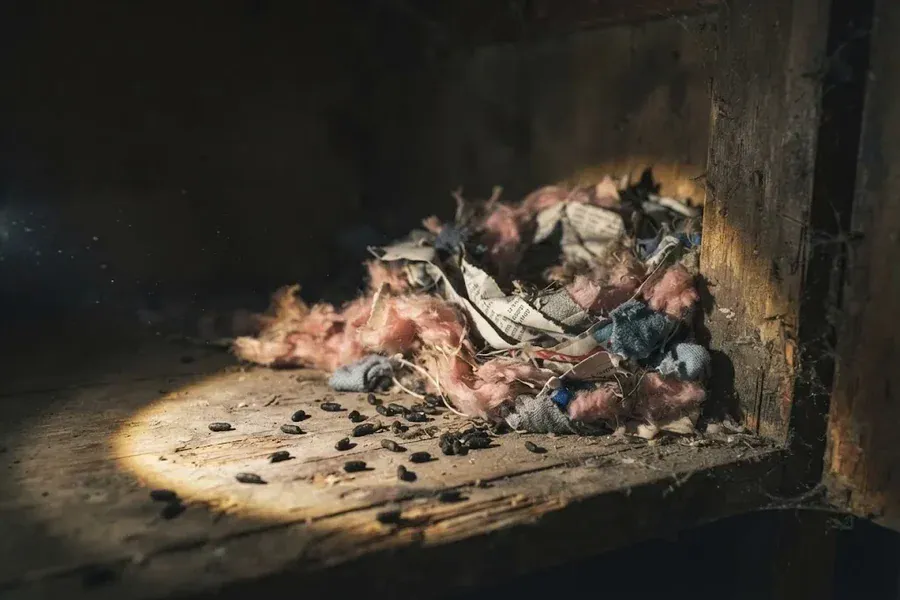
Signs that deer mice already live in your space
- Small, dark droppings along walls, in drawers, or on shelves
- Shredded paper, fabric, or insulation gathered into a ball
- Seed hulls, nut shells, or cached pet food in unusual places
- Gnaw marks on food packaging, wiring, or upholstery
- Scratching or scurrying sounds at night
- A musty, ammonia-like odor in closed spaces
If you find several of these signs, learn what attracts mice into a home and remove those attractants while you work on exclusion.
Safe Cleanup: How to Wet-Clean Mouse Droppings and Nests
The CDC, CDPH, and county health departments all recommend the same core method: ventilate, keep dust down, disinfect while wet, and dispose of waste carefully. Use this method for light contamination, such as a few droppings or a small nest in a ventilated room.
- Ventilate for at least 30 minutes. Open doors and windows, create cross-airflow, and leave the space while it airs out. Direct sunlight also helps inactivate the virus.
- Gear up. Put on rubber, latex, vinyl, or nitrile gloves. Do not rely on fabric gloves. A basic dust mask does not protect against viruses, so use a properly fitted respirator if you must work in dusty conditions.
- Mix a fresh disinfectant. Combine 1½ cups of household bleach with 1 gallon of water (about 1 part bleach to 9 parts water), or use a disinfectant label-approved for this purpose. Mix a new batch each day, because diluted bleach loses strength.
- Soak, do not scrub dry. Spray droppings, nests, urine stains, and any trapped or dead rodents until they are thoroughly wet. Let the solution sit for at least 5 minutes. Some California health departments advise up to 15 minutes, so follow your disinfectant label and local guidance.
- Wipe with disposable towels. Pick up the material with paper towels, then mop or sponge the surface with more disinfectant.
- Double-bag and discard. Seal the waste in two plastic bags and put it in a covered outdoor trash can. Follow local rules for dead-animal disposal.
- Clean yourself and your tools. Wash gloved hands with disinfectant or soap and water before removing the gloves, then wash your bare hands thoroughly. Launder contaminated clothing and bedding in hot water with detergent.
The CDC provides a companion overview on its rodent cleanup guidance page.
Never do this: Do not sweep, vacuum, dry-dust, or use a leaf blower or compressed air on rodent waste. Do not handle live or dead rodents with bare hands. Do not disturb a nest first and disinfect second. Every one of these mistakes turns settled dust into breathable dust.
Cleaning dead rodents
Spray the carcass and the surrounding area with disinfectant first, wait, then lift the animal with a paper towel or a gloved hand into a bag. Double-bag it. If you cannot find the source of a smell, or the animal sits inside a wall void or attic, our dead rodent removal services in California page explains how professionals locate and remove carcasses safely.
Cleaning traps
Wear gloves, spray the trap and animal with disinfectant, and let it soak before you handle either one. Dispose of used snap traps in double bags, or disinfect and rinse a reusable trap outdoors.
When not to DIY
Call a professional instead of cleaning yourself when you find any of these conditions:
- Contamination inside an attic, crawl space, wall void, or HVAC duct
- Heavy droppings, multiple nests, or large amounts of shredded insulation
- A space you cannot ventilate well
- Anyone in the household who has a lung condition or a weakened immune system
- Repeat activity after you already cleaned once
Heavy infestations call for stronger personal protection, including a fitted respirator under a formal respiratory protection program, which the National Park Service and other agencies require for their own workers.
Seal Up, Trap Up, Clean Up: A Prevention Plan That Works
Public health agencies summarize rodent prevention in three words: seal up, trap up, clean up. The order matters. Sealing entry points stops new mice from arriving, trapping removes the ones already inside, and cleaning restores a safe space only after the first two steps work.
Seal up: close every gap
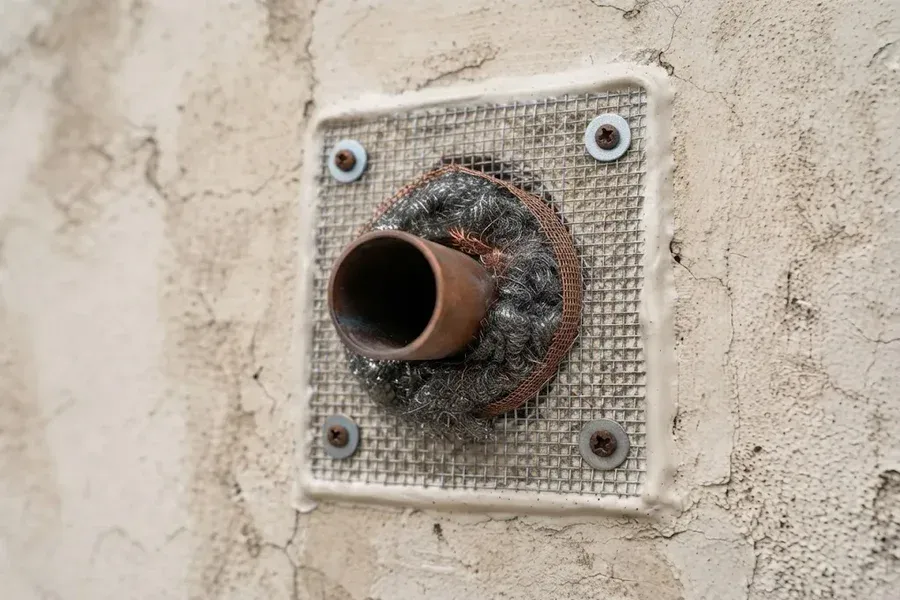
Mice squeeze through openings as small as a quarter inch. Inspect the outside of the building at ground level and along rooflines, then close what you find.
- Utility penetrations. Stuff pipe, cable, and dryer-vent gaps with coarse steel wool or copper mesh, then seal over it with exterior-grade sealant.
- Doors and garage doors. Install door sweeps and replace worn bottom seals on garage doors.
- Foundation vents. Cover vents with quarter-inch hardware cloth, not plastic screening.
- Roof and eaves. Repair loose flashing, soffit gaps, and damaged vents that give mice access to the attic.
- Cabins and sheds. Check sill plates, rafter tails, and floor corners where wood meets ground.
Rodent-proofing a building is more effective than trapping alone. If mice keep returning after you seal one gap, they have found another one, so inspect again.
Trap up: remove the mice already inside
Snap traps placed along walls and near droppings work well for a small number of mice. Set several traps, place them where you see activity, and check them daily. Wear gloves, and disinfect each trapped animal before disposal. For larger or ongoing activity, a structured program that combines inspection, exclusion, and trapping performs better than scattered traps. Our rapid and effective rodent control in Los Angeles page explains how a coordinated program works in a dense urban market.
Clean up: remove what attracts mice
- Store pet food, bird seed, and grains in sealed metal or hard plastic containers.
- Stack firewood at least 18 inches off the ground and away from the wall. Rotate it so mice do not settle in.
- Trim shrubs and branches away from the roofline and foundation.
- Keep garages, sheds, and storage rooms free of cardboard piles and cluttered corners.
- Store bedding, cushions, and clothing in sealed plastic bins.
- Remove fallen fruit, nuts, and unmanaged bird feeder spillage.
Protect seasonal properties
Before you close a cabin or RV for the season, remove all food, wash surfaces, seal gaps, and set traps. When you return, ventilate first and inspect before you settle in. This routine takes an hour and lowers both infestation and exposure risk.
When to Call a Professional for Deer Mouse Problems
A professional adds value in three places: confirming the species, finding every entry point, and cleaning or removing contamination in spaces that a homeowner should not enter. Property owners often underestimate the second one. Most mouse problems continue because the owner sealed the gaps they could see and missed the ones they could not.
What PestPunt does
PestPunt is a California statewide Service Area Business. Our field representatives come directly to your property, so you never need to visit an office. During an on-site visit, a representative can:
- Identify the rodent species from droppings, nests, gnaw marks, or a photo or specimen you provide
- Inspect the exterior and interior for entry points and attractants
- Explain which areas need professional-grade cleaning and which you can handle yourself
- Recommend an exclusion and control plan that matches the species and the building
We tell you plainly when a situation looks like a house mouse or a rat problem instead of a deer mouse problem, because the right plan changes with the animal.
How to prepare for the visit
- Take clear photos of droppings, nests, and any animals from a safe distance.
- Note where and when you first noticed activity.
- List any spaces the household uses seasonally or rarely.
- Do not sweep or vacuum before the visit, so the representative can see the evidence.
Frequently Asked Questions About Deer Mice and Hantavirus
How can I tell a deer mouse from a house mouse?
Check the belly, ears, and tail. A deer mouse has a white belly, large thinly furred ears, and a furred tail that is dark on top and white underneath. A house mouse has a solid gray-brown coat, smaller ears, and a nearly bare, single-color tail.
Do all deer mice carry hantavirus?
No, but you cannot tell an infected mouse from a healthy one by looking. Health officials advise you to treat every deer mouse nest, dropping, and carcass as a possible exposure source.
Can hantavirus spread from person to person?
Not with the Sin Nombre strain found in California and the western United States. People get infected by breathing airborne particles from deer mouse urine, droppings, or nesting material.
How long after exposure do hantavirus symptoms start?
Symptoms usually begin one to eight weeks after exposure. They start like the flu and can progress to coughing and shortness of breath. Seek medical care quickly, and tell your provider about the rodent exposure.
Is it safe to vacuum mouse droppings?
No. Vacuuming or sweeping sends virus particles into the air. Ventilate the room, wear gloves, soak the droppings with a fresh 1:10 bleach solution or another disinfectant, wipe with disposable towels, and double-bag the waste.
Should I clean up mouse droppings in an attic myself?
Small amounts in a well-ventilated room are a manageable wet-cleaning job. Attics, crawl spaces, and heavy contamination raise the risk because of dust, poor airflow, and insulation, so call a professional who uses respiratory protection.
What is the best way to keep deer mice out of a cabin?
Close every gap larger than a quarter inch, store food in sealed containers, keep firewood away from walls, and set traps before you close the cabin for the season. Ventilate and inspect before you re-enter.
Key takeaways: Identify by belly, ears, and tail. Assume any small rodent waste in an enclosed space could carry risk. Ventilate, wet-clean, and never sweep or vacuum. Seal gaps larger than a quarter inch. Call a professional for attics, crawl spaces, heavy contamination, or repeat activity.
California Mobile Rodent Control Services
Confirm the Species. Clean Safely. Stop the Exposure.
A local field representative travels to your property anywhere in California for on-site identification, entry-point inspection, and safe cleanup guidance. Call (888) 217-6759 for 24/7 dispatch.