Leptospirosis From Rat Urine: Risks Explained
Rat urine can carry Leptospira bacteria, and the risk grows when urine soaks into damp soil, stored items, or standing water around your home. This guide explains how exposure happens, which symptoms need a doctor, how to clean up safely, and when a California field representative should take over.
Leptospirosis From Rat Urine at a Glance
How it spreads: Urine from infected animals enters the body through cuts, scrapes, and mucous membranes. Person-to-person spread is rare.
Typical symptoms: Fever, chills, headache, muscle aches, vomiting, and red eyes. Some people have no symptoms at all.
Safe response: Ventilate, wear gloves, wet the area with disinfectant, wipe it up, bag it, and wash your hands.
Best prevention: Remove the rats, seal entry points, and keep food, water, and trash away from them.
What Leptospirosis Is and Why Rat Urine Matters
Leptospirosis is a bacterial infection caused by Leptospira. Many wild and domestic animals carry the bacteria, including rodents, dogs, livestock, and raccoons. The CDC explains that the bacteria spread through the urine of infected animals, and that they can survive in water and soil for weeks to months.
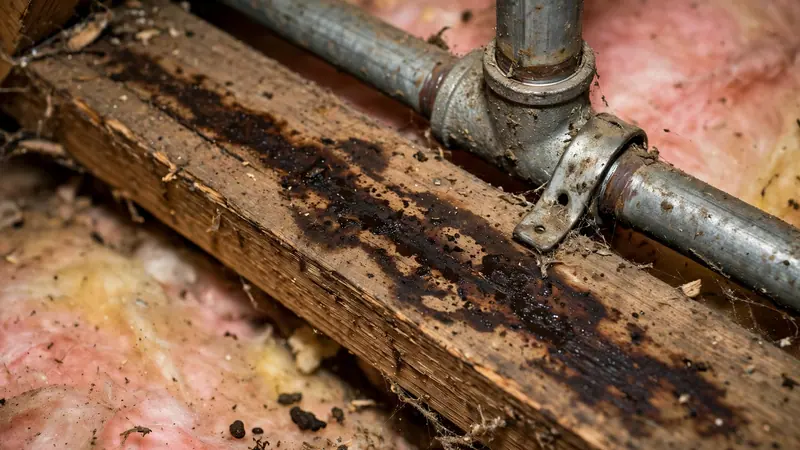
Rats matter because they live close to people and they urinate constantly while they travel. A single rat leaves tiny urine trails along walls, pipes, and joists every night. You rarely see those trails, and that invisibility is the real problem. You cannot judge how contaminated a space is by looking at it.
Leptospirosis Is Not the Same as Hantavirus
People often confuse the two illnesses. Hantavirus spreads mainly when you breathe in dust from dried droppings and nests. Leptospirosis spreads mainly through direct contact with urine, or with water and soil that urine has contaminated. The cleanup rule overlaps, because wet cleanup protects you from both, but the way the bacteria enter your body differs.
How Common Is the Risk at Home?
Most homes with a rodent problem never produce a leptospirosis case. Infection needs three things at once: an infected rat, urine that reaches you, and a way into your body. Still, the University of California’s own pest guidance lists leptospirosis among the diseases house mice and rats can carry, so the risk is real enough to take seriously, especially during cleanup.
What the Bacteria Need to Cause Harm
Leptospira enter through cuts, scrapes, and softened skin. They also enter through the lining of the eyes, nose, and mouth. Intact, dry skin blocks most exposure. That is why gloves, boots, and careful hand washing form the core of every safe cleanup plan.
How Rat Urine Spreads Leptospira Around Your Home
Rats do not stay in one place. They move between nests, food sources, and water several times a night, and they mark their routes with urine as they go. Over weeks, the contamination spreads far beyond the nest.
Direct Contact With Urine
You touch urine directly when you move stored boxes, pick up a dead rodent bare-handed, or clean a stained shelf without gloves. The bacteria then reach any scratch or hangnail on your hands. They can also reach your eyes if you rub your face afterward.
Contaminated Water and Wet Soil
Water carries Leptospira from one place to another. Leaking pipes, pooled water under a sink, a flooded crawl space, and wet garden soil all hold urine for longer than dry surfaces do. A rat that urinates near a dripping water heater can contaminate that puddle for days. If you wade through it barefoot, you take on the exposure.
Contaminated Food and Pet Dishes
Rats walk across counters, pantry shelves, and pet bowls at night. They leave urine behind. The CDC advises people not to eat food that rodents may have reached. Throw away open packages that show gnaw marks, and wash every dish and bowl that rats could have touched. Our guide on how salmonella contamination happens covers the food side of the problem in more detail.
Why Dry Homes Still Carry Risk
Many Californians assume a dry climate protects them. It helps, but it does not remove the risk. Irrigation, leaking pipes, pet water bowls, rain events, and coastal fog all create damp spots. Rats find those spots first.
Who Faces the Highest Risk of Infection
Anyone can get leptospirosis, but some people meet rat urine more often than others. Knowing your own exposure pattern helps you decide how careful to be.
Homeowners and Renters Doing Cleanup
The most common exposure in a house happens during cleanup. A homeowner opens a long-closed garage, shifts old boxes, and handles urine-stained cardboard without protection. Renters in older buildings face the same risk when they clean under sinks and behind appliances.
People Who Work Outdoors or With Animals
Gardeners, plumbers, sewer and drain workers, pet groomers, kennel staff, and farm workers handle wet soil, standing water, and animals every day. They need boots, gloves, and a firm hand-washing habit before eating.
Children and Pet Owners
Children play in dirt, touch floors, and put their hands in their mouths. Dogs drink from puddles and sniff rodent trails. Both groups need extra attention. Ask your veterinarian about leptospirosis vaccination for your dog, because the CDC lists vaccination of pets as one prevention step.
People With Weakened Immune Systems
Anyone with a weakened immune system should avoid doing rodent cleanup at all. Ask a trained field representative to handle contaminated areas, and speak with your doctor about any exposure.
Leptospirosis Symptoms and Timeline
Symptoms can start anywhere from two days to four weeks after exposure. Many infected people feel nothing at all. Others feel like they have the flu, which makes the illness easy to miss.
Early Symptoms
- Sudden fever and chills
- Headache and muscle aches, especially in the calves and lower back
- Nausea, vomiting, or diarrhea
- Red eyes
- Abdominal pain or a skin rash in some people
Severe Symptoms
A smaller share of patients develop serious illness. Health agencies describe jaundice (yellow skin or eyes), kidney problems, bleeding, and breathing trouble as warning signs. Illness may also come in two phases, with a short improvement before the second phase starts.
What to Tell Your Doctor
Tell your doctor about any contact with rodents, rodent urine, floodwater, or contaminated soil. Say when it happened. Without that detail, a clinician may treat your illness as a common viral infection. Doctors can order tests and prescribe antibiotics when they suspect leptospirosis, and early treatment generally helps.
Six Steps to Take After Contact With Rat Urine
A fast, calm response lowers your exposure. Follow these six steps after you touch rat urine, or after you clean a contaminated spot without protection.
Stop and Step Away
Leave the contaminated area before you touch your face. Keep children and pets out of the room while you take the next steps.
Wash Skin Right Away
Wash your hands and any exposed skin with soap and clean running water for at least 20 seconds. Scrub under your nails. Clean any cut or scrape and cover it with a waterproof bandage.
Rinse Your Eyes If They Were Splashed
Flush your eyes gently with clean water for several minutes if urine or dirty water splashed into them. Call a doctor if irritation continues.
Change and Wash Your Clothes
Remove clothes and shoes that touched the contamination. Wash fabrics in hot water and clean boots with disinfectant. Wash your hands again afterward.
Note the Date and Details
Write down when the exposure happened, what you touched, and what protection you wore. A clear timeline helps your doctor if symptoms appear later.
Watch for Symptoms for Four Weeks
Watch for fever, chills, headache, muscle aches, vomiting, and red eyes. Tell your doctor about the exposure the moment any symptom appears.
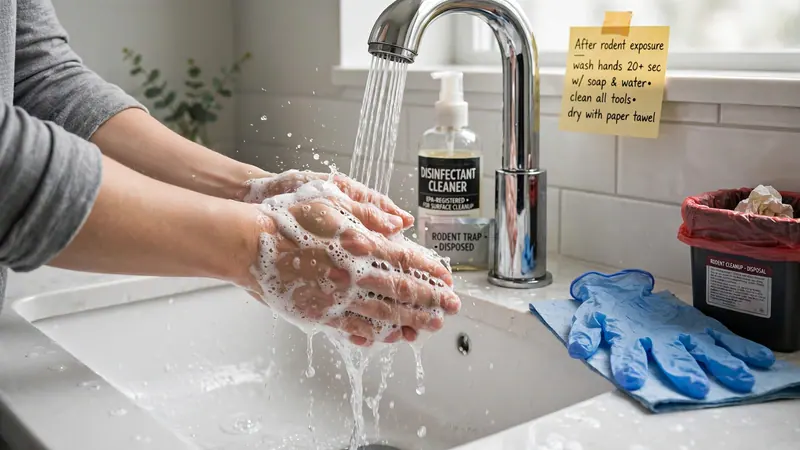
How to Clean Rat Urine Safely, Step by Step
Use wet cleanup for every urine-stained surface. The same method protects you from hantavirus, and our guide on cleaning rodent droppings safely adds more detail on droppings.
Ventilate the Space
Open doors and windows for at least 30 minutes before you start. Keep pets and children away.
Put On Protective Gear
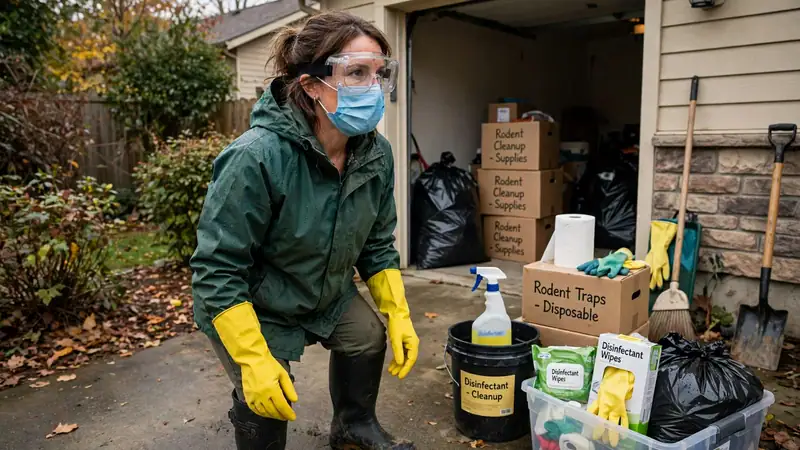
Wear rubber, nitrile, or vinyl gloves, closed shoes or boots, and eye protection. Use a fitted respirator in attics, crawl spaces, and enclosed rooms.
Spray, Do Not Sweep
Spray urine stains, droppings, and nesting material with a disinfectant until they are thoroughly wet. The CDC’s common home mix is one part bleach to nine parts water. Never mix bleach with ammonia products.
Wait, Then Wipe
Let the disinfectant sit for the contact time on the label. Wipe up the material with paper towels and place them straight into a plastic bag.
Disinfect Surfaces and Tools
Mop hard floors and wipe shelves, counters, and storage bins with disinfectant. Wash stained fabrics in hot water. Throw away porous items such as soaked cardboard and insulation.
Bag, Remove Gloves, and Wash
Seal waste in a double bag. Wash your gloved hands, remove the gloves, and wash your bare hands with soap and water.
Pets, Standing Water, and Winter Rain in California
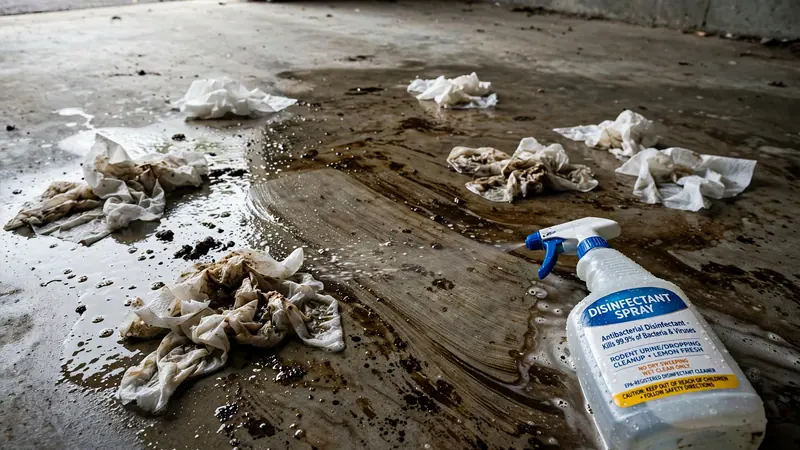
California’s weather changes the risk from season to season. Dry months push rats toward irrigation lines, pool equipment, and leaking hose bibs. Winter storms flood burrows, crawl spaces, and storm drains, so rats move into garages, attics, and wall voids.
Protect Your Dog
Dogs face more exposure than people do because they drink from puddles and investigate rodent trails. Ask your veterinarian whether leptospirosis vaccination makes sense for your dog, and remove puddles, buckets, and leaky fixtures from the yard.
Handle Standing Water Quickly
Dry out wet crawl spaces and fix leaks fast. Do not wade through standing water in a space where rats have been active. If you must enter a flooded garage or basement, wear waterproof boots and gloves, and treat everything you touch as contaminated.
Pick Up Dead Rodents the Safe Way
A dead rat leaves urine and body fluids behind. Wear gloves, wet the area, bag the animal and the cleanup materials, and disinfect the spot. If you cannot reach the body, our team provides dead rodent removal across California.
Leptospirosis Compared With Other Rodent-Borne Illnesses
Rodents can spread several illnesses, and each one enters the body differently. Use this table to match the exposure to the right precaution.
| Illness | Main route | Common first symptoms | Best precaution |
|---|---|---|---|
| Leptospirosis | Urine on broken skin, eyes, nose, or mouth; contaminated water and soil | Fever, chills, headache, muscle aches, red eyes | Gloves, boots, wet cleanup, hand washing |
| Hantavirus | Breathing dust from droppings, urine, and nests | Fever, fatigue, muscle aches, later cough and shortness of breath | Ventilate, never sweep or vacuum, wet cleanup |
| Salmonella | Food or surfaces contaminated with droppings | Diarrhea, stomach cramps, fever | Discard exposed food, disinfect kitchens, wash hands |
| Rat-bite fever | Bites, scratches, or food contaminated by rats | Fever, vomiting, joint pain, rash | Avoid handling rats, clean wounds, seek care |
Read more about rodents and salmonella next, then continue with rat-bite fever symptoms and causes. Each page in this series uses the same safe-cleanup logic.
Where Our Field Representatives Handle Rat Urine Contamination
PestPunt operates as a mobile, on-site service. Local field representatives drive to your property, inspect the areas rats used, and explain the cleanup and exclusion work before it begins. Typical dispatch areas include:
- Los Angeles: Highland Park (90042), Echo Park (90026), Hollywood (90028), Van Nuys (91401), and Eagle Rock (90041). See our Los Angeles rodent control page.
- San Francisco and the Bay Area: Mission District (94110), Sunset District (94122), Richmond District (94118), and Rockridge in Oakland (94618). See rodent pest control in San Francisco.
- San Diego: North Park (92104), Pacific Beach (92109), Hillcrest (92103), and Ocean Beach (92107). See emergency rodent removal in San Diego.
- Sacramento, Fresno, and San Jose: Midtown Sacramento (95816), Tower District in Fresno (93728), and Willow Glen in San Jose (95125). See Sacramento rodent control, Fresno rodent exterminators, and San Jose rodent exterminators.
- Long Beach: Belmont Shore (90803) and Bixby Knolls (90807). See fast rodent control in Long Beach.
Coastal neighborhoods such as Pacific Beach and the Sunset District stay damp and foggy, which keeps soil and crawl spaces wet. Inland areas such as Fresno’s Tower District and Midtown Sacramento see hot summers, so rats target irrigation lines and pool equipment. Our field representatives plan each visit around those local patterns. Browse every coverage area on our locations page.
Where Rat Urine Hides in a California Home
Field work teaches one lesson fast: rats favor the same few places, and urine concentrates there. Check these spots first, with gloves on.
Under Sinks and Behind Appliances
Warm, damp, and dark describes the cabinet under a kitchen sink. Rats follow supply lines up from wall voids. Look for stained wood, dark streaks on pipes, and a sharp ammonia-like odor.
Garages and Storage Boxes
Cardboard soaks up urine. Boxes of holiday decorations, old clothes, and pet food bags make excellent nests, and the stain often hides on the underside.
Attics and Insulation
Rats flatten insulation into tunnels and urinate along the same path every night. Do not walk through heavily stained insulation. A trained team can remove it with proper equipment, which is part of our {A("rodent-cleanup-decontamination-services", "rodent cleanup and decontamination services")}.
Crawl Spaces and Yards
Damp soil holds Leptospira longer than dry dust does. Avoid bare hands in crawl spaces, garden beds near burrows, and compost piles. Wear boots, gloves, and wash up before you eat or touch your face.
Pantries and Pet Feeding Areas
Wash every shelf, bowl, and container after a rodent visit. Replace open food rather than trying to salvage it. Store pet food in sealed metal or hard plastic bins.
DIY Cleanup or a Professional Visit?
Small, recent, and well-ventilated problems often suit careful DIY cleanup. Larger, hidden, or older contamination calls for trained help. Use these lists as a starting point.
DIY Cleanup May Work When
- You find a few droppings or one small urine stain on a hard surface.
- The area has good airflow and you can reach every spot.
- You own gloves, eye protection, disinfectant, and plastic bags.
- No one in the home has a weakened immune system or is pregnant.
Call a Professional When
- You find heavy staining, large nests, or contaminated insulation.
- The problem sits in an attic, crawl space, or wall void.
- Rats keep returning after you clean and seal.
- A child, a pregnant person, or an immunocompromised person lives in the home.
- You see dead rodents you cannot reach.
Cleanup alone never ends a rat problem. If you remove urine but leave the entry points open, new rats arrive within days. A field representative finds the entry points, removes the rats, and plans cleanup in the right order. Learn more about professional rat removal in California or our full list of services.
A Practical Prevention Checklist for Homeowners
Prevention beats cleanup every time. The UC Integrated Pest Management program calls exclusion the most successful and permanent form of rodent control, and the same logic applies to rats. Work through this list once a season.
- Seal gaps, vents, and utility openings with metal mesh, sheet metal, or concrete patch.
- Fix dripping pipes, hose bibs, and water heater leaks.
- Store pet food, bird seed, and pantry goods in sealed metal or hard plastic containers.
- Use trash cans with tight lids and keep them away from walls.
- Trim vegetation and tree limbs that touch the roof.
- Move firewood and stored items away from exterior walls.
- Clean up fallen fruit and pet waste in the yard.
- Inspect the attic and garage every season for droppings and gnaw marks.
Our walkthrough on cleaning areas contaminated by mice helps with the cleanup that follows.

Six Mistakes That Raise Leptospirosis Risk
1. Cleaning Bare-Handed
Urine reaches cuts you may not notice. Always wear gloves and wash your hands after you remove them.
2. Sweeping or Vacuuming
Dry cleaning lifts contaminated dust and droplets. Wet the area with disinfectant first.
3. Saving Contaminated Food
Food that rats touched can carry bacteria. Throw it out, even if you see no damage.
4. Ignoring Standing Water
Puddles hold Leptospira for weeks. Fix leaks and avoid wading through water that rats used.
5. Cleaning Before Removal
New rats re-contaminate a clean room within days. Remove the rats and seal the entry points first.
6. Waiting With Symptoms
Fever and muscle aches after cleanup deserve a call to your doctor. Tell them about the rodent exposure.
Frequently Asked Questions About Leptospirosis and Rat Urine
Yes, you can, although it is uncommon. Infection happens when urine from an infected rat, or water, soil, or food it contaminated, touches broken skin, your eyes, your nose, or your mouth. Wear gloves, wet the area with disinfectant, and wash your hands to lower the risk.
The CDC says the bacteria can survive for weeks to months in water and soil that urine contaminates. Dry surfaces generally hold the bacteria for a shorter time. Damp crawl spaces, puddles, and wet soil carry the most lasting risk, so treat them with extra care.
Early symptoms include fever, chills, headache, muscle aches, nausea, vomiting, and red eyes. Symptoms can appear from two days to four weeks after exposure. Some people feel nothing. See a doctor if you feel sick after rodent exposure, and mention that exposure.
Old, dry stains carry a lower risk than fresh or damp ones, but you should still protect yourself. Wear gloves, wet the stain with disinfectant, and wipe it up. Do not scrub dry material or sweep it, because that spreads particles.
Common household disinfectants can inactivate the bacteria when you apply them correctly. The CDC’s rodent cleanup guidance uses a mix of one part bleach to nine parts water, with the surface fully wet. Follow the product label, never mix bleach with ammonia, and ventilate the room.
Person-to-person spread is rare. The main sources are infected animal urine and contaminated water, soil, or food. Rare cases have involved sexual contact and breastfeeding. Most people get the infection from the environment, not from another person.
Yes. Doctors treat leptospirosis with antibiotics, and early treatment generally improves outcomes. Severe cases may need hospital care. Contact a doctor promptly if you develop symptoms after rodent exposure, and describe what you touched and when.
Call a professional when contamination is heavy, hidden in an attic or crawl space, or keeps returning. Also call if a child, a pregnant person, or someone with a weakened immune system lives in the home. PestPunt field representatives travel to your California property 24/7.
Final Takeaways
Rat urine can carry Leptospira, and the bacteria spread through cuts, the eyes, the nose, and the mouth. You lower the risk with gloves, wet cleanup, hand washing, dry crawl spaces, and fast rat removal. Watch for fever, headache, and muscle aches for four weeks after any exposure, and tell your doctor what happened.
Do not wait for a small problem to grow. Call (888) 217-6759 to schedule an inspection, then keep reading with our guide to rodents and salmonella contamination.
Mobile Rodent Control Services
Remove the Rats Before the Contamination Spreads
Call our team at (888) 217-6759 for a California on-site inspection. We will locate the entry points, remove the rats, and explain safe cleanup for every contaminated area.