Where Do Mice Hide During the Day? 9 Hiding Spots in California Homes (2026 Guide)
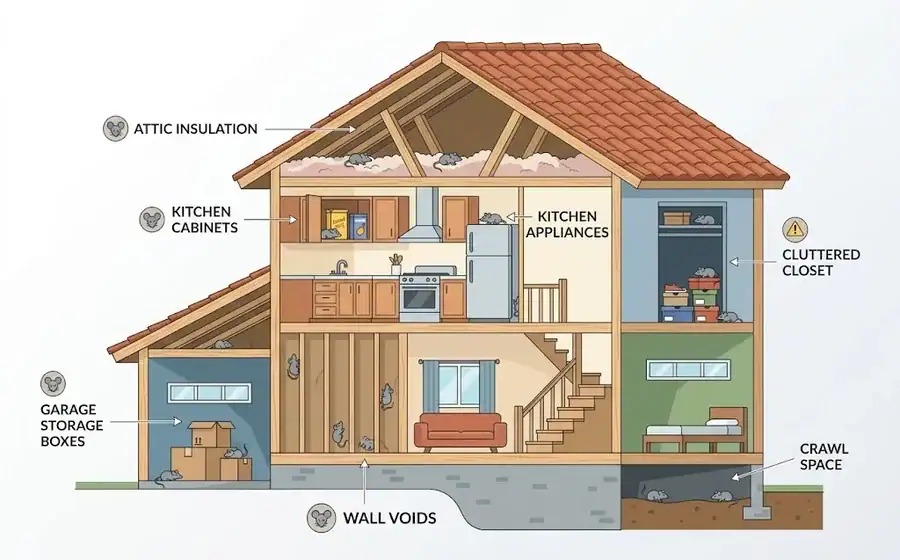
Mice hide during the day in quiet, dark, enclosed spaces close to food and warmth. The most common spots are wall voids, attics, behind and under kitchen appliances, kitchen cabinets and pantries, garage storage boxes, crawl spaces, and cluttered closets.
Where Do Mice Hide During the Day? The Short Answer
Short answer: Mice hide during the day in quiet, dark, enclosed spaces close to food and warmth. The most common spots are wall voids, attics, behind and under kitchen appliances, kitchen cabinets and pantries, garage storage boxes, crawl spaces, and cluttered closets. A mouse rarely sleeps far from its food, so the nest usually sits within about 30 feet of where you find droppings.
Updated for 2026 by PestPunt field specialists. Reviewed against UC Integrated Pest Management and CDC guidance.
You flip on the kitchen light at 2 a.m. and hear a scurry. At noon the house looks spotless and silent. So where did the mouse go? This guide answers that question room by room, explains why mice choose each spot, and shows you how to confirm a hiding place safely. It also covers what California homes add to the picture, from stucco gaps to garage conversions, so you can act on what you find.
Why Do Mice Hide During the Day?
Mice hide during the day because daylight and human activity signal danger. A mouse is a small prey animal. Cats, owls, hawks, snakes, and people all threaten it, so it sleeps when those threats are most active and forages when the house goes quiet. Wildlife educators commonly report that mice can sleep for many hours a day, and that rhythm explains the silence you notice between sunrise and dusk.
Three needs drive every hiding choice a mouse makes:
- Shelter from predators and people. Mice pick enclosed spaces with a tight roof and walls, such as a wall cavity or the gap beneath a refrigerator.
- Warmth. UC IPM notes that house mice prefer to nest in protected areas near a food supply and heat, especially dark corners behind appliances that produce warmth.
- Short trips to food and water. Mice do not wander far. Pest control sources commonly put their home range at about 30 feet from the nest, which is why a nest and a food source almost always share the same part of the house.
Mice are not strictly nocturnal. Activity peaks around dusk, through the night, and again near dawn. They also come out in daylight when conditions push them. A disturbed nest, a hunger spike, crowding, or a quiet house can all trigger a daytime appearance. When you spot a mouse in the afternoon, treat it as a warning, because it often means the population has outgrown its comfortable hiding places.
Where Do Mice Hide Inside a House?
Mice can squeeze through an opening about the size of a dime, according to UC Integrated Pest Management. That body flexibility opens up nearly every structure. The spots below appear most often in the homes our field representatives inspect across California.
1. Inside Wall Voids
Wall voids rank as the number one daytime hiding place. Mice enter the wall cavity through gaps around plumbing, electrical lines, and baseboards, then climb or run along studs and pipes. Inside the void they find insulation, darkness, and zero foot traffic. You usually hear this activity as faint scratching or scurrying at night, and you often see no evidence at all in the open rooms. If you hear sounds in a wall, the nest likely sits within a few feet of that spot.
2. Attics and Insulation
Attics offer warmth, shelter, and soft nesting material, and homeowners visit them rarely. Mice climb well. They can travel up wall voids, along utility lines, or up tree branches and rooflines to reach the attic. Once inside, they tunnel through insulation and pull cardboard, fabric, and stored paper into nests. Look for flattened insulation trails, droppings along rafters, and chewed storage boxes.
3. Behind and Under Kitchen Appliances
Refrigerators, stoves, and dishwashers give mice exactly what UC IPM describes: dark corners with heat nearby. The motor compartment under a refrigerator stays warm and dry. A gap behind the stove usually connects to the wall void through the pipe or gas-line cutout. Pull the appliance out carefully with a flashlight in hand. Droppings, grease smears, and shredded paper tell you quickly whether mice live there.
4. Kitchen Cabinets and Pantries
Pantries and lower cabinets put food and shelter in one place. Mice enter through the hole where the sink plumbing passes through the cabinet back, then nest in the corners behind pots, pasta boxes, and bags of rice. Open every lower cabinet and shine a light along the back panel. Check the base of the cabinet where it meets the wall, because gaps there open straight into the void behind.
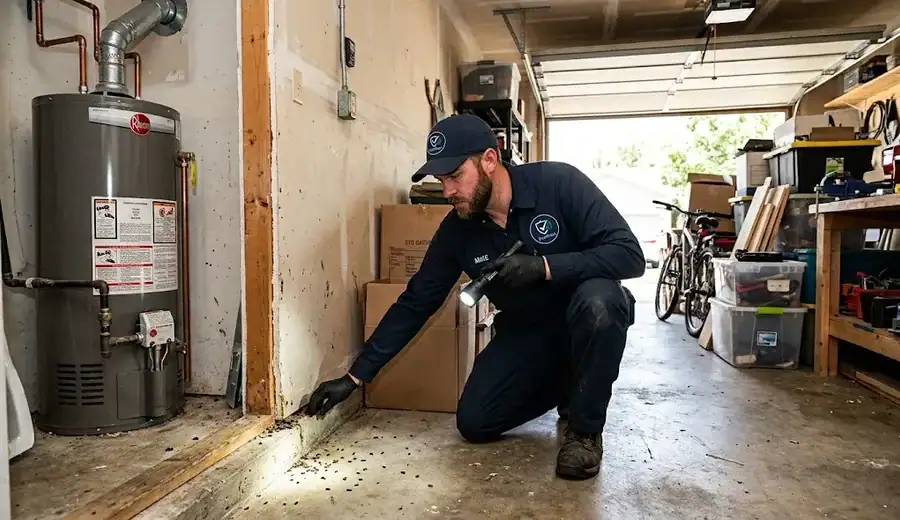
5. Garages and Storage Boxes
Garages rank among the most overlooked mouse habitats in California homes. Door gaps, weep holes, and gaps around utility penetrations let mice in, and the clutter inside provides ready-made nest sites. Cardboard boxes, holiday decorations, old clothing, and bags of pet food or birdseed give them both shelter and a meal. If the garage connects to the house, mice often use the shared wall or the gap under the interior door as a highway.
6. Crawl Spaces and Subfloors
Raised-foundation homes give mice a second hidden level under the floor. Foundation vents with torn screens, gaps around pipe penetrations, and earth-to-wood contact all provide access. Mice nest in the insulation under floors and climb pipes into the kitchen and bathroom walls. If you hear noise from under the floor at night, inspect the crawl space for droppings and torn insulation, and wear protective gear.
7. Couches, Closets, and Cluttered Rooms
Mice sometimes nest in upholstered furniture, stored clothing, and stacks of paper. A couch that sits against a wall provides a dark, soft cavity. A closet floor covered in shoes and bags provides cover. Clutter increases hiding options everywhere, so the more cluttered a room is, the harder it is to find the nest. Pull furniture away from walls and inspect the underside of cushions and the dust cover on the bottom of the couch.
8. Bathrooms and Laundry Rooms
Bathroom vanities and laundry rooms offer water and plumbing access. Mice use the gap around drain and supply pipes to move between walls and cabinets. Check under sinks, behind the washer, and around the water heater closet, where warmth attracts them.
9. Vehicle Engine Bays
Mice also hide in cars, trucks, and RVs, especially those parked for several days. Engine bays stay warm after a drive and offer wiring insulation to chew. If you find droppings on the engine cover or a nest in the air filter housing, a mouse has settled in. Inspect the vehicle before long trips, and check parked vehicles near the garage.
Quick Reference: Indoor Hiding Spots, Clues, and What to Check
| Hiding spot | Why mice choose it | Clue to check |
|---|---|---|
| Wall voids | Dark, insulated, undisturbed | Night scratching, droppings at baseboard gaps |
| Attic | Warm, soft nesting material, rarely visited | Flattened insulation trails, chewed boxes |
| Behind appliances | Heat, dark corners, pipe access | Droppings and grease marks on the floor edge |
| Cabinets and pantry | Food and shelter side by side | Gnawed packaging, droppings in corners |
| Garage | Clutter, door gaps, stored food | Nests in boxes, droppings along walls |
| Crawl space | Insulation, pipe access, no foot traffic | Torn insulation, droppings under the kitchen |
| Couches and closets | Soft cavities and cover | Shredded fabric, small droppings |
| Vehicle engine bay | Residual warmth, wiring to chew | Droppings on the engine cover, chewed wires |
What Does a Mouse Nest Look Like?
A mouse nest looks like a loose, messy ball of shredded material, not a tidy bird nest. UC IPM states that house mice build nests from finely shredded paper or other fibrous material in sheltered locations. You may find shredded insulation, fabric, cardboard, tissue, or pet bedding packed into a hollow roughly the size of a fist. Fresh nests smell musky, and old ones collect droppings and urine stains.
Mice also build more than one nest. A breeding female may keep a nesting site separate from the daily sleeping spots of other mice. If you want to understand how nest placement changes with the seasons, population size, and building type, read our mouse nesting habits guide next.
Where Do Mice Hide Outside?
Mice also live outdoors, and the outdoor population feeds the indoor one. Common outdoor hiding places include:
- Dense ground cover and ivy that touch the foundation.
- Woodpiles and stacked lumber that rest against the house or garage.
- Sheds, pool equipment boxes, and outdoor storage bins with gaps at the base.
- Dumpsters and trash enclosures. UC IPM recommends moving dumpsters at least 50 feet from buildings.
- Vehicle engines, patio furniture cushions, and barbecue covers left untouched for weeks.
- Burrows beneath concrete slabs, along fence lines, and under heavy shrubs.
When cold snaps or heavy rain hit, or when yard food dries up, outdoor mice look for indoor shelter. In California, that shift often follows the first significant rains of the season. Cut back vegetation, raise stored items off the ground, and keep a clear strip around the foundation so you remove the staging area before mice move in.
What California Homes Add to the Problem
California construction and climate create hiding opportunities that national guides skip. Our field representatives see the same patterns again and again across the state:
Mild Winters Keep Mice Active Year-Round
House mice breed year-round, and UC IPM reports that a single female can have as many as 60 young in a year. In most of California, mild weather removes the natural slowdown that colder states see. A small problem in spring can become an established colony by fall.
Stucco, Weep Screeds, and Foundation Gaps
Stucco homes often have small gaps at the weep screed, where the stucco meets the foundation. Mice can use those gaps to reach the wall void behind the stucco. Sealing the visible interior hole alone does not help if this exterior entry stays open.
Tile Roofs and Roofline Gaps
Barrel tile roofs leave gaps beneath the tiles, and mice can slip through damaged or missing bird stops into the attic. Roof rats use the same routes, so an attic noise needs a proper identification before you choose a control method.
Garage Conversions and Accessory Dwelling Units
Converted garages and backyard units often keep older gaps around utility lines. Fresh walls can hide old voids that connect to the main house. If mice appear in a new unit, inspect the utility connections between buildings first.
Drought, Wildfire Cleanup, and Rain Cycles
Dry spells push rodents toward irrigated yards and homes. Heavy rains flood burrows and drive them indoors. Brush clearance and defensible space reduce habitat near the home, but they can also push displaced rodents toward the house for a short time, so tighten your exclusion work after major yard changes.

Signs That Mice Are Hiding Nearby
You rarely see the mouse, so you look for the evidence it leaves behind. Check each sign below, and note where the signs cluster, because the cluster points to the nest.
Droppings
Mouse droppings are dark, pointed pellets about 1/4 inch long, roughly the size of a rice grain. Fresh droppings look dark and moist. Old droppings turn gray and crumble. A mouse produces many droppings every day, so a small pile near a baseboard or in a drawer corner confirms regular travel.
Sounds in the Walls or Ceiling
Scratching, light scurrying, and faint squeaking at night point to wall or attic activity. Sound travels, so pinpoint the spot by listening at several places along the wall.
Gnaw Marks and Damaged Packaging
Mice gnaw on food packaging, wood, soap, and wiring. Small, shallow teeth marks and ragged cardboard edges tell you mice are feeding in that area. UC cooperative extension warns that gnawed wiring can cause fires, so treat chewed cables as a safety issue.
Grease and Rub Marks
Mice follow the same routes along walls, and their fur leaves dark, greasy smears along baseboards, pipes, and entry holes. These smears show the active route between nest and food.
Musky Odor
A strong, stale smell near a cabinet, appliance, or closet suggests a nest with accumulated urine. Do not ignore this smell, even when you cannot find droppings.
Pet Behavior
Dogs and cats often stare at, paw at, or sniff the exact wall or appliance where the mice hide. Watch where your pet focuses, then inspect that spot.
What a Daytime Sighting Means
Seeing a mouse in daylight deserves attention. A single daytime mouse does not always mean a massive infestation, but it often points to a nest disturbance, food shortage, or crowded hiding spaces. Combine the sighting with the signs above before you decide how serious the problem is.
How to Find Where Mice Hide: A Safe Inspection Method
You can locate most hiding spots in under an hour with a flashlight and a systematic approach. Follow these steps in order.
Step 1: Prepare Protective Gear
Put on rubber or nitrile gloves and a well-fitting respirator-rated mask before you disturb nesting material or dusty areas.
Step 2: Inspect at Dusk
Start when the house is quiet and light is low. Mice become active, and you can hear and see more.
Step 3: Use a Flashlight at a Low Angle
Shine it along baseboards and floor edges. Droppings and grease smears show up clearly in side lighting.
Step 4: Check Kitchen Appliances
Look behind the refrigerator and stove, and use a flashlight to check under them. Pull them out only if you can do so safely.
Step 5: Open Every Lower Cabinet
Examine the back panels and the plumbing penetrations at the sink.
Step 6: Inspect the Attic, Garage, and Crawl Space
Look for droppings, shredded insulation, and chewed boxes.
Step 7: Use a Tracking Surface
Dust a thin line of unscented flour or baby powder along a suspected route, then check it in the morning for tiny footprints and tail drags. Keep it away from pets and food.
Step 8: Map Your Findings
Mark the locations of droppings, sounds, and gnaw marks on a simple floor plan. The cluster shows you where the nest sits and where mice enter.
Safety First: Never Sweep or Vacuum Rodent Waste. The CDC explains that when fresh urine, droppings, or nesting material is stirred up, hantavirus particles can enter the air. Do not sweep, dry-dust, or vacuum droppings. Wet the area with a disinfectant, let it soak, then wipe it up with paper towels. The CDC hantavirus prevention page lists the full cleanup steps. For heavy contamination in attics or crawl spaces, call a professional.
Mouse, Rat, or Deer Mouse: Do They Hide in the Same Places?
Different rodents choose different spaces, and identifying the animal changes your plan. Use the comparison below as a starting point.
| Rodent | Typical daytime hiding place | Identification clue |
|---|---|---|
| House mouse | Wall voids, behind appliances, cabinets, garages, low attic areas | Gray-brown coat, nearly hairless tail, small droppings about 1/4 inch long |
| Deer mouse | Sheds, garages, woodpiles, crawl spaces, rural and hillside properties | Larger eyes and a furred tail that is dark on top and light underneath |
| Roof rat | High spaces: upper attic, roof void, dense tree canopy, palm fronds | Larger droppings, noises overhead, runs along utility lines and fences |
| Norway rat | Burrows, sewer lines, basements, ground-level voids | Heavy body, larger droppings, burrows near foundations |
UC IPM separates the house mouse from the deer mouse by coat color, eye size, and tail fur. That distinction matters because deer mice carry additional health concerns, and they often hide in outbuildings and rural structures instead of kitchens. If you suspect a deer mouse or a rat, skip DIY handling in enclosed spaces and request an inspection. Juvenile rats can look like adult mice, which causes frequent misidentification, so check tail length relative to body length rather than size alone.
What to Do After You Find the Hiding Spot
Finding the nest is the first half of the job. The second half is stopping the next group from moving in. UC IPM states plainly that exclusion is the most successful and permanent form of house mouse control, so build your plan around it.
Step 1: Seal Entry Points
Walk the exterior and seal every gap larger than a pencil width. Use steel wool or copper mesh packed into the gap, then cover it with caulk or a rodent-proof sealant. Install tight-fitting door sweeps on the garage and exterior doors. Cover foundation vents with intact, rodent-proof mesh.
Step 2: Trap Before You Seal the Last Hole
Trapping reduces the population that already lives inside. UC IPM recommends snap traps set with the trigger end against the baseboard in dark corners, and suggests baits such as peanut butter. Place traps where you found droppings and grease marks, and check them daily. Keep traps out of reach of children and pets.
Step 3: Remove Food and Shelter
Store pantry food, pet food, and birdseed in sealed, rigid containers. Wipe crumbs from counters and floors. Move cardboard storage to plastic bins with tight lids, and clear the garage floor so you can see signs of activity.
Step 4: Clean and Disinfect Safely
After you remove the mice, clean droppings, urine, and nests using the CDC method: wear gloves, wet the contamination, wipe it up, and bag the waste. Disinfect the surfaces afterward. Heavy contamination, especially in attic insulation, requires professional cleanup and insulation replacement.
Step 5: Monitor for Two Weeks
Keep a few traps in place, and keep checking your tracking powder lines. New droppings after the work point to a missed entry point or a second nest.
Common Mistakes That Keep Mice Hiding in Your Home
- Sealing the entry hole while mice remain inside. Trapped mice chew new holes or die inside a wall, which creates odor and attracts insects.
- Relying on repellents alone. Sound devices and scented products rarely clear an established nest. Mice adjust to them or simply ignore them.
- Placing traps in the open. Mice travel along walls, so traps in the middle of the floor miss the route.
- Setting too few traps. One trap for a whole kitchen leaves most of the population untouched. Use several along walls and near hiding spots.
- Skipping the attic or garage. You may clear the kitchen and still leave the main nest upstairs or next door.
- Leaving food accessible. Without a food cutoff, new mice replace trapped ones within days or weeks.
- Using poison blindly in wall voids. A poisoned mouse can die inside a wall where you cannot reach it. Rodenticides also pose risks to pets and wildlife, so use them only under professional guidance.
When to Call a Professional
You can handle a single mouse and a small, obvious entry point yourself. Call for professional help in these situations:
- You hear activity in walls or the attic night after night, even after trapping.
- You find droppings in several rooms, which suggests multiple nests.
- You see mice during the day on more than one occasion.
- You discover chewed wiring or a strong odor with no visible source.
- You cannot identify the animal, or you suspect rats or deer mice.
- You face heavy contamination in the attic or crawl space.
- You want a full exclusion plan that covers every entry point.
How PestPunt Service Works
PestPunt is a California statewide Service Area Business. We do not operate a public office, and we do not ask you to visit one. Instead, our field representatives travel to your property, so every inspection happens where the problem actually lives.
- You call or email. Tell us what you see, hear, or smell, and where it happens.
- We dispatch a field representative. The representative arrives at your property for an on-site assessment.
- We inspect hiding spots and entry points. The inspection covers the interior, attic, garage, crawl space where accessible, and the exterior.
- We explain what we find. You get a plain-language summary of the species, the nest locations, the entry points, and the recommended plan.
- We start control and exclusion. The plan focuses on removing the existing mice and closing the paths they use.
We focus on accurate identification first, because the right plan for a house mouse differs from the right plan for a roof rat or a deer mouse. We also explain our findings in clear terms, so you can decide what to do next with full information.
Prevention Checklist: Keep Mice From Hiding in Your Home
- Seal gaps around pipes, vents, and utility lines with steel wool and sealant.
- Install door sweeps on garage and exterior doors.
- Repair torn foundation vent screens and damaged roof bird stops.
- Trim trees and shrubs so branches stay away from the roofline.
- Keep woodpiles and storage off the ground and away from the house.
- Store all food, pet food, and birdseed in sealed containers.
- Replace cardboard storage with lidded plastic bins.
- Take out trash regularly and keep outdoor bins closed.
- Inspect the attic, garage, and crawl space twice a year, especially before the rainy season.
- Check vehicles that sit unused for several days.
Frequently Asked Questions About Where Mice Hide
Where do mice hide during the day in a house?
Mice hide in quiet, dark, enclosed spaces near food and warmth. The most common spots are wall voids, attics, behind and under kitchen appliances, inside cabinets and pantries, garage storage boxes, crawl spaces, and cluttered closets.
Do mice come out during the day?
Mice mostly stay hidden during the day, but they can appear in daylight. A daytime sighting often means the nest was disturbed, food is scarce, or the population is crowded. Treat a daytime mouse as a sign that more mice live nearby.
How far do mice travel from their nest?
Mice usually stay within about 30 feet of their nest. If you find droppings or gnaw marks in one room, the nest often sits within that radius, frequently inside a wall, ceiling, or appliance cavity.
How small a gap can a mouse squeeze through?
According to UC Integrated Pest Management, mice can enter through an opening about the size of a dime. Seal every gap larger than a pencil width around pipes, vents, and garage doors.
How can I find a mouse nest in my house?
Search at dusk with a flashlight. Look for droppings about the size of a rice grain, greasy rub marks along walls, shredded paper or fabric, and gnawed packaging. Check behind appliances, inside the attic, and along garage walls first. Wear gloves and a respirator-rated mask when you disturb any nesting material.
Are mouse droppings and nests dangerous?
Yes. The CDC states that stirring up dried urine, droppings, or nesting material can release hantavirus particles into the air. Never sweep or vacuum rodent waste. Wet it with disinfectant, wipe it up with paper towels, and wear gloves.
Does seeing one mouse mean I have more?
Usually, yes. House mice breed year-round, and UC IPM reports that one female can produce as many as 60 young in a single year. A single visible mouse often signals an established nest.
Can PestPunt come to my property to find where mice hide?
Yes. PestPunt is a California statewide Service Area Business that dispatches field representatives directly to your property. There are no physical office visits. Call (888) 217-6759 or email [email protected].
Key Takeaways
- Mice hide during the day in dark, enclosed, warm spaces within about 30 feet of food.
- Wall voids, attics, appliance gaps, cabinets, garages, and crawl spaces top the list.
- A daytime sighting signals a disturbed nest, hunger, or crowding.
- Droppings, grease marks, gnaw marks, odor, and night sounds reveal the hiding spot.
- Exclusion works best, and trapping removes the mice already inside.
- Never sweep or vacuum droppings. Follow CDC wet-cleanup steps.
- California homes add stucco gaps, tile roofs, garage conversions, and year-round breeding.
California Statewide Mouse Inspection & Control
Need Help Finding Where Mice Hide?
Safe inspection matters. Contact our team at (888) 217-6759 to schedule a species identification, hiding-spot inspection, entry-point survey and tailored exclusion plan.