Rodent Damage to Car Engines and Wiring: Signs, Costs of Waiting, and How to Stop It
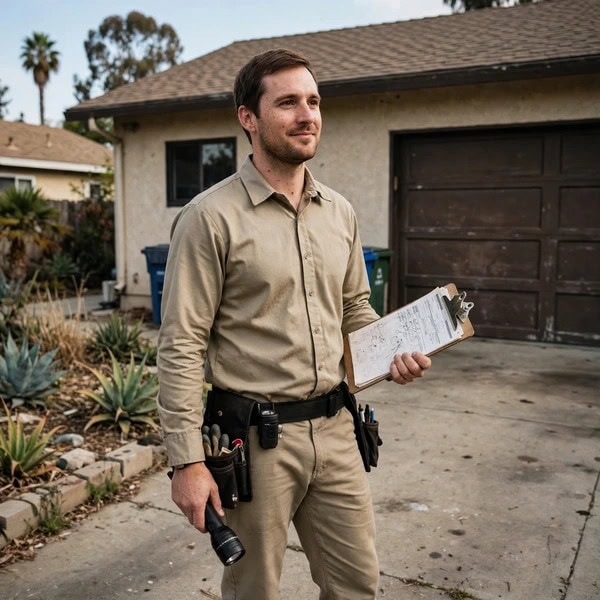
A car that stalls, throws warning lights, or smells musty may have a rodent problem under the hood. Rats and mice chew wire insulation, hoses, and filters, and they often return after the first repair. This guide shows you what to check, what to do first, and how to remove the rodents at the source.
Rodent Damage to Car Engines — At a Glance
What they chew: Wire insulation, sensor leads, hoses, filters, and under-hood sound insulation.
First move: Stop repeated start attempts, take photos, and have a mechanic inspect before you drive.
Why it returns: Food, shelter, and an open route to your parking spot stay in place until someone fixes them.
Long-term fix: Trap the rodents, seal entry points, remove food and cover, and protect the parking area.
Why Rats and Mice Move Into Car Engines
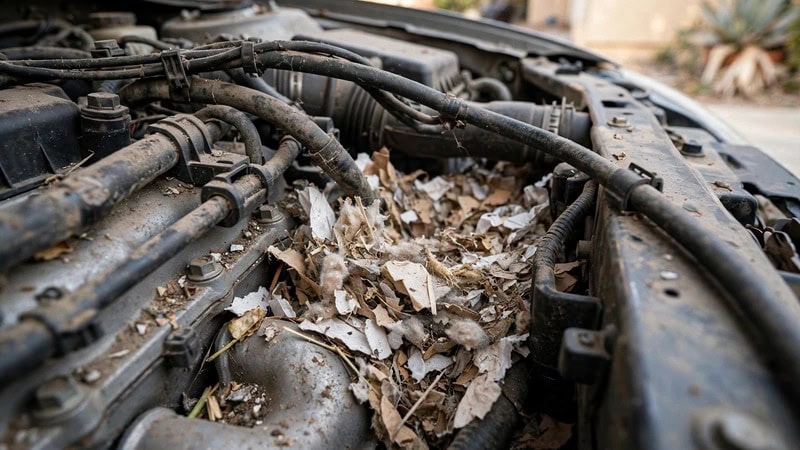
A parked car offers everything a rodent wants: a dark hollow, a heat source that stays warm after you turn the engine off, and a roof over its head. The engine bay holds soft insulation and plastic shrouds, and it sits close to a garage wall, a fence, or a planter. For a rat looking for a nest site on a cold night, that bay looks like a finished apartment.
The University of California reports that rats commonly gnaw the insulating sheaths on engine wires in cars, which leads to significant malfunctions and expensive mechanical repairs. The same source notes the problem extends to trucks, tractors, and other equipment. You can read the full guidance in the UC IPM Pest Notes on rats.
Warmth, Cover, and a Short Walk to Food
Rodents choose a nest site for three reasons: warmth, cover from predators, and a short trip to food. A car in a garage that also stores pet food, bird seed, or boxed holiday items meets all three. A car parked on a driveway beside fruit trees, ivy, or a dense hedge also meets them, because roof rats live in the plants and travel to the vehicle at night.
Chewing Is Normal Rodent Behavior
Rodent teeth keep growing, so rats and mice gnaw to keep them worn down. They do not target your car out of spite. Wire insulation, rubber hoses, and plastic clips happen to be the right size and texture. Some drivers also suspect that certain wire coatings taste appealing, but no single source settles that question, so we treat it as an open theory and focus on what we can control: access, food, and shelter.
Which Rodents Cause the Damage
Three groups matter in California. House mice squeeze through very small gaps and nest in air filter boxes and under insulation. Norway rats burrow along foundations and favor ground-level garages. Roof rats climb fences, wires, and tree limbs, and they often nest above ground in shrubs, vines, and attics. Squirrels also chew vehicle wiring in some neighborhoods. Because each animal behaves differently, a good inspection identifies the species before anyone sets a trap. Our guides on the roof rat and Norway rat and on Norway rats and house mice explain how to tell them apart.
What Rodents Damage Under the Hood and Inside the Car
Rodent damage rarely stays in one spot. A rat that enters through the grille can reach the wiring harness, the battery cables, the fuel injector leads, and the cabin air intake in a single night. Modern vehicles also pack dozens of small sensors, and each one connects through thin wire that a rodent can sever with one bite.
Wiring Harnesses and Sensor Leads
Wiring causes the most expensive trouble. Chewed insulation can expose copper, and exposed copper can short against metal. A short may blow a fuse, trigger warning lights, or stop the engine from starting. Sensor wires, such as those that report wheel speed, oxygen levels, or engine position, can fail in ways that confuse the dashboard and mislead a quick diagnosis.
Hoses, Vacuum Lines, and Belts
Rodents also gnaw rubber and plastic lines. A nicked coolant hose may leak slowly and cause overheating weeks later. A chewed vacuum line can cause a rough idle. Fuel lines deserve special attention: if you smell gasoline near a car you suspect of rodent damage, stay away from sparks and have a mechanic check it.
Insulation, Filters, and the Cabin
Rats and mice shred hood insulation and fill air filter boxes with nesting material. Some then travel through the cabin air intake into the vents. A musty or ammonia-like smell when you turn on the heater or air conditioner can mean a nest sits in the intake path. Droppings in the glove box or trunk also point to a vehicle that rodents use as a shelter.
Electric and Hybrid Vehicles
Electric and hybrid vehicles still contain low-voltage wiring that rodents can chew, and their high-voltage cables need trained technicians. If you drive one, tell your service center that you suspect rodents and do not inspect high-voltage components yourself.
| Vehicle area | What rodents do | What you may notice | Who should fix it |
|---|---|---|---|
| Engine wiring harness | Strip insulation and sever wires | Warning lights, misfires, or a no-start condition | Qualified mechanic or auto electrician |
| Sensor leads | Chew thin wires near wheels and engine | Erratic gauges, stability or brake warnings | Qualified mechanic |
| Hoses and vacuum lines | Gnaw rubber and plastic | Rough idle, leaks, or overheating | Qualified mechanic |
| Air filter box and intake | Pack nesting material and food caches | Reduced power, musty smell from vents | Mechanic, then cleanup of the nest area |
| Hood insulation | Shred it for bedding | Torn lining, loose fibers, droppings | Mechanic or body shop |
| Garage and driveway | Use the area as a shelter and food route | Droppings, grease marks, gnawed boxes nearby | Pest control professional |
The last row matters most. A mechanic repairs the car, but only a property inspection can stop the next visit. We cover that side of the problem below.
Warning Signs That Rodents Have Reached Your Vehicle
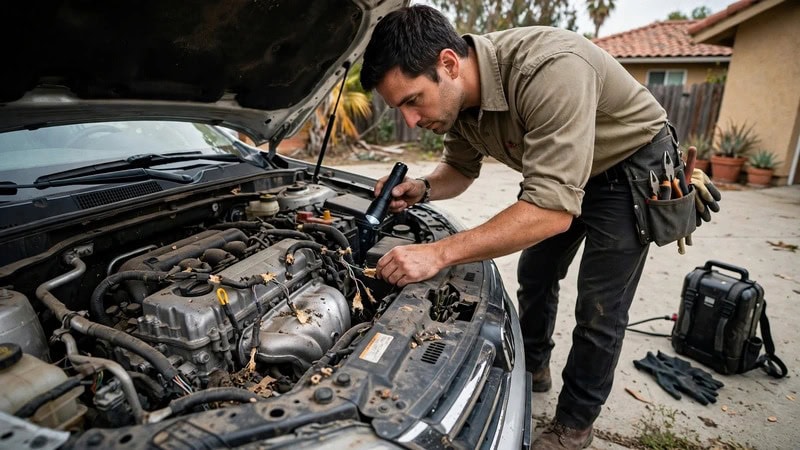
Catch the problem early and you may save yourself a long repair bill. Check your car on a regular schedule, especially if you park near a garden, a trash area, or a wall where you have heard scratching. Wear gloves and use a flashlight. Do not blow into the engine bay, and do not crawl underneath a car that sits on a jack.
Signs Inside the Engine Bay
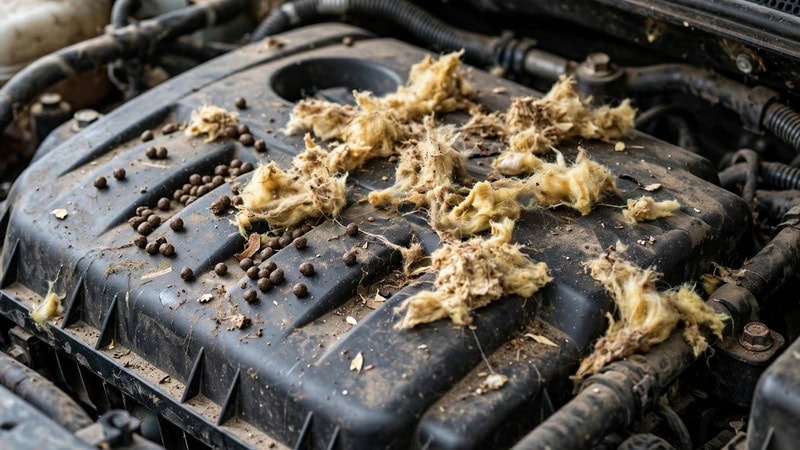
- Shredded paper, insulation, leaves, or fabric packed on top of the engine, in the corners, or in the air filter box.
- Dark, pellet-shaped droppings on the engine cover, the battery tray, or the firewall.
- Gnawed plastic clips, hoses, and wire coatings.
- Stashed food, such as seeds, nuts, dog kibble, or pieces of fruit.
Signs While Driving or Starting
- A check engine light or multiple warning lights that appear after the car sits unused for a few days.
- A car that cranks but does not start, or that stalls without warning.
- A musty, urine-like odor from the vents or the engine bay after you heat the car.
- Fan or blower noise that changes, because debris may sit in the housing.
Signs Around the Parking Spot
- Droppings or grease smears along the garage wall or the base of the driveway fence.
- Gnawed bags, pet food containers, or stored cardboard.
- Tiny footprints in dust on the bumper, tire, or wheel well.
- Fresh digging or burrows along the foundation beside the garage door.
If you see these signs in the garage, read our guide to rodent infestation signs in the garage and our explanation of how to identify rodent chew marks on wood and wire. Both help you separate rodent damage from ordinary wear.
What to Do the Moment You Suspect Rodent Damage
These six steps protect you, your car, and your insurance position. Follow them in order, and call a mechanic before you try to fix anything under the hood.
Stop and Do Not Keep Cranking
If the car will not start or throws new warning lights, stop trying. Repeated starts can push current through damaged wires and may turn a small repair into a larger one.
Inspect With Gloves and a Light
Open the hood and look for nests, droppings, and gnawed wires. Wear gloves, wet down any nesting material, and keep your face away from dust. Do not touch cables or connectors you cannot identify.
Photograph Everything
Take clear photos of the damage, droppings, nest material, and the parking area. Good photos help your mechanic explain the cause and help your insurer review a claim.
Call a Mechanic Before You Drive
Ask a qualified shop to confirm the damage and test the electrical system. A car with exposed or shorted wires may be unsafe to drive, and the shop can tow it if needed.
Contact Your Insurer and Check Your Policy
Ask whether your policy covers animal damage and what your deductible is. Our companion guide on insurance coverage for rodent damage in California explains what to ask.
Call for Rodent Control at the Source
Repairs do not remove the animals that live nearby. Call PestPunt at (888) 217-6759 so a field representative can inspect the garage, driveway, and yard.
Where California Drivers See Rodent Damage Most
Rodent pressure varies from block to block. Our field representatives see the same patterns again and again: mature landscaping, shared fences, older garages, and street parking beside gardens. The neighborhoods below show how those patterns look in different parts of the state. We list them as examples, not as a ranking, and we serve every California community.
Los Angeles and Long Beach
In Highland Park (ZIP 90042), hillside lots with ivy, citrus trees, and detached garages give roof rats cover and food close to parked cars. In Naples in Long Beach (ZIP 90803), canal-side landscaping and tight driveways put vehicles near rodent travel routes. Our Long Beach rodent control page and our Los Angeles rapid rodent control page describe those service areas.
San Francisco Bay Area
In the Sunset District of San Francisco (ZIP 94122), row houses share fences and rooflines, and street-level garages sit under dense plantings. In Willow Glen in San Jose (ZIP 95125), mature trees and older detached garages offer roof rats an easy route from branch to roof to garage. See our San Francisco rodent pest control page for more.
Sacramento, Fresno, and San Diego
Fruit trees, backyard compost, and open storage can draw rodents in Land Park in Sacramento (ZIP 95818) and in the Tower District of Fresno (ZIP 93728). In North Park in San Diego (ZIP 92104), older homes with crawl spaces and detached garages give mice and rats plenty of places to hide. You can browse every service area on our locations page.
A practical tip from the field: the car in the garage is rarely the first thing a rodent finds. The animals usually settle in the wall, the attic, or the shrubs next door, and they discover the vehicle later. That is why we inspect the whole property, not just the parking spot.
How PestPunt Removes the Rodents Behind the Damage
Mechanics fix cars. We remove the rodents, close the routes, and clean up the area so the next repair does not follow the last one. Here is how a typical visit works.
You Call and Describe the Problem
Call (888) 217-6759 at any hour. Tell us what you found in the car, where you park, and what you hear in the garage, walls, or attic.
A Field Representative Comes to You
PestPunt operates as a mobile service. We do not run a walk-in office, so a local representative travels directly to your property.
We Inspect the Whole Property
We check the garage, the driveway edges, the foundation, the roofline, and the landscaping. We also identify the species, because roof rats, Norway rats, and mice need different tactics.
We Set Up Trapping Where Rodents Travel
Snap traps remain the method that UC IPM calls the safest, most effective, and most economical for rats. We place them along travel routes and out of reach of children and pets.
We Seal Entry Points and Reduce Attractants
We close gaps larger than a quarter inch with durable materials, and we advise you on food storage, trash, and plantings. Our rat proofing and mouse proofing pages describe the work.
We Plan the Cleanup and Next Checks
Droppings and nesting material need safe, wet cleanup. If the area needs more than you can handle, our cleanup and decontamination service can help. We also explain what to monitor after treatment.
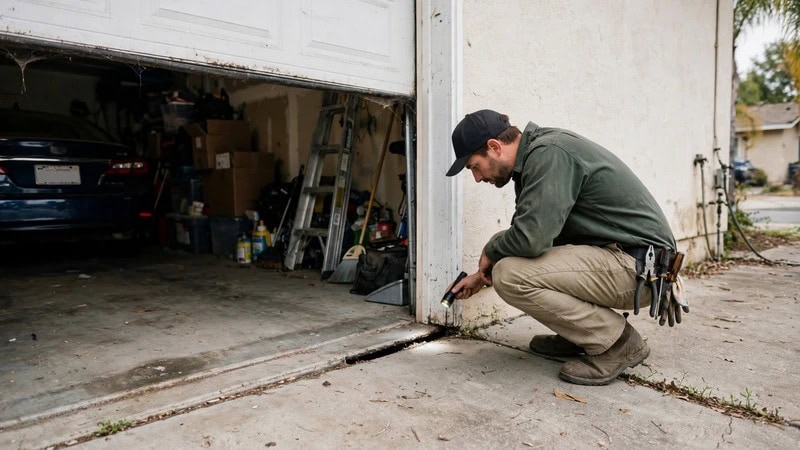
DIY Protection or Professional Control: Which Fits Your Situation?
You can take several protective steps yourself, and you should. But a vehicle problem often signals a larger rodent population than one car can show. Use the comparison below to decide where your situation falls.
When DIY Steps Can Help
- You found a single, old sign and no fresh droppings.
- You can park in a clean, sealed garage with no stored food.
- You can use a weighted car cover that touches the ground all around the car.
- You check the engine bay every week and see no new activity.
When to Call a Professional
- Warning lights return after a repair, which suggests the animals came back.
- You find droppings or nests in the car and the garage.
- You hear scratching in walls or the attic near the parking area.
- Roof rats travel along fences, wires, or tree limbs to your roof.
- Anyone in the home has asthma, a weakened immune system, or pregnancy.
- A neighbor has the same problem, and the activity seems to move between yards.
UC IPM recommends a weighted car cover that touches the ground and forms a seal all around the vehicle. The same guidance adds that managing rodents across the landscape and neighborhood will likely be needed for a longer-term reduction. In plain terms, a cover helps, but it does not replace removing the population.
Avoid using poison baits in or near a garage. Rodents that eat bait may die inside walls, vents, or the vehicle itself, and baits can harm pets and wildlife. UC IPM also advises sealing entry points before baiting outside so poisoned rats do not come indoors to die. Licensed professionals choose and place products according to the label and California rules.
How to Keep Rodents Out of Your Car for Good
Prevention works best in layers. No single trick keeps every rodent away, and UC IPM states that no repellents have solved a rat problem for more than a very short time. Build several barriers instead.
Park Smart
- Park in a closed garage when you can, and keep the door shut at night.
- Keep the car away from walls stacked with boxes, wood, or bags.
- Avoid parking under overhanging branches and beside ivy or dense shrubs.
- Move the car every few days. A vehicle that never moves looks like a permanent shelter.
Remove Food and Cover
- Store pet food, bird seed, and garden supplies in sealed metal or thick plastic containers. Rats can chew through thin plastic.
- Pick up fallen fruit and nuts and keep trash lids tight.
- Trim limbs at least 3 feet from the roof and thin dense plantings, as UC IPM advises.
- Keep firewood and lumber off the ground and away from the garage wall.
Seal the Building
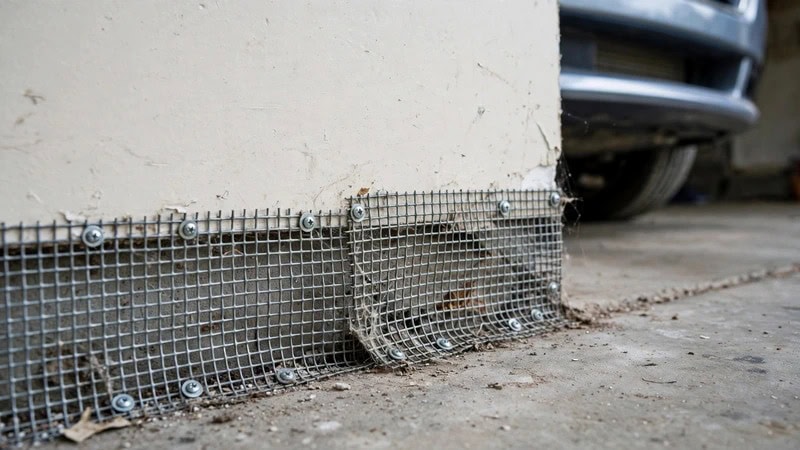
- Close gaps larger than a quarter inch around pipes, wires, and vents with steel wool, wire screen, or sheet metal. UC IPM warns that rats can chew through plastic, foam, wood, and caulk.
- Fit a good door sweep on the garage door and check the corners.
- Use heavy-gauge mesh, not lightweight chicken wire, on vents.
Protect the Car Itself
- Use a weighted car cover that reaches the ground on every side.
- Ask your mechanic about protective wire wrap or shielding that suits your vehicle.
- Open the hood and look inside once a week during rodent season.
If your inspection turns up a bigger story, our guide on how to find mouse and rat entry points shows you where to look, and our article on why rats chew through wires and wood explains the behavior behind the damage.
Six Mistakes That Make Rodent Damage Worse
Repairing Without Removing
A new wiring harness will not last if the same rat still lives in your garage. Fix the source and the car.
Cranking a Damaged Car
Repeated starts can worsen shorts. Stop, inspect, and call a mechanic.
Using Flammables Near the Engine
Rags soaked in strong-smelling products can ignite near a hot engine or exhaust. Skip home remedies under the hood.
Trusting Sound Gadgets
UC IPM reports that rats quickly become used to repeated sounds, including ultrasonic ones. Our next guide covers this in detail.
Dry Sweeping Droppings
Dry cleanup lifts dust into the air. Wet the area, wear protection, and wipe it up.
Setting One or Two Traps
UC IPM notes that heavily infested homes may need a dozen or more traps. A single trap rarely solves the problem.
How to Choose a Rodent Control Provider for a Vehicle Problem
Not every provider treats vehicle damage as part of the property problem. Ask a few direct questions before you book.
Questions Worth Asking
- Will you inspect the whole property, or only the garage?
- How will you identify the rodent species?
- What will you do about entry points, not just traps?
- How will you keep pets, children, and wildlife safe?
- What cleanup steps will you recommend for droppings and nesting material?
Good Signs and Warning Signs
A good provider explains the plan in plain language, ties each step to the cause, and tells you what you must do too. A warning sign is a provider who promises instant results, pushes poison inside the garage, or ignores entry points. PestPunt dispatches local field representatives to your property and explains the plan before work begins. You can learn more on our about page and review the full list of rodent services.
How to Prepare for a Visit and What Happens Next
A little preparation helps your representative work faster and gives you a clearer plan.
- Write down when you first noticed the warning lights or smell.
- Keep the photos you took of the damage and the parking area.
- Clear a path to the garage walls and any stored boxes.
- Secure pets in another room.
- Keep your mechanic's findings and any repair estimates handy.
After the inspection, we explain what we found, what we recommend, and what to check in the weeks ahead. If the vehicle damage ties to a claim, keep copies of your photos, repair paperwork, and pest control records. The next page in this series, insurance coverage for rodent damage in California, walks through what insurers may ask.
Frequently Asked Questions About Rodent Damage to Cars
Rodent teeth never stop growing, so they gnaw constantly to keep them short. Wire insulation, hoses, and plastic clips offer the right size and texture. A warm engine bay also gives them shelter, so they chew while they build a nest.
Look for nests, droppings, gnawed wires, and stashed food in the engine bay. Warning lights, a no-start condition, or a musty smell from the vents can also signal damage. A mechanic should confirm the cause before you drive.
No. Repeated starts can push current through exposed copper and cause shorts. Photograph the damage, avoid touching unfamiliar cables, and have a qualified mechanic inspect the car before you drive it.
It can help. UC IPM recommends a weighted cover that touches the ground and seals all around the vehicle. The same guidance says long-term reduction likely requires rodent management across the landscape and neighborhood too.
Evidence is weak. UC IPM reports that rats quickly adapt to repeated sounds, including ultrasonic ones, and that no repellent has solved a rat problem for more than a very short time. Use barriers and trapping instead.
It depends on your policy. The California Department of Insurance says comprehensive coverage pays for damage from causes other than a collision, but its list does not name rodents. Ask your insurer whether animal damage qualifies and what your deductible is.
A PestPunt field representative inspects your garage, driveway, foundation, and landscaping, identifies the species, sets traps where rodents travel, and recommends sealing and sanitation. We handle the property side, and your mechanic handles the vehicle.
Yes. PestPunt is a Service Area Business that dispatches local field representatives across California. Call (888) 217-6759 at any hour, and we will tell you how we can reach your property.
Final Takeaways
Rodents damage cars because the engine bay offers warmth, cover, and soft nesting material, and because food and shelter sit close by. A repair fixes the symptom, but only removing the rodents and closing their routes fixes the cause. Stop cranking a damaged car, document everything, and let a mechanic confirm the damage.
If you want a plan for your garage, driveway, and yard, call PestPunt at (888) 217-6759. We dispatch a field representative to your property anywhere in California.
Mobile Rodent Control Services
Stop the Rodents Before the Next Repair Bill
A field representative can inspect your garage, driveway, and yard and explain how to remove the rodents and close their routes. Call (888) 217-6759 for 24/7 dispatch anywhere in California.