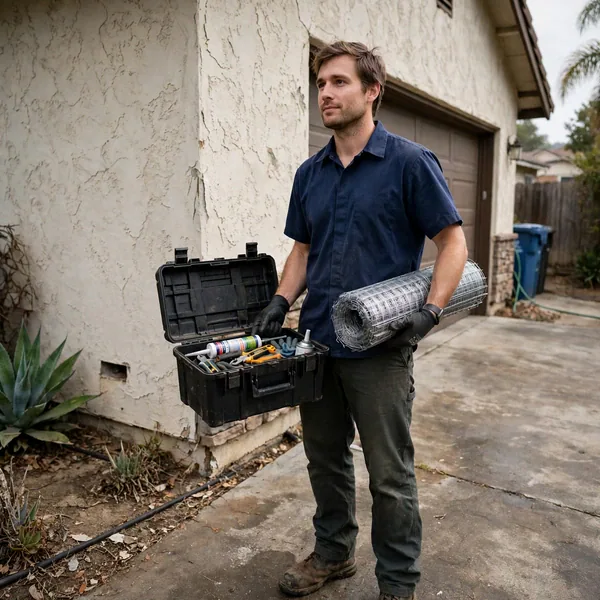
Rat Entry Point Sealing: Find and Close Every Gap Rats Use to Get Inside
Traps remove the rats you can catch. Sealing keeps the next ones out. PestPunt field representatives come to your property, trace the routes rats use, and close each opening with metal and masonry that rats cannot chew. Call (888) 217-6759 any hour.
Rat Entry Point Sealing at a Glance
What it covers: Roofline, soffits, vents, utility lines, garage doors, foundation gaps, and drains.
Materials: Hardware cloth, copper mesh, sheet metal flashing, and mortar. Not foam or caulk alone.
Order of work: Inspect, trap, seal, then check. We never seal live rats inside the structure.
How to start: Call (888) 217-6759. A field representative comes to your property.
What Rat Entry Point Sealing Covers on a Los Angeles Home
Rat entry point sealing is the physical repair of your building so rats cannot walk, climb, or squeeze inside. It is the part of rodent control that lasts. Traps and bait stations reduce the rats you have today. Sealing decides whether new rats move in next month.
We treat the whole building as one system. A rat that finds one sealed gap tests the next one, so we look for every opening from the roof peak to the footing. These are the areas we inspect and seal on almost every visit.
Roofline and Soffits
Gaps where fascia meets the roof, loose soffit panels, and open eave returns. Roof rats use these first.
Vents and Louvers
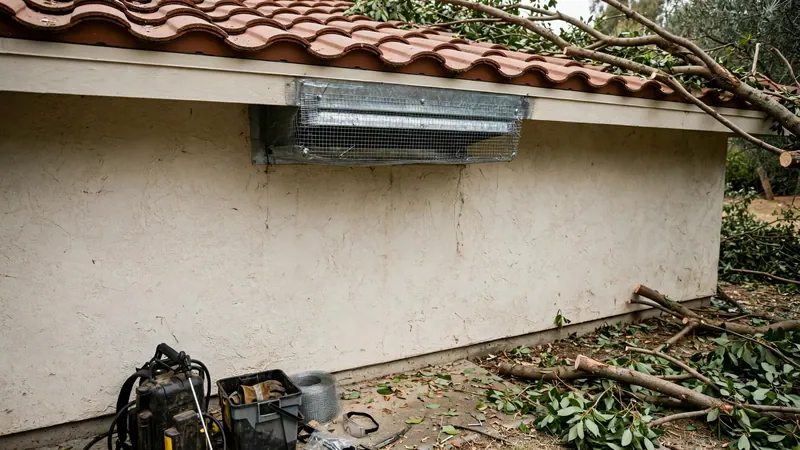
Attic, gable, foundation, dryer, and bathroom vents. We fit metal mesh behind or over damaged screens.
Pipes and Utility Lines
Gaps around gas, water, AC line sets, cable, and electrical entries. We close them with mesh and sealant.
Doors and Garage
Worn door sweeps, garage door corners, and bottom seals. Young rats can pass under a ½ inch gap.
Foundation and Slab
Cracks, missing mortar, and gaps beside crawl space doors where Norway rats dig and chew.
Drains and Sewer Lines
Open cleanouts and broken lines. We flag these for a plumber because sealing alone cannot fix them.
Each area links to a different habit. Our guide to finding mouse and rat entry points explains the search method in detail. This page explains what happens once we find them.
How Rats Get Into a House: The Routes We Check First
Rats do not need a door. They need a gap about as wide as their skull. Most Los Angeles homes carry several such gaps, and the owners never notice them. Our field representatives start high and finish low, because the two common species take different routes.
Roof Rats Come From Above
Roof rats climb. They run along fences, utility wires, and tree limbs, then step onto the roof. From there they reach eaves, roof vents, and gaps beside chimneys. If you hear footsteps in the attic at night, the route is usually overhead. Our page on roof rat entry points covers this pattern in depth.
Norway Rats Come From Below
Norway rats dig and gnaw. They tunnel along foundations, chew through weak vents, and slip under worn garage seals. If you see burrow holes beside a slab or find droppings in a crawl space, the route is usually at ground level.
Why Both Species Can Share One House
UC Integrated Pest Management notes that when both species live in one building, Norway rats usually stay on lower floors and roof rats take the upper floors. That is why we inspect both levels before we quote any scope of work. A fix at one level leaves the other open.
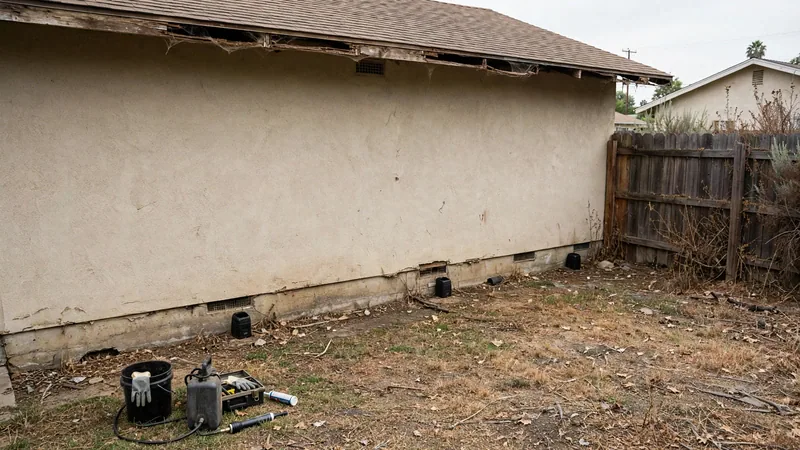
The Gap Rule We Use
Many references give ½ inch as the minimum opening for an adult rat. The UC IPM rat guidelines tell homeowners to seal cracks larger than ¼ inch, because young rats and mice squeeze through smaller holes. We follow the stricter rule. A house sealed to stop mice also stops rats.
How Booking a Rat Sealing Visit Works
You do not visit an office, because PestPunt works as a mobile Service Area Business. These six steps take you from your first call to a sealed home.
Call the dispatch line
Dial (888) 217-6759. Tell us what you hear, see, and smell, and where in the house.
Describe the building
Give us the home type, roof style, and any garage or crawl space. This helps us bring the right materials.
Meet your field representative
A local representative travels to your property. You do not need to come to us.
Walk the exterior together
We inspect the roofline, vents, pipes, and foundation. We point out each gap as we find it.
Review the scope
We explain what we found, which gaps matter most, and which repairs belong to other trades.
Approve and schedule the work
You choose the scope. We then trap if needed and seal the openings.
If you want the inspection alone, see our rodent proofing inspection page. It explains what a field representative documents and what you receive afterward.
What Happens on the Day We Seal Your Rat Entry Points
A good sealing visit follows a fixed order. We never skip the first two steps, because they protect you and the animals.
Confirm no rats remain inside
We check trap results and activity signs first. Sealing over live rats traps them in your walls, where they die and smell.
Clear access
We trim contact points, move stored items, and open attic or crawl space hatches so we can reach each gap.
Cut and fit the material
We cut mesh or metal to fit the opening. We make each patch larger than the hole so it overlaps solid framing.
Fasten it mechanically
We screw or staple mesh with washers, or set metal with fasteners. Glue alone does not hold against a determined rat.
Seal the edges
We add sealant around mesh and pipes to stop drafts, dust, and insects. The metal does the stopping, not the sealant.
Inspect and document
We re-check every repair, note each location, and explain what to watch over the next several weeks.
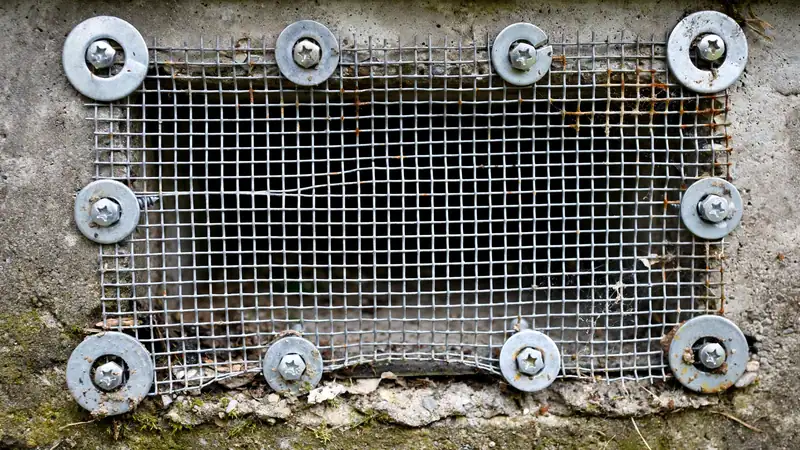
Materials That Stop Rats and Materials That Fail
Rats chew plastic, wood, foam, and caulk. UC IPM states this directly in its rat guidance. A repair that a rat can chew is not a repair, so material choice decides the result. This table shows what we use and why.
| Opening | Material we use | Why it works |
|---|---|---|
| Attic and foundation vents | Galvanized hardware cloth over the vent | Rigid mesh blocks teeth and lets air through |
| Pipe and wire gaps | Copper mesh, then sealant | Copper does not rust and rats cannot tear it |
| Roofline and eave gaps | Sheet metal flashing | Metal covers wide gaps that mesh cannot span |
| Foundation cracks | Mortar or concrete patch | Masonry stops digging and gnawing |
| Garage door corners and bottom | Heavy rubber seal with metal guard | The seal closes the gap and the guard resists chewing |
| Exterior door bottoms | Metal-reinforced door sweep | A tight sweep removes the ½ inch squeeze space |
Why Steel Wool and Foam Alone Fall Short
Steel wool makes a handy temporary plug, and the CDC seal-up guidance lists it for small holes. UC IPM warns that steel wool may rust over time. Spray foam and caulk hold steel wool in place, but they do not stop teeth by themselves. We use them as a finishing layer, never as the barrier.
Roof Rat or Norway Rat: Why the Species Changes the Sealing Plan
Sealing is not one-size-fits-all. The species decides where we spend most of our time. Droppings, gnaw size, and travel routes all point to the animal. Our guide to the difference between roof rats and Norway rats shows how to tell them apart.
| Feature | Roof rat | Norway rat |
|---|---|---|
| Body type | Sleek and agile | Large and robust |
| Main route | Roofline, wires, tree limbs | Foundation, burrows, drains |
| Usual nest area | Attics and upper walls | Basements, crawl spaces, burrows |
| Priority seal | Eaves, roof vents, gaps by chimneys | Foundation vents, slab cracks, door bottoms |
| Extra step | Trim branches back from the roof | Fill burrows and fix drain access |
Both species leave dark droppings, but roof rat droppings are usually smaller and spindle-shaped. See our roof rat droppings guide if you are unsure what you found.
Where PestPunt Seals Rat Entry Points in Los Angeles Neighborhoods
PestPunt sends field representatives to homes across Los Angeles. Housing style, tree cover, and lot layout change what we find, so we plan each visit around the neighborhood. These examples show where homeowners often call us.
Eastside and Northeast LA
- Highland Park (90042): 1920s bungalows with worn foundation vent screens
- Silver Lake (90039): hillside homes where fences meet rooflines
- Echo Park (90026): dense lots with shared fences and wires
San Fernando Valley
- Sherman Oaks (91403): mature trees and palms beside rooflines
- Van Nuys (91401): ranch homes with open eaves and attached garages
- Woodland Hills (91364): large lots with citrus and tall hedges
Westside
- Brentwood (90049): tall hedges and old trees touching roofs
- Mar Vista (90066): mid-century homes with open eaves and garage gaps
- Westchester (90045): tract homes with aging vent screens
Los Angeles ZIP codes we dispatch to include 90042, 90041, 90039, 90026, 90027, 90028, 90005, 90019, 90034, 90045, 90049, 90066, 90068, 90291, 91316, 91324, 91401, 91403, 91364, and 91604, plus nearby areas. If your ZIP code is not listed, call and ask. For more local detail, see our Los Angeles entry point sealing page, our 24/7 Los Angeles rodent control page, and our Highland Park rodent exterminator page. We have no office, so our locations page lists where we dispatch.
Why Los Angeles Homes Often Need Rat Sealing
Los Angeles gives rats three things they love: mild weather, fruit trees, and old buildings. The climate keeps rats active through winter. Citrus, avocado, and fig trees feed them. Many homes date from the 1920s through the 1960s, and age brings loose trim, worn vent screens, and open eaves.
Hillside and Canyon Homes
Homes near Griffith Park, the Santa Monica Mountains, and the canyons around Silver Lake and Hollywood Hills sit beside brush and wildlife. Rats follow the brush line to the fence and then to the roof. We check the climb route first and the gap second.
Bungalows and Raised Foundations
Raised foundations use vents that rats chew open. In older bungalows we often find vent frames that are bent or rusted, and crawl space doors that no longer sit flush. These are ground-level routes for Norway rats.
Detached Garages and ADUs
Backyard garages and accessory units add roof edges, wire runs, and pipe entries. Rats treat each new structure as another doorway to your yard. We include them in every inspection.
Sealing for Homes, Garages, and Small Businesses
The same rat can threaten a kitchen, a car, and a stockroom. We adjust our scope to the property type, because each one hides different gaps.
Residential
- Attic, roofline, and soffit checks
- Garage door and side door seals
- Crawl space and foundation vents
- Pipe and utility penetrations
Commercial
- Dock doors and roll-up doors
- Dumpster and alley access points
- Kitchen and storage room pipe chases
- Roof units, curb gaps, and conduit
Rats also chew wiring in garages and engines. Read about the rodent damage to car wiring and the fire risk from chewed wires to see why quick sealing matters.
How to Choose a Rat Sealing Provider
Many companies sell sealing as a quick add-on. Use these questions to separate real exclusion work from a sales pitch.
Questions to Ask Before You Hire
- Will you inspect the roof, vents, and foundation, or only the attic?
- Which materials will you use on vents, pipes, and eaves?
- Will you trap before you seal?
- Will you show me each repair and explain it?
- Which problems fall outside your scope, such as plumbing or roof repair?
Green Flags and Red Flags
Green flags
- The provider names the materials
- The provider checks above and below
- The provider explains limits honestly
- The provider documents each location
Red flags
- The provider promises to seal everything in one hour
- The provider uses foam or caulk as the only barrier
- The provider ignores the roofline
- The provider will not explain pricing logic
How to Prepare for Sealing and What to Do Afterward
A little preparation shortens the visit and improves the result. A few weeks of follow-up confirm that the work holds.
Before Our Representative Arrives
- Clear access to the attic hatch, garage walls, and crawl space door.
- Move vehicles so we can reach the driveway side of the house.
- Note where you hear noise and at what time.
- Photograph droppings or gnaw marks without touching them.
- Secure pets in a room away from the work area.
After the Work Is Done
Check each sealed area at dusk and again at dawn for a week. Look for new droppings, fresh gnawing, or grease marks. If rats test a repair, they leave scratches or small chew marks around it. Report any sign to us right away, because a small adjustment now prevents a full repair later.
Cleanup Comes Next
Sealing does not remove droppings or nests. Wet down contamination, wear gloves and a respirator, and never sweep or vacuum dry droppings. Our cleanup and decontamination service handles heavy contamination, and our guide to cleaning rodent droppings safely explains the safe method.
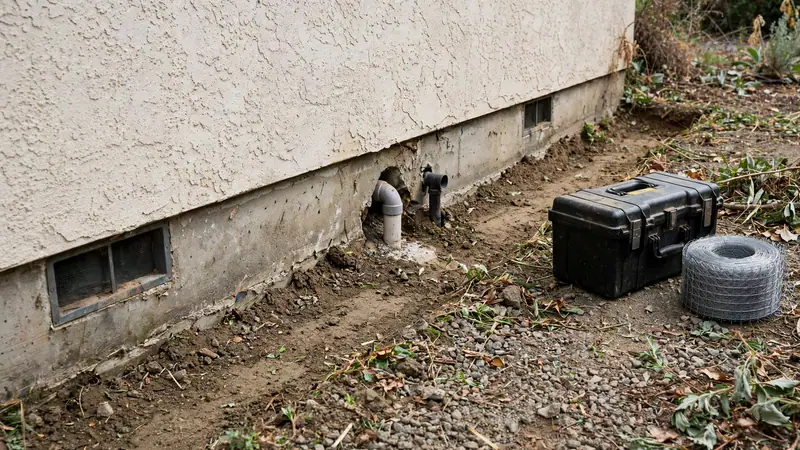
Sealing Works Best Inside a Full Rodent Control Plan
The CDC seal-up guidance frames rodent control as three jobs: seal up, trap up, and clean up. We follow the same logic. Sealing alone does not remove rats already inside. Trapping alone does not stop new rats. Cleanup alone leaves the door open.
Where Sealing Fits in Your Timeline
For an active infestation, we trap first, confirm that activity has stopped, seal, and then clean. For a home with no rats yet, we seal as prevention. If you have an active problem now, our professional rat removal service handles the trapping side, and our guide to rat burrows in the yard covers outdoor digging.
Why Food and Shelter Still Matter
Rats go where food and cover exist. Trim shrubs, store pet food in sealed containers, and keep trash lids tight. These steps do not replace sealing, but they make your yard less inviting. Our guide on what rats eat explains which food sources attract them most.
What Rat Sealing Cannot Do
We want you to buy the right service, so we state the limits plainly.
- Sealing cannot fix open sewer lines. Rats can travel through broken laterals. A plumber must repair those. Our guide to sewer rats explains the process.
- Sealing cannot cure a structural defect. Rotted fascia or missing roof tiles may need a roofer.
- Sealing cannot make a home 100 percent rat-proof forever. Settling, weather, and new construction can open new gaps. Regular checks matter.
- Sealing cannot remove rats already trapped inside. It must follow trapping.
When a gap sits beside a neighbor's property, a shared fence, or a utility line you do not own, we explain who should fix it.
Related Rodent Proofing Pages
Your situation may fit a more specific page. Use these links to go deeper.
- Need to stop mice at the same time? Read about mouse entry point sealing, our next page in this series.
- Want the full-home approach? Visit home rodent proofing in Los Angeles.
- Hear noises in the walls? See mouse noises in walls at night.
- Concerned about attics? See attic rodent solutions.
- Browse every PestPunt service in one place.
Six Rat Sealing Mistakes We See Again and Again
Sealing before trapping
Rats locked inside chew new exits through walls and wires. Always confirm silence first.
Skipping the roof
Homeowners seal the ground floor and ignore the roofline. Roof rats simply use the open top.
Using foam alone
Rats chew foam in minutes. Foam belongs under metal, not in place of it.
Patching one hole
Rats test every nearby gap. A single repair moves the rats to the next weakness.
Leaving a branch bridge
A limb touching the roof acts as a ramp. Trim it back about 3 feet.
Forgetting cleanup
Droppings and nests keep attracting rodents and carry health risk. Clean safely after sealing.
Frequently Asked Questions About Rat Entry Point Sealing
An adult rat can squeeze through an opening about the size of a quarter, roughly ½ inch. Young rats and mice fit through smaller gaps. UC IPM advises sealing openings larger than ¼ inch, and we follow that stricter rule to stay safe.
Yes. We confirm that activity has stopped before we close the last openings. Sealing live rats inside walls leads to gnawing, noise, and odor. We trap first, check results, and then seal.
We use galvanized hardware cloth, copper mesh, sheet metal flashing, mortar, and reinforced door seals. We add sealant as a finishing layer. Rats chew foam, caulk, and plastic, so we never rely on them alone.
You can seal small, reachable gaps with mesh and fasteners. Rooflines, tall eaves, and attics carry fall and contamination risks, and missed gaps let rats return. Call us if you cannot reach every opening safely.
No. Sealing blocks new entry. You still need trapping to remove rats inside, and cleanup to remove droppings and nests. We combine these steps so each one supports the others.
It depends on the building size, roof height, and number of gaps. A small home may need one visit, while a large or complex property may need more. Your field representative explains the timeline before work begins.
Yes, but we adjust the plan. Roof rats favor rooflines and wires, so we focus on eaves and vents. Norway rats favor foundations and burrows, so we focus on slab cracks, door bottoms, and ground-level vents.
We send field representatives across Los Angeles, including Highland Park, Eagle Rock, Silver Lake, Echo Park, Hollywood, Koreatown, Sherman Oaks, Studio City, Venice, Brentwood, and Westchester. We work as a Service Area Business and travel to you. Call to confirm your ZIP code.
Final Takeaways
Rat entry point sealing closes the routes rats use to reach your food, wires, and attic. Rats can pass through gaps near ½ inch, so we seal anything larger than ¼ inch with metal, mesh, or mortar. We trap first, seal second, and clean third. Material choice and full coverage decide whether the repair lasts.
If you hear footsteps overhead or find droppings, call PestPunt at (888) 217-6759. Our field representatives travel directly to your Los Angeles property. Next, read about mouse entry point sealing to close the smaller gaps too.
Mobile Rodent Control Services
Stop Rats at the Door Instead of Chasing Them Inside
Call (888) 217-6759 any hour. A PestPunt field representative will inspect your roofline, vents, and foundation, and explain the right sealing plan for your home.