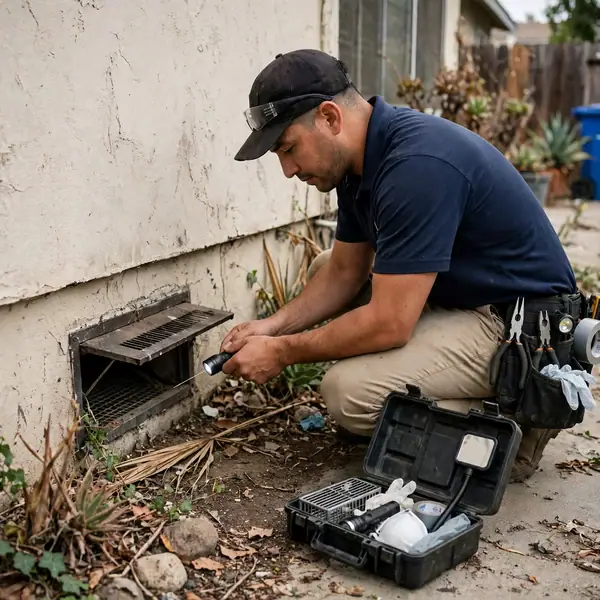
Rodent Proofing Inspection: A Full Roofline-to-Foundation Check for Rats and Mice
You cannot fix a gap you have not found. A PestPunt field representative walks your property, checks every place rodents enter, and explains what each finding means. Call (888) 217-6759 to schedule a visit at your home or business.
A Rodent Proofing Inspection at a Glance
What we check: Roofline, vents, utility lines, doors and garage, foundation, and the yard.
What you learn: Which species you face, where they enter, and which gaps to fix first.
Who needs one: Homeowners who hear noises, find droppings, buy a home, or want prevention.
How to start: Call (888) 217-6759. We come to your property.
The Six Zones of a Rodent Proofing Inspection
A rushed look at the attic misses most entry points. We split every property into six zones and check each one in order. This method keeps the inspection consistent and makes sure nothing falls through the gaps.
Zone 1: Roof and Eaves
We check fascia, soffits, roof returns, tile edges, and chimney flashing for gaps and gnaw marks.
Zone 2: Vents and Openings
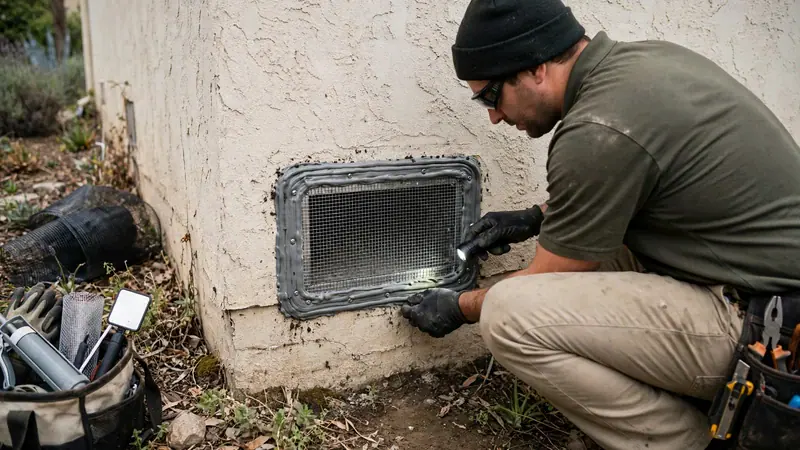
We inspect attic, gable, foundation, dryer, and bathroom vents for torn screens and missing dampers.
Zone 3: Utility Lines
We trace gas, water, electrical, cable, and AC line entries and measure the gaps around each.
Zone 4: Doors and Garage
We test door sweeps, garage corners, and side seals for daylight and wear.
Zone 5: Foundation and Crawl Space
We look for cracks, burrows, missing mortar, and open crawl space doors.
Zone 6: Yard and Surroundings
We note fences, branches, wood piles, trash storage, and pet food that give rodents access or food.
Every zone links to a repair. When we find gaps, our rat entry point sealing and mouse entry point sealing services close them.
When a Rodent Proofing Inspection Makes Sense
Most people call after they see a rodent. Smart owners call earlier. These are the moments when an inspection pays off.
You Hear or See Signs
Night scratching, droppings, grease marks, or a rotten smell all justify a visit. Read our 10 early signs of rodent infestation to compare what you notice.
You Are Buying or Selling a Home
Rodents hide well, and old damage can lurk in attics and crawl spaces. An inspection gives buyers a clearer picture and gives sellers a chance to fix gaps before listing. This information is educational, and it does not replace the formal inspections your transaction may require.
You Moved Into a New Place
Previous occupants may have left gaps, droppings, or nests behind. A visit in your first weeks sets a baseline.
You Had Rodents Before
Rodents return to places that worked for them once. After a removal, an inspection confirms that sealing and cleanup are complete. Our guide on whether rats return to the same nest explains why this matters.
You Live Near Higher Pressure
Homes beside creeks, canyons, orchards, alleys, restaurants, or construction face steady rodent traffic. A yearly check keeps small gaps from growing.
How a PestPunt Inspection Visit Works
We have no office to visit, because PestPunt is a Service Area Business. Our field representatives come to you. Here is how a visit unfolds.
Confirm the visit
We schedule a field representative to arrive at your property. Please have an adult present.
Start outside
We walk the exterior first, from the roofline down to the foundation, and photograph each gap.
Check inside
We inspect the attic, garage, kitchen, utility closets, and crawl space where we can safely reach.
Explain what we found
We show you each finding and explain what it means for the species, risk, and urgency.
Choose the next step
You decide whether to seal, trap, clean up, or monitor. We never force a package.
The Tools and Methods Behind a Careful Inspection
Good inspections rely on simple tools used with patience. We carry a small kit and use it the same way at every property.
- Bright flashlight and headlamp: Light across a surface at a low angle shows grease marks and gnaw lines.
- Inspection mirror: A small mirror lets us look behind pipes and into tight corners.
- Pencil or gap gauge: A pencil approximates ¼ inch, the mouse threshold, while a coin-sized gap suggests rat access.
- Moisture meter: It helps us separate rodent odor from a water leak.
- Camera: We photograph findings so you can see what we see.
- Protective gear: We wear gloves and respirators in contaminated spaces.
Why Daylight Alone Is Not Enough
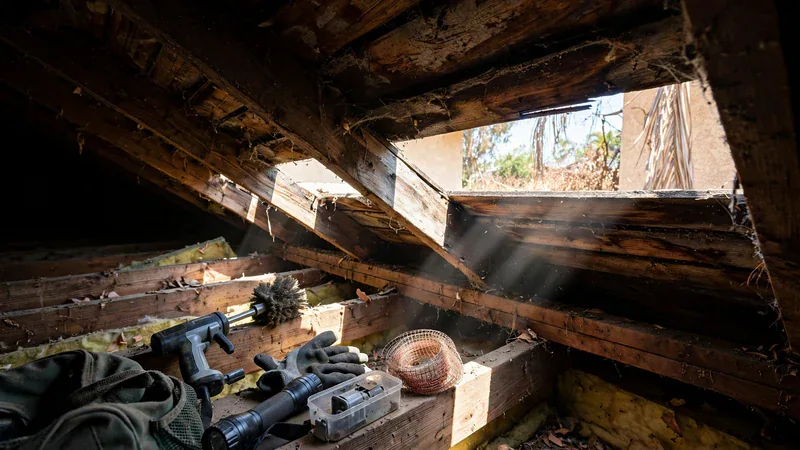
One of the best tricks is to stand inside a dark attic or garage on a bright day. Daylight that leaks through a gap shows exactly where rodents can pass. Our Los Angeles entry point inspection page shows how this works in practice.
How We Read Rodent Evidence During an Inspection
Evidence tells us the species, the age of the problem, and the route. We train our eyes on a few signs and compare them as we move through the property.
| Sign | What it can suggest | What it cannot prove |
|---|---|---|
| Small, pointed droppings | Mice, usually near food or travel paths | How many mice live there |
| Larger, blunt droppings | Norway rats, often at ground level | That rats are still active |
| Spindle-shaped droppings in the attic | Roof rats, often along beams and wires | Which gap they used |
| Grease marks on trim or beams | A repeated travel route | The age of the route |
| Gnaw marks | Rodent feeding or entry attempts | Which species made them without size checks |
| Ammonia-like smell | Urine buildup in a nest or run | Whether the nest is active now |
Size and shape help, but they are not final. Our guides on mouse versus rat droppings and fresh versus old droppings explain how to read them. We combine these clues with entry points and trap results before we state a conclusion.
What You Learn at the End of an Inspection
You should leave the visit knowing three things: what is happening, where it is happening, and what to do next. We aim to cover each in plain language.
The Species and Pressure
We explain whether the evidence points to mice, roof rats, Norway rats, or a mix. We also explain whether the pressure looks light or heavy, using only what we saw. We do not guess at numbers. Our guide on one mouse versus an infestation explains why one sign rarely tells the whole story.
The Entry Points
We point out each gap, and we photograph it when access allows. We rank the gaps by risk, so you know which ones to fix first.
The Options
We lay out your choices: seal only, trap and seal, clean up, or monitor. We also tell you which repairs belong to a roofer, plumber, or electrician. That honesty builds trust, and it keeps your money on the right jobs.
The Warning Signs We Flag Right Away
If we see chewed wiring or heavy contamination, we tell you immediately. Rodents can damage wires, and our page on chewed wires and fire risk explains why this deserves quick attention.
What Happens After the Inspection
An inspection only helps if you act on it. These six steps show how most customers move from findings to a protected property.
Review the findings
Read the notes and photos, and ask questions about anything unclear.
Trap if rodents remain
If activity continues, we trap first. Sealing over live rodents causes new gnawing.
Seal the gaps
We close the openings with metal mesh, flashing, mortar, and sweeps.
Clean up safely
We remove droppings and nesting material with wet methods and protective gear.
Fix the yard
You trim branches, store food, and clear clutter beside the foundation.
Re-check in a few weeks
You watch sealed areas and call us if new signs appear.
Inspection, Sealing, Trapping, and Cleanup: Which One Do You Need?
Homeowners often mix up these four services. Each solves a different problem, and the right order saves money. This table shows how they differ.
| Service | Main goal | Best when | Order |
|---|---|---|---|
| Inspection | Find gaps, evidence, and species | You are unsure what is happening | First |
| Trapping | Remove rodents already inside | You see or hear active rodents | Second |
| Sealing | Block entry for good | Activity has stopped or you want prevention | Third |
| Cleanup | Remove droppings, nests, and odor | Contamination remains after removal | Fourth |
Not every property needs all four. A clean home with a few gaps may need only an inspection and sealing. A home with active rats in the attic needs trapping, sealing, and cleanup. Our rat removal service and cleanup service cover the other steps.
How We Stay Safe, and Keep You Safe, in Contaminated Spaces
Attics and crawl spaces can hold droppings, urine, and old nests. Disturbing them can send particles into the air. Our field representatives treat every unknown space as contaminated until we see otherwise.
Our Safety Habits
- We wear gloves and a respirator in dusty or soiled spaces.
- We avoid sweeping or vacuuming dry droppings.
- We wet down heavy contamination before we move it.
- We wash hands and change gloves after contact.
- We stop and explain if a space is unsafe to enter.
What You Should Do at Home
Stay out of attics and crawl spaces with visible droppings until you have the right gear and method. Read our guide to cleaning rodent droppings safely for the wet-cleanup method, and see our page on hantavirus symptoms and risks in California for health context. If you feel unwell after rodent exposure, contact a healthcare provider.
Rodent Proofing Inspections Across Los Angeles Neighborhoods
PestPunt sends field representatives to homes across Los Angeles. Housing style, tree cover, and lot layout change what we find, so we plan each visit around the neighborhood. These examples show where homeowners often call us.
Hillside and Eastside
- Los Feliz (90027): hillside homes with mature planting
- Echo Park (90026): dense lots with shared fences
- Boyle Heights (90033): older homes with worn seals and vents
Valley and Foothills
- Studio City (91604): ranch homes with open vents
- Woodland Hills (91364): large lots with citrus and tall hedges
- Sherman Oaks (91403): mature trees beside rooflines
Westside and South Bay Approaches
- Westchester (90045): tract homes with aging vent screens
- Mar Vista (90066): mid-century homes with garage gaps
- Palms (90034): small lots and mixed apartments
Los Angeles ZIP codes we dispatch to include 90042, 90041, 90039, 90026, 90027, 90028, 90005, 90019, 90034, 90045, 90049, 90066, 90068, 90291, 91316, 91324, 91401, 91403, 91364, and 91604, plus nearby areas. If your ZIP code is not listed, call and ask. For more local detail, see our Los Angeles entry point inspection booking page, our 24/7 Los Angeles rodent control page, and our Highland Park rodent exterminator page. We have no office, so our locations page lists where we dispatch.
What We See When We Inspect Los Angeles Properties
Every area of Los Angeles produces a different inspection. Our field representatives learn the housing styles and adjust their checklist.
Older Eastside Bungalows
We often find worn foundation vents, loose soffit panels, and pipe gaps beneath kitchen sinks. Crawl space doors may not close tightly.
Valley Ranch Homes
Ranch homes have long rooflines and attached garages. We spend extra time on eaves, gable vents, and garage seals.
Hillside Homes
Steep lots often hide gaps on the downhill side where a ladder is hard to place. Brush and fences create climb routes. We map them before we leave.
Westside Tract Homes
Tract homes share designs, so one gap type repeats along a block. Once we spot a weakness at your house, we know where neighbors may have the same problem.
How to Prepare for Your Inspection
A few small steps save time and give us better information. None of them takes long.
- Write down when and where you hear noises.
- Photograph droppings or damage without touching them.
- Clear access to the attic hatch, garage, and crawl space door.
- Move vehicles from the driveway side of the house.
- Secure pets in a safe room.
- Note any past repairs, treatments, or remodels.
What Not to Do Beforehand
Do not sweep or vacuum dry droppings. The CDC seal-up guidance and our own safety guide stress wet cleanup to avoid stirring dust. Do not seal gaps in a hurry either, because we need to see the evidence. Do not spray repellents or place poison in the attic. These steps can scatter rodents or create dead-animal odors in walls.
How to Choose a Rodent Inspection Provider
Inspection quality varies widely. Some companies treat it as a quick sales step. Ask these questions before you book.
Ask these questions
- Will you inspect the roof, vents, and foundation, not just the attic?
- Will you show me each finding?
- Will you explain the species and the evidence?
- Which problems do you refer to other trades?
Walk away if
- They name a diagnosis without looking
- They push one package for every home
- They skip the exterior
- They cannot explain their materials
Inspections for Small Businesses
Restaurants, warehouses, storage units, and offices face different risks than homes. Dock doors, roll-up doors, dumpster areas, and rooftop units create extra gaps. Food storage rules and customer safety add pressure to act fast. We adapt the six zones to commercial buildings, and we explain which findings need a facility manager, a landlord, or another trade. Tell us your property type when you call so we can prepare.
Six Inspection Mistakes That Waste Time and Money
Inspecting only the attic
Rodents enter at many levels. An attic-only check misses the foundation and garage.
Skipping the outside
Every interior sign leads to an exterior gap. Start outside every time.
Cleaning before inspecting
Cleaning removes evidence that shows the species and route. Inspect first.
Sealing before trapping
Trapped rodents gnaw new exits. Confirm silence before the last seal.
Trusting a single sign
One dropping does not tell the whole story. We combine several clues.
Never re-checking
Buildings shift. A yearly check catches new gaps early.
Frequently Asked Questions About Rodent Proofing Inspections
We check six zones: roof and eaves, vents, utility lines, doors and garage, foundation and crawl space, and the yard. We photograph gaps when access allows, read the evidence, and explain which repairs matter most.
It depends on the building size, roof height, and access. Small homes need less time, and large or complex properties need more. Your field representative explains the plan when they arrive.
Please have an adult present so we can enter the garage, attic, and utility areas. We walk the exterior with you and explain each finding.
We explain what the evidence suggests, such as droppings, gnaw size, and travel routes. We say plainly when the evidence cannot settle the question, and we may recommend monitoring or trapping to confirm.
The inspection finds and documents gaps. Sealing, trapping, and cleanup are separate services. We explain each option after the visit, and you choose what to approve.
An inspection can reveal gaps and signs that a quick tour misses. It gives you educational information to plan repairs, and it does not replace any formal inspection your purchase requires.
Many homeowners check once a year, ideally in late summer before cooler weather. Schedule sooner if you hear noises, find droppings, remodel, or live beside canyons, creeks, orchards, or alleys.
We send field representatives across Los Angeles, including Highland Park, Eagle Rock, Silver Lake, Echo Park, Hollywood, Koreatown, Sherman Oaks, Studio City, Venice, Brentwood, and Westchester. We work as a Service Area Business and travel to you. Call to confirm your ZIP code.
Final Takeaways
A rodent proofing inspection shows you where rats and mice enter, which species you face, and which repairs matter most. We inspect six zones from the roofline to the yard, flag gaps near ¼ inch, and explain your options in plain language. You then choose to seal, trap, clean, or monitor.
To schedule a visit, call PestPunt at (888) 217-6759. Our field representatives travel directly to your Los Angeles property. Next, read about roof rat entry points to learn where climbing rats get in.
Mobile Rodent Control Services
Know Where Rodents Get In Before They Move In
Call (888) 217-6759 any hour. A PestPunt field representative will inspect your property and explain the best next step.